13 results for "Medicine"

The Pattern Seekers How Autism Drives Human Invention

Simon Baron-Cohen
*A New York Times Editors' Choice Pick* An "ambitious work" ( Washington Post ) tracing the links between autism and ingenuity Is the ability to invent things unique to humans? In The Pattern Seekers , Cambridge University psychologist Simon Baron-Cohen argues that it is, and proposes that autistic people have played a key role in human progress for seventy to one hundred thousand years, from the first complex tools like the bow and arrow and the first musical instrument to the digital revolution. He presents the science that the same genes that contribute to autism enable a special kind of pattern seeking that is essential to our species' inventiveness. However, these abilities come at a cost for autistic people, including social and neurological challenges. Baron-Cohen calls on us to support and celebrate autistic people in both their disabilities and their talents. Ultimately, The Pattern Seekers isn't just a new theory of human evolution, but a call to reconsider how society treats those who think differently.
Basic Books 2023-01-24 272 pages

Jack Herer's the Emperor Wears No Clothes

Jack Herer
In this thoroughly researched, scrupulously annotated and shockingly provocative book you’ll learn: how and why Cannabis prohibition began and what that has meant to America ; all the uses of hemp as medicine, food, fuel, fiber, paper, and as a plastic replacement ; the straight dope on marijuana smoke and its effect on the human body ; who profits from the prohibition and criminalization of Cannabis ; what you can do to speed up legalization and profit from the coming changes.
Ah Ha Pub. 1998 291 pages

Voices from the Pandemic Americans Tell Their Stories of Crisis, Courage and Resilience

Eli Saslow
From Pulitzer Prize-winning Washington Post reporter Eli Saslow, a powerful portrait of a country grappling with the pandemic, told through voices of people from all across America The Covid-19 pandemic was a world-shattering event, affecting everyone in the nation. From its first ominous stirrings, renowned journalist Eli Saslow began interviewing a cross-section of Americans, capturing their experiences in real time: An exhausted and anguished EMT risking his life in New York City; a grocery store owner feeding his neighborhood for free in locked-down New Orleans; an overwhelmed coroner in Georgia; a Maryland restaurateur forced to close his family business after forty-six years; an Arizona teacher wrestling with her fears and her obligations to her students; rural citizens adamant that the whole thing is a hoax, and retail workers attacked for asking people to wear masks; patients struggling to breathe and doctors desperately trying to save them. Through Saslow's masterful, empathetic interviewing, we are given a kaleidoscopic picture of a people dealing with the unimaginable. These deeply personal accounts make for cathartic reading, as we see Americans at their worst, and at their resilient best.
Random House Large Print 2021 304 pages

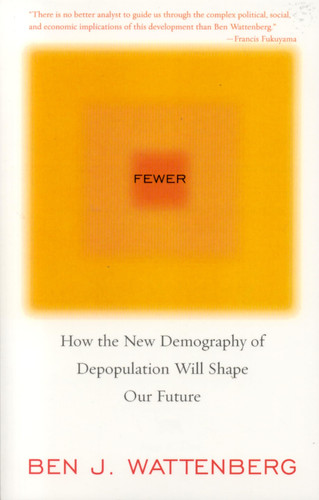
Fewer How the New Demography of Depopulation Will Shape Our Future

Ben J. Wattenberg
For at least 650 years, since the time of the Black Plague, the world's population has headed in only one direction: up. But within a few decades the number of people on earth will level off and then will likely decline over an extended period of time. In Fewer, the author explains how and why birthrates and fertility rates are now falling at an alarming rate in countries throughout the world--both modern and less developed. And he explores the major implications--for world politics, the environment, and the international economy--of this momentous shift. Illustrated with 23 clarifying charts.
Bloomsbury Academic 2004 241 pages

The Jewish Woman in America

Charlotte Baum,Charlotte Brown,Paula Hyman,Sonya Michel
This encyclopedia provides the first standard reference work on the lives, history and activities of Jewish women in the United States. Covering a period which extends from the arrival of the first Jewish women in North America in 1654 to the present, this two-volume set presents the most comprehensive and detailed portrait of American Jewish women ever published, and brings together for the first time the wealth of recent scholarship on this subject. Includes: * Biographical entries on over 800 individual women. * 128 topical articles on organizations such as Hadassah, the National Council of Jewish Women, Mizrachi, and the Ladies' Garment Workers' Union. * Major essays on Jewish women's participation in the movement for women's suffrage, social reform, civil rights, and the recent women's movement. * The activities of Jewish women in politics, business, education, the arts, and religion. * A readable, inviting format with over 500 large photographs. * Bibliographies at the end of each entry which include overviews of major scholarship in the field, complete citations of more general works and citations of additional bibliographical and reference sources. * The comprehensive index includes citations to every substantive discussion in the entries as well as all proper names appearing in the text, such as organizations, book, song and film titles, schools, and individuals. The "Encyclopedia" provides information on American Jewish women in all fields of endeavor, and pays special attention to the work of women in the arts, academics, law, the labor movement, education, science, medicine, journalism and publishing, and on the lives of ordinary Jewish women during all time periods and in all regions of the United States.
New American Library 1977 290 pages

False Alarm The Truth about the Epidemic of Fear

Marc Siegel
More relevant than ever as the Coronavirus, COVID-19 pandemic sweeps the globe, False Alarm (Originally released in 2008) reminds readers to look closely at the facts as the media covers the national pandemic news and spread of the virus, as well as reinforces the notion that we must arm ourselves against fear tactics that inhibit our abilities to properly make decisions in a world of uncertainty. Life today for citizens of the developed world is safer, easier, and healthier than for any other people in history thanks to modern medicine, science, technology, and intelligence. So why is an epidemic of fear sweeping America? The answer, according to nationally renowned health commentator Dr. Marc Siegel, is that we live in an artificially created culture of fear. In False Alarm , Siegel identifies three major catalysts of the culture of fear-government, the media, and big pharma. With fascinating, blow-by-blow analyses of the most sensational false alarms of the past few years, he shows how these fearmongers manipulate our most primitive instincts--often without our even realizing it. False Alarm shows us how to look behind the hype and hysteria, inoculate ourselves against fear tactics, and develop the emotional and intellectual skills needed to take back our lives.
John Wiley & Sons Canada, Limited 2006-09 258 pages

Criminal Man, According to the Classification of Cesare Lombroso

Gina Lombroso Ferrero,Cesare Lombroso
Written while Lombroso was professor of forensic medicine at the University of Turin, L'Uomo delinquente (Criminal Man) set out to conduct an anthropological study of its subject. The premise was that the criminal is born and could be identified from congenital traits. By learning to recognise them, and by developing a detailed system of classification, the aim was better to understand the criminal so as to optimise prevention, reform, or containment. The author leaves no stone unturned, examining every type and level of criminal, recording every measurable characteristic, be it physical, physiological, or psychological. Although subsequently subject to criticism, and now long deprecated, the work was enormously influential in the late 19th and early 20th centuries, as both a pioneering and sincere effort to understand the origins and sources of crime. The work went through five Italian editions, in which Lombroso continued to expand and refine his theory. However, because of its length, it was difficult to get the book translated, so no English edition existed until after the author's death. First published in 1911, the present text is a summary prepared for the Anglo-American market by his daughter, Gina, while her father still lived, and it is in this form that it became known in the English speaking world. Its influence would be felt throughout Europe and America, and would transcend criminology to find references in literature. The likes of Émile Zola, Leo Tolstoy, Joseph Conrad, and Bram Stoker, the later in his descriptions of the vampire in Dracula, drew from Lombroso's work on criminal man.
Spradabach Publishing 2022-08-18 364 pages

Junk Medicine Doctors, Lies and the Addiction Bureaucracy

Theodore Dalrymple
Almost everything you know about heroin addiction is wrong. Not only is it wrong, but it is obviously wrong. Heroin is not highly addictive; withdrawal from it is not medically serious; addicts do not become criminals to feed their habit; addicts do not need any medical assistance to stop taking heroin; and contrary to received wisdom, heroin addiction most certainly IS a moral or spiritual problem. Based on his experience as a prison doctor and as a psychiatrist in a large general hospital in Birmingham, Dr. Dalrymple argues that addiction to heroin is not an illness at all, and that doctors only make it worse. They deceive both the addicts and themselves by pretending that they have something to offer. In this brilliant, entertaining and provocative book, Theodore Dalrymple explains how and why a literary tradition dating back to De Quincey and Coleridge, and continuing up to the deeply sociopathic William Burroughs and beyond, has misled all Western societies for generations about the nature of heroin addiction. These writers' self-dramatizing and dishonest accounts of their own addiction have been accepted uncritically, and have been more influential by far in forming public attitudes than the whole of pharmacological science. As a result, a self-serving, self-perpetuating and completely useless medical bureaucracy has been set up to deal with the problem. With scathing wit, implacable logic and savage denunciation, Dr. Dalrymple exposes the mythology surrounding heroin addiction. Moving seamlessly between literature, pharmacology, history and philosophy, he demonstrates what happens when the nature of a social problem is so thoroughly misunderstood, and when human beings are regarded as inanimate objects rather than as agents of their own destiny. His scintillating, iconoclastic little book has an importance far beyond its immediate subject matter.
Harriman House Publishing 2010 160 pages

Man's Future Birthright

Hermann Joseph Muller
Hermann Joseph Muller (1890-1967) was a member of the early genetics group at Columbia University that developed the chromosome theory of inheritance. T. H. Morgan received the Nobel Prize in Medicine and Physiology for this work in 1934, and Muller, his student, received the Nobel Prize in 1946 for his discovery of radiation-induced mutation. Muller's writings extended beyond contributions to technical journals. He was an active critic of social abuse of science; he advocated eugenic programs based on free choice; and he played a major role in the reform of high school biology. Muller's social views were published in magazines and journals which are accessible to scholars more than to the lay reader or student. They have been collected here to show how extensively he thought our lives are affected by radiation, evolution, modern medicine, and gene theory. He attempted to alert humanity to the dangers of neglect and abuse of their genetic heritage. He also used humanistic values to urge mankind to improve itself, to foster cooperativeness, to increase health and intelligence, and to adopt and evolutionary outlook. A companion collection of essays, The Modern Concept of Nature: Essays on Theoretical Biology by H. J. Muller, also published by State University of New York Press, deals with Muller's scientific contributions to genetics and evolution. It was Muller who developed the relation between genes and mutation; his views on the primacy of the gene in biology are reflected today in the similar primacy of nucleic acids as the basis of life. For students of the history of ideas, a collection of these essays would illustrate how genetic thinking prepared the world view for molecular biologists. The relation of science to values is often neglected because of the inaccessibility of the written contributions of famous scientists. To read Muller's major essays in these two areas is an important way to evaluate a scientist's career, his maturation of ideas, and his developing application of science to society.
State University of New York Press 1973 164 pages

Psychosexual Functions in Women Studies in Psychosomatic Medicine of the Institute for Psychoanalysis

Therese Friedmann Benedek
Psychosexual Functions In Women: Studies In Psychosomatic Medicine Of The Institute For Psychoanalysis is a comprehensive book written by Therese Friedmann Benedek. The book explores the psychosexual functions of women and provides an in-depth analysis of the psychosomatic medicine of the Institute for Psychoanalysis. Benedek delves into the complex nature of female sexuality and how it is affected by various psychological and physical factors. She discusses the role of the unconscious in shaping sexual desires and behaviors, as well as the impact of childhood experiences and cultural influences on sexual development. The book also covers topics such as sexual dysfunction, sexual trauma, and the relationship between sexuality and mental health. Benedek draws on her extensive experience as a psychoanalyst to provide insights into the challenges faced by women in their sexual lives and offers practical advice for overcoming these challenges. Overall, Psychosexual Functions In Women is a valuable resource for anyone interested in the psychology of female sexuality and the role of psychoanalysis in understanding and treating sexual issues. It is written in a clear and accessible style, making it suitable for both professionals and lay readers alike.This scarce antiquarian book is a facsimile reprint of the old original and may contain some imperfections such as library marks and notations. Because we believe this work is culturally important, we have made it available as part of our commitment for protecting, preserving, and promoting the world's literature in affordable, high quality, modern editions, that are true to their original work.
Literary Licensing, LLC 2012-03 450 pages

The Prospect of Immortality in Bilingual American English and Traditional Chinese 永生的期盼美式英文-繁體中文雙語版本

Robert C W Ettinger
THE PROSPECT OF IMMORTALITY IN BILINGUAL AMERICAN ENGLISH AND TRADITIONAL CHINESE 永生的期盼美式英文-繁體中文雙語版本 by Robert C.W. Ettinger 羅伯艾丁格著 with a new (2010) foreword by the author 內有新原作者前言(2010年) -- Sinclair T. Wang, Translator 王振祥,翻譯者 -- is available in hardback (ISBN 978-1-934297-00-1) and paperback (ISBN 978-1-934297-01-8) editions. HERE IS MORE INFORMATION ABOUT THE BOOK (ORIGINALLY PUBLISHED IN ENGLISH IN 1964): In the 1960s Ettinger founded the cryonics (cryonic hibernation) movement and authored The Prospect of Immortality. Ettinger sees "discontinuity in history, with mortality and humanity on one side -- on the other immortality and transhumanity." Cryonic hibernation (experimental long-term suspended animation) of humans may provide a "door into summer" unlike any season previously known. Ettinger argues for his belief in "the possibility of limitless life for our generation." 在1960年代艾丁格創始了冰凍人 (冰凍休眠) 運動,並且著作了永生的期盼一書 。 艾丁格洞見了 "歷史上的不連續, 一邊是會死和凡人 -另一邊則是不死和超人。" 人類的冰凍休眠 (實驗性的長期活體休眠) 可能可以提供一道"進入盛夏之門", 而且是一個不像任何前所熟悉之季節。 愛丁格爲他在 "我們世代中無窮盡生命可能性" 的信念進行了辯解。 KEYWORDS: biostasis; cryonics; death; future medicine; immortality; life extension; personal identity; suspended animation; technological singularity; transhumanism. HERE IS A TABLE OF CONTENTS OF THE BILINGUAL (IMPROVE YOUR ENGLISH AND/OR YOUR CHINESE?) BOOK OF 552 PAGES: ((CONTENTS IN ENGLISH: )) ---Preface by the Translator ● viii ---FOREWORD 2010 BY ROBERT ETTINGER ● xxii ---Preface by Jean Rostand ● 2 ---Preface by Gerald J. Gruman ● 12 ---Chapter I. Frozen Death, Frozen Sleep, and Some Consequences ● 28 ---Chapter II. The Effects of Freezing and Cooling ● 52 ---Chapter III. Repair and Rejuvenation ● 140 ---Chapter IV. Today's Choices ● 184 ---Chapter V. Freezers and Religion ● 220 ---Chapter VI. Freezers and the Law ● 264 ---Chapter VII. The Economics of Immortality ● 302 ---Chapter VIII. The Problem of Identity ● 364 ---Chapter IX. The Uses of Immortality ● 398 ---Chapter X. Manners, Modes, and Morals of Tomorrow ● 428 ---Chapter XI. The Freezer-Centered Society ● 468 ---References ● 497 ((CONTENTS IN CHINESE: )) ---譯者前言 ● ix ---ROBERT ETTINGER 2010年前言 ● xxiii ---Jean Rostand 前言 ● 3 ---Gerald J. Gruman 前言 ● 13 --- 第一章死亡冰凍,睡眠冰凍,以及其一些後果 ● 29 --- 第二章冰凍和冷卻的一些效應 ● 53 --- 第三章修復和回春 ● 141 --- 第四章當今的選擇 ● 185 --- 第五章冰凍主義和宗教 ● 221 --- 第六章冰凍主義和法律 ● 265 --- 第七章永生的經濟學 ● 303 --- 第八章身分上的問題 ● 365 --- 第九章永生的利用 ● 399 --- 第十章明日的態度,模式和道德 ● 429 --- 第十一章以冰凍人為中心的社會 ● 469 --- 參考資料 ● 497
Ria University Press 2010-08 554 pages