29 results for "Memoir"

Measure of a man: from Auschwitz survivor to presidents' tailor

Greenfield, Martin,Hall, Wynton
He's been called "America's greatest living tailor" and "the most interesting man in the world." Now, for the first time, Holocaust survivor Martin Greenfield tells his incredible life story. Taken from his Czechoslovakian home at age fifteen and transported to the Nazi concentration camp at Auschwitz with his family, Greenfield came face to face with "Angel of Death" Dr. Joseph Mengele and was divided forever from his parents, sisters, and baby brother. In haunting, powerful prose, Greenfield remembers his desperation and fear as a teenager alone in the death camp—and how an SS soldier's shirt dramatically altered the course of his life. He learned how to sew; and when he began wearing the shirt under his prisoner uniform, he learned that clothes possess great power and could even help save his life. Measure of a Man is the story of a man who suffered unimaginable horror and emerged with a dream of success. From sweeping floors at a New York clothing factory to founding America’s premier custom suit company, Greenfield built a fashion empire. Now 86 years old and working with his sons, Greenfield has dressed the famous and powerful of D.C. and Hollywood, including Presidents Dwight Eisenhower, Bill Clinton, and Barack Obama, celebrities Paul Newman, Leonardo DiCaprio, and Jimmy Fallon, and the stars of Martin Scorsese's films. Written with soul-baring honesty and, at times, a wry sense of humor, Measure of a Man is a memoir unlike any other—one that will inspire hope and renew faith in the resilience of man.
Regnery History 2016-08-22 234 pages

Still alive: a Holocaust girlhood remembered

Klüger, Ruth
Swept up as a child in the events of Nazi-era Europe, Ruth Kluger saw her family's comfortable Vienna existence systematically undermined and destroyed. By age eleven, she had been deported, along with her mother, to Theresienstadt, the first in a series of concentration camps which would become the setting for her precarious childhood. Kluger's story of her years in the camps and her struggle to establish a life after the war as a refugee survivor in New York, has emerged as one of the most powerful accounts of the Holocaust. Interwoven with blunt, unsparing observations of childhood and nuanced reflections of an adult who has spent a lifetime thinking about the Holocaust, Still Alive rejects all easy assumptions about history, both political and personal. Whether describing the abuse she met at her own mother's hand, the life-saving generosity of a woman SS aide in Auschwitz, the foibles and prejudices of Allied liberators, or the cold shoulder offered by her relatives when she and her mother arrived as refugees in New York, Kluger sees and names an unexpected reality which has little to do with conventional wisdom or morality tales. Still Alive is a memoir of the pursuit of selfhood against all odds, a fiercely bittersweet coming-of-age story in which the protagonist must learn never to rely on comforting assumptions, but always to seek her own truth.
Feminist Press at the City University of New York 2001 216 pages

My name is Selma: the remarkable memoir of a Jewish resistance fighter and Ravensbrück survivor

Perre, Selma van de
Selma van de Perre was seventeen when World War Two began. Until then, being Jewish in the Netherlands had been of no consequence. But by 1941 this simple fact had become a matter of life or death. Several times, Selma avoided being rounded up by the Nazis. Then, in an act of defiance, she joined the Resistance movement, using the pseudonym Margareta van der Kuit. For two years 'Marga' risked it all. Using a fake ID, and passing as Aryan she travelled around the country delivering newsletters, sharing information, keeping up morale - doing, as she later explained, what 'had to be done'. In July 1944 her luck ran out. She was transported to Ravensbruck women's concentration camp as a political prisoner. Unlike her parents and sister - who, she would later discover, died in other camps - she survived by using her alias, pretending to be someone else. It was only after the war ended that she was allowed to reclaim her identity and dared to say once again: My name is Selma. Now, at ninety-eight, Selma remains a force of nature. Full of hope and courage, this is her story in her own words. --
Bantam press 2020 215 pages

Shores beyond shores: from Holocaust to hope : my true story

Butter, Irene H.,Bidwell, John,Holloway, Kris
As Irene's Pappi fights to save his family during the Holocaust, Irene's childhood is lost. Play is restricted. Family and friends disappear. Finally, with the Dutch police at their door comes the reality that Irene's father has not moved his family far enough from Hitler's Germany. By January 1945, the family is struggling to survive a death camp. Irene tends her ailing parents, cares for starving kids, and even helps bring clothes to her Amsterdam neighbor Anne Frank, before her family is offered a singular chance for freedom...providing the Nazi doctor says they are healthy enough. After two weeks of heart-lifting miracles and heart-breaking tragedies, Irene arrives in the Algerian desert to journey into redemption and womanhood, without her parents or brother. Irene's first person memoir, Shores Beyond Shores, is an account of how the heart keeps its common humanity in the most inhumane and turbulent of times. Irene's hard-earned lessons are a timeless inspiration. ______________________________________________________________________________________________________________________ Following publication of an article on the Holocaust on April 13, 2018, Irene wrote a letter to the Editor which was published April 17, 2018 in The New York Times: Holocaust Survivors 'Have Voices That Matter' April 17, 2018 Re "Getting Facts Wrong on the Holocaust" (news article, April 13): More than four decades passed before I could break the silence about my traumatic experiences during the Holocaust. It is a formidable challenge for survivors to speak and for others to listen. The number of survivors is dwindling; they are getting quite old and their memories are fading. Yet it is ever more important that the signs of authoritarian regimes and how they evolved are brought into the consciousness of youths and adults, as warning signals of what must be prevented from happening again. Survivors, when able, have the responsibility to bear witness and provide evidence so that the six million Jews who were murdered are not forgotten, so that perpetrators are not pardoned for their crimes, and so that deniers don't have a leg to stand on. While the voices of the victims have been silenced forever, we the survivors have voices that matter. After four decades of not speaking, I realized that silence was no longer an option. I told my stories to my children and grandchildren as well as to many students in many schools over a 30-year period. Schools and other organizations should take advantage of every opportunity to engage survivors to tell their stories. IRENE BUTTER, ANN ARBOR, MICH. The writer survived two concentration camps, Westerbork and Bergen-Belsen. She recently published her memoir, "Shores Beyond Shores: From Holocaust to Hope."
White River Press 2018 273 pages

The ballerina of Auschwitz

Eger, Edith Eva,Schwall, Esmé
"Edie is a talented dancer and skilled gymnast with hopes of making the Olympics. Between her rigorous training and her struggle to find her place in a family where she's considered the daughter "with brains but no looks," Edie's too busy to dwell on the state of the world. But life in Hungary in 1943 is dangerous for a Jewish girl. Just as Edie falls in love for the first time, Europe collapses into war, and Edie's family is forced onto a train bound for the Auschwitz concentration camp. Even in that darkest of moments, Edie's beloved, Eric, kindles hope. "I'll never forget your eyes," he tells her through the slats of the cattle car. Auschwitz is horrifying beyond belief, yet through starvation and unthinkable terrors, dreams of Eric sustain Edie. Against all odds, Edie and her sister Magda survive, thanks to their sisterhood and sheer grit. In this young adult edition of her bestselling, award-winning memoir The Choice, renowned psychologist and Holocaust survivor Dr. Edith Eger gives readers a gift of hope and strength"--
Atheneum Books for Young Readers 2024-10 182 pages

Landscapes of memory: a Holocaust girlhood remembered

Kluger, Ruth
Ruth Kluger is one of the child-survivors of the Holocaust. In 1942, at the age of eleven, she was deported to the Nazi "family camp" Theresienstadt with her mother. They would move to two other camps (including Auschwitz-Birkenau) before the war ended. 'Landscapes of memory' is the story of Ruth's life. Of a childhood spent in the Nazi camps and her refusal to forget the past as an adult in America. 'It is not in our power to forgive: memory does that for us,' says Kluger. Not erasing a single detail, not even the inconvenient ones, she writes frankly about the troubled relationship with her mother even through their years of internment, and of her determination not to forgive and absolve the past. It is this memory, pure and harsh, this anger, savage and profound, that makes Kluger's memoir so unforgettable. A gripping narrative and a superb meditation on the relationship between private memory and history, on forgiveness and redemption, 'Landscapes of memory' will become a classic of our times.
Bloomsbury 2004 272 pages

All rivers run to the sea: memoirs

Wiesel, Elie
In this first volume of his two-volume autobiography, Wiesel takes us from his childhood memories of a traditional and loving Jewish family in the Romanian village of Sighet through the horrors of Auschwitz and Buchenwald and the years of spiritual struggle, to his emergence as a witness for the Holocaust's martyrs and survivors and for the State of Israel, and as a spokesman for humanity. With 16 pages of black-and-white photographs.
A.A. Knopf 1995 432 pages

Burned child seeks the fire: a memoir

Edvardson, Cordelia
[A] searing memoir. . . . An enduring, indeed universal, story. Robert Taylor, The Boston Globe Summoned with her mother to Gestapo headquarters in 1943, fourteen-year-old Cordelia Edvardson was given a terrible choice: to acknowledge her secret Jewish heritage and suffer the consequences or to see her mother charged with treason. Burned Child Seeks the Fire is the true story of the love between this mother and daughter, and a piercing example of the tragedies wrought by Nazi Germany. "A lacerating, beautifully translated memoir." Publishers Weekly , starred review "Mesmerizing. . . . [Has] the concise unreality of a horrifying fairy tale." Thomas Frick, Los Angeles Times Book Review "Behind [Edvardson's] deceptively simple prose is a complex and tragic story." Judith Bolton-Fasman, Newsday "Cordelia Edvardson's defiant tone challenges us to eschew simplified encounters with the literature and experiences of Holocaust survivors." Paul H. Hamburg, Jewish Book World "To see the horrors of the Holocaust through a child's eye is to experience hell. Cordelia Edvardson's astonishing story captures, with a terrifying reality, a child's response to the myriad atrocities of the Nazis and their murderous regime. Burned Child Seeks the Fire is compelling, horrifying, poetic in its intensity." Deborah Peifer, Bay Area Reporter
Beacon Press 1997 105 pages

The art of resistance: my four years in the French underground : a memoir

Rosenberg, Justus
"In 1937, as the Nazis gained control and anti-Semitism spread in the Free City of Danzig, a majority German city on the Baltic Sea, sixteen-year-old Justus Rosenberg was sent to Paris to finish his education in safety. Three years later, France fell to the Germans. Alone and in danger, penniless, and cut off from contact with his family in Poland, Justus fled south. A chance meeting led him to Varian Fry, an American journalist in Marseille helping thousands of men and women, including many artists and intellectuals--among them Hannah Arendt, Marc Chagall, Andre Breton, and Max Ernst--escape the Nazis. With his German background, understanding of French culture, and fluency in several languages, including English, Justus became an invaluable member of Fry's refugee network as a spy and scout. The spry blond who looked even younger than his age flourished in the underground, handling counterfeit documents, secret passwords, black market currency, surveying escape routes, and dealing with avaricious gangsters. But when Fry was eventually forced to leave France, Gussie, as he was affectionately known, could not get out. For the next four years, Justus relied on his wits and skills to escape captivity, survive several close calls with death, and continue his fight against the Nazis, working with the French Resistance and later, becoming attached with the United States Army. At the war's end, Justus emigrated to America, and built a new life. Justus' story is a powerful saga of bravery, daring, adventure, and survival with the soul of a spy thriller. Reflecting on his past, Justus sees his life as a confluence of circumstances. As he writes, 'I survived the war through a rare combination of good fortune, resourcefulness, optimism, and, most important, the kindness of many good people.'" -- Publisher's description.
William Collins 2020 288 pages

Rue Ordener, Rue Labat

Kofman, Sarah
Rue Ordener, Rue Labat is a moving memoir by the distinguished French philosopher Sarah Kofman. It opens with the horrifying moment in July 1942 when the author’s father, the rabbi of a small synagogue, was dragged by police from the family home on Rue Ordener in Paris, then transported to Auschwitz—“the place,” writes Kofman, “where no eternal rest would or could ever be granted.” It ends in the mid-1950s, when Kofman enrolled at the Sorbonne. The book is as eloquent as it is forthright. Kofman recalls her father and family in the years before the war, then turns to the terrors and confusions of her own childhood in Paris during the German occupation. Not long after her father’s disappearance, Kofman and her mother took refuge in the apartment of a Christian woman on Rue Labat, where they remained until the Liberation. This bold woman, whom Kofman called Mémé, undoubtedly saved the young girl and her mother from the death camps. But Kofman’s close attachment to Mémé also resulted in a rupture between mother and child that was never to be fully healed. This slender volume is distinguished by the author’s clear prose, the carefully recounted horrors of her childhood, and the uncommon poise that came to her only with the passage of many years.
University of Nebraska Press 1996 85 pages

Hitler, Stalin and I: an oral history

Kovály, Heda,Třeštíková, Helena
The oral history of a renowned Czech writer, whose optimism and faith in people survived grueling experiences under authoritarian regimes. Heda Margolius Kovály (1919-2010) was a renowned Czech writer and translator born to Jewish parents. Her bestselling memoir, Under a Cruel Star: A Life in Prague, 1941-1968 has been translated into more than a dozen languages. Her crime novel Innocence; or, Murder on Steep Street --based on her own experiences living under Stalinist oppression--was named an NPR Best Book in 2015. In the tradition of Studs Terkel, Hitler, Stalin and I is based on interviews between Kovály and award-winning filmmaker Helena Trestíková. In it, Kovály recounts her family history in Czechoslovakia, starving in the deprivations of Lodz Ghetto, how she miraculously left Auschwitz, fled from a death march, failed to find sanctuary amongst former friends in Prague as a concentration camp escapee, and participated in the liberation of Prague. Later under Communist rule, she suffered extreme social isolation as a pariah after her first husband Rudolf Margolius was unjustly accused in the infamous Slánsky Trial and executed for treason. Remarkably, Kovály, exiled in the United States after the Warsaw Pact invasion in 1968, only had love for her country and continued to believe in its people. She returned to Prague in 1996. Heda had an enormous talent for expressing herself. She spoke with precision and was descriptive and witty in places. I admired her attitude and composure, even after she had such extremely difficult experiences. Nazism and Communism afflicted Heda's life directly with maximum intensity. Nevertheless, she remained an optimist. Helena Trestíková has made over fifty documentary films. Hitler, Stalin and I has garnered several awards in the Czech Republic and Japan.
DoppelHouse Press 2018 160 pages

Jews, Germans, and Allies: close encounters in occupied Germany

Grossmann, Atina
In the immediate aftermath of World War II, more than a quarter million Jewish survivors of the Holocaust lived among their defeated persecutors in the chaotic society of Allied-occupied Germany. Jews, Germans, and Allies draws upon the wealth of diary and memoir literature by the people who lived through postwar reconstruction to trace the conflicting ways Jews and Germans defined their own victimization and survival, comprehended the trauma of war and genocide, and struggled to rebuild their lives. In gripping and unforgettable detail, Atina Grossmann describes Berlin in the days following Germany's surrender--the mass rape of German women by the Red Army, the liberated slave laborers and homecoming soldiers, returning political exiles, Jews emerging from hiding, and ethnic German refugees fleeing the East. She chronicles the hunger, disease, and homelessness, the fraternization with Allied occupiers, and the complexities of navigating a world where the commonplace mingled with the horrific. Grossmann untangles the stories of Jewish survivors inside and outside the displaced-persons camps of the American zone as they built families and reconstructed identities while awaiting emigration to Palestine or the United States. She examines how Germans and Jews interacted and competed for Allied favor, benefits, and victim status, and how they sought to restore normality--in work, in their relationships, and in their everyday encounters. Jews, Germans, and Allies shows how Jews were integral participants in postwar Germany and bridges the divide that still exists today between German history and Jewish studies.
Princeton University Press 2007-09-24 393 pages

A childhood under Hitler and Stalin: memoirs of a "certified" Jew

Wieck, Michael
A bestseller in Germany, Michael Wieck's account of his childhood in Königsberg recalls a German city obliterated by fire-bombing during the Second World War. As the child of a Jewish mother and Gentile father, Wieck was persecuted first as a "certified Jew" by the Nazis, then as a German by the Russian occupiers, including horrific internment in the Rothenstein concentration camp. His emigration to the West in 1948 marked the end of the 408-year history of the Jewish community in Königsberg. From the earliest delights of a childhood filled with music, family, and the smell of pines and the sea, Wieck retraces his life. He tells of his school days and their sudden end, the shock of Kristallnacht, his Aunt Fanny being sent by train to a destination unknown, the chemical factory where Jewish workers gradually disappeared, the bombs falling on Königsberg. The Russian occupation was anything but the expected delivery from the horrors of the war. In the midst of privation, savagery, and death, there were moments of absurdity, and Wieck powerfully depicts them in this unforgettable memoir.
the University of Wisconsin Press 2003 293 pages

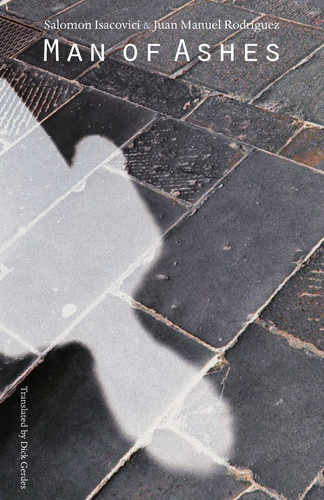
Man of ashes

Isacovici, Salomon
"A poignant, groundbreaking memoir that links the Holocaust and its aftermath to the safe haven that opened for camp survivors in Latin America at mid-century. The controversy surrounding the collaboration between Isacovici and Rodr guez remains an extraordinary opportunity to reflect on the thorny path of Jewish-Hispanic relations worldwide."-Ilan Stavans"Distinguished by geography as well as by its painful testimony. . . . Much of the memoir's early drama involves the creeping Nazi threat opposing Jews' wishful thinking-that the war might be ending and that 'it can't happen here.' . . . The author's family is shattered in Birkenau, but he survives Auschwitz with jobs peeling potatoes and mining coal at Jaworno, and he survives a gruesome death march as the Soviets advance. Isacovici is able to rejoin two brothers in a fruitless return to the family farm and to many European cities in search of a haven. He then joins the family of a woman with whom he has a serious romance, who end up with visas for Ecuador, where he feels an empathy for the suffering of the local Indians. . . . This account tells an unforgettable and unique story."-Kirkus ReviewsSalomon Isacovici died in 1998. Dick Gerdes is a professor of Spanish at George Mason University. Man of Ashes was first published in Mexico in 1990 as A7393: Hombre de cenizas and was awarded the Fernando Jeno Prize.
University of Nebraska Press 2002 244 pages

The straits of hell: the chronicle of a Salonikan Jew in the Nazi extermination camps Auschwitz, Mauthausen, Melk, Ebensee

Ha-Elion, Moshe
"The Jerusalem of the Balkans is today a city of ghosts. Saloniki or Salonika, as Thessaloniki was known its Jewish community, today barely numbers a thousand Jews whereas from 1500 to World War I the Jews constituted the majority of its inhabitants. Moshe Ha-Elyon and his extended family were part of the deportation from Salonika of some 45,000 Jews to Auschwitz where all but a handful were gassed, beaten, or starved to death during the spring of 1943 to the end of the war. This memoir differs from the many memoirs of Greek Jews. Moshe Ha- Elyon portrays the religious and cultural life of his ancestral community as well as the spiritual and mystical research of his father who predicted, prior to his death at the onset of the war, both the persecution of the Jews and the subsequent rise of a Jewish state in its aftermath. It is the moving story of a teenager who suffered in extremis yet lived to transmit to his family in Israel the legacy of a vanished era. A most informative and worthwhile insight into the inner world of Greek Jewry before and during its destruction during World War II"--
Bibliopolis 2005 120 pages