19 results for "Memoir"

Doppelganger: a trip into the mirror world

Klein, Naomi
"What if you woke up one morning and found you'd acquired another self--a double who was almost you and yet not you at all? What if that double shared many of your preoccupations but, in a twisted, upside-down way, furthered the very causes you'd devoted your life to fighting against? Not long ago, the celebrated activist and public intellectual Naomi Klein had just such an experience--she was confronted with a doppelganger whose views she found abhorrent but whose name and public persona were sufficiently similar to her own that many people got confused about who was who. Destabilized, she lost her bearings, until she began to understand the experience as one manifestation of a strangeness many of us have come to know but struggle to define: AI-generated text is blurring the line between genuine and spurious communication; New Age wellness entrepreneurs turned anti-vaxxers are scrambling familiar political allegiances of left and right; and liberal democracies are teetering on the edge of absurdist authoritarianism, even as the oceans rise. Under such conditions, reality itself seems to have become unmoored. Is there a cure for our moment of collective vertigo? Naomi Klein is one of our most trenchant and influential social critics, an essential analyst of what branding, austerity, and climate profiteering have done to our societies and souls. Here she turns her gaze inward to our psychic landscapes, and outward to the possibilities for building hope amid intersecting economic, medical, and political crises. With the assistance of Sigmund Freud, Jordan Peele, Alfred Hitchcock, and bell hooks, among other accomplices, Klein uses wry humor and a keen sense of the ridiculous to face the strange doubles that haunt us--and that have come to feel as intimate and proximate as a warped reflection in the mirror. Combining comic memoir with chilling reportage and cobweb-clearing analysis, Klein seeks to smash that mirror and chart a path beyond despair. Doppelganger asks: What do we neglect as we polish and perfect our digital reflections? Is it possible to dispose of our doubles and overcome the pathologies of a culture of multiplication? Can we create a politics of collective care and undertake a true reckoning with historical crimes? The result is a revelatory treatment of the way many of us think and feel now--and an intellectual adventure story for our times"--
Farrar, Straus and Giroux 2023-09-12 399 pages

Horse crazy: the story of a woman and a world in love with an animal

Nir, Sarah Maslin
"In the bestselling tradition of works by such authors as Susan Orlean and Mary Roach, a New York Times reporter and Pulitzer Prize finalist explores why so many people-including herself-are obsessed with horses. It may surprise you to learn that there are over seven million horses in America-even more than when they were the only means of transportation-and nearly two million horse owners. Acclaimed journalist and avid equestrian Sarah Maslin Nir is one of them; she began riding horses when she was just two years old and hasn't stopped since. Horse Crazy is a fascinating, funny, and moving love letter to these graceful animals and the people who-like her-are obsessed with them. It is also a coming-of-age story of Nir growing up an outsider within the world's most elite inner circles, and finding her true north in horses. Nir takes us into the lesser-known corners of the riding world and profiles some of its most captivating figures. We meet Monty Roberts, the California trainer whose prowess earned him the nickname "the man who listens to horses"; George and Ann Blair, the African-American husband and wife who run a riding academy for inner city youth on a tiny island in the middle of Manhattan's East River; and Francesca Kelly, a wealthy London socialite whose love for an Indian nobleman shaped her life's mission: to rescue an endangered Indian breed of horse and bring them-illegally-to America. Woven into these compelling character studies, Nir shares her own moving personal narrative. She details her father's harrowing tale of surviving the Holocaust, and describes an enchanted but deeply lonely upbringing in Manhattan, where horses became her family. She found them even in the middle of the city, in a stable disguised in an old townhouse and in Central Park, when she chased down truants as an auxiliary mounted patrol officer. And she speaks candidly of how horses have helped her overcome heartbreak and loss. Infused with heart and wit, and with each chapter named after a horse Nir has loved, Horse Crazy is an unforgettable blend of beautifully written memoir and first-rate reporting"--
Simon & Schuster 2020-08-04 292 pages

The gentrification of the mind: witness to a lost imagination

Schulman, Sarah
In this memoir of the AIDS years (1981-1996) in New York, CUNY Professor of English Sarah Schulman recalls how much of the queer culture, cheap rents, and virbrant downtown arts movement vanished almost overnight, replaced by gay conservative spokespeople and mainstream consumerism. Schulman takes us back to her Lower East Side and brings it to life, sharing vivid memories of her avant-garde queer friends and recreating the early years of the AIDS crisis as experienced by a political insider. Interweaving personal reminiscence with analysis, Schulman details her experience as a witness to the loss of a generation's imagination and the consequences of that loss.--From publisher description.
University of California Press 2013-09-02 179 pages

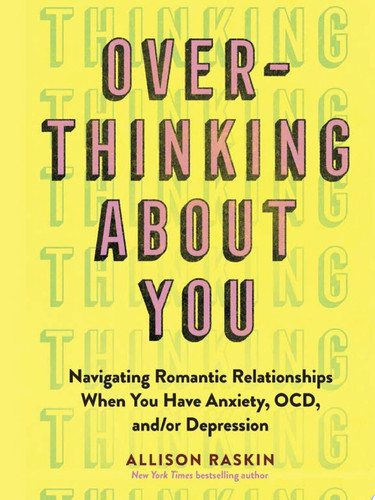
Overthinking about you: navigating romantic relationships when you have anxiety, OCD, and/or depression

Raskin, Allison
"Dating is hard-but when you live with anxiety, OCD, and/or depression, dating can feel like a minefield. At last, a book that focuses solely on mental health and dating-an intersection that demands attention, given that one in five Americans will experience a mental illness in a given year. Overthinking About You is a memoir-driven self-help book that explores the complex connection between brain and heart, for an engaging, useful, and relatable read for anyone whose mental health has gotten in the way of successful romantic relationships"--
Workman Publishing 2022-05-03 197 pages

Hourglass: time, memory, marriage

Shapiro, Dani
The New York Times bestselling author of Inheritance delivers her most intimate and powerful work: a piercing, life-affirming memoir about marriage and memory, sorrow and love. • "A beautiful book by a writer of rare talent.”— Cheryl Strayed, bestselling author of WILD Hourglass is an inquiry into how marriage is transformed by time—abraded, strengthened, shaped in miraculous and sometimes terrifying ways by accident and experience. With courage and relentless honesty, Dani Shapiro opens the door to her house, her marriage, and her heart, and invites us to witness her own marital reckoning—a reckoning in which she confronts both the life she dreamed of and the life she made, and struggles to reconcile the girl she was with the woman she has become. What are the forces that shape our most elemental bonds? How do we make lifelong commitments in the face of identities that are continuously shifting, and commit ourselves for all time when the self is so often in flux? What happens to love in the face of the unexpected, in the face of disappointment and compromise—how do we wrest beauty from imperfection, find grace in the ordinary, desire what we have rather than what we lack? Drawing on literature, poetry, philosophy, and theology, Shapiro writes gloriously of the joys and challenges of matrimonial life, in a luminous narrative that unfurls with urgent immediacy and sharp intelligence. Artful, intensely emotional work from one of our finest writers.
Anchor Books 2018-04-03 160 pages

What's luck got to do with it? the history, mathematics, and psychology behind the gambler's illusion

Mazur, Joseph
"Mazur's book treats luck in a fresh light. The philosophy and emotional aspects (along with a little mathematics) are all there. The reader who delves in will be lucky indeed." --Persi Diaconis, Stanford University "Blending math with memoir, probability with psychology, and heuristics with history, Mazur has written an essential book for anyone who wants to get a better idea of why we consistently bet against the odds. From the betting window to Wall Street, he offers insights into both the mechanics of chance and the enduring appeal that luck holds for those who wager every day, whether they call it gambling, speculation, or just hoping for the best. Engaging and illuminating, this is a guaranteed winner." --David G. Schwartz, director of the Center for Gaming Research at the University of Nevada, Las Vegas, and author of Roll the Bones: The History of Gambling "This is a fascinating book. It's a fresh, funny, philosophical look at gambling by a mathematician who knows what he's talking about, and who has quite obviously thought about gambling for a long time. Mazur isn't afraid to make provocative, opinionated statements. I have not seen a gambling book like this before. I think it will attract a lot of readers." --Paul J. Nahin, author of Digital Dice "This book is significant in that it offers a lively and diverse collection of gambling-related ideas. Mazur's robust blend of anecdotes, history, psychology, and mathematics differs from other attempts to discuss these ideas. He offers plenty of insights into the questions and issues he raises." --Edward Packel, author of The Mathematics of Games and Gambling
Princeton University Press 2010-06-06 277 pages

After the Holocaust: challenging the myth of silence

David Cesarani,Eric J. Sundquist
For the last decade scholars have been questioning the idea that the Holocaust was not talked about in any way until well into the 1970s. After the Holocaust: Challenging the Myth of Silence is the first collection of authoritative, original scholarship to expose a serious misreading of the past on which, controversially, the claims for a âe~Holocaust industryâe(tm) rest. Taking an international approach this bold new book exposes the myth and opens the way for a sweeping reassessment of Jewish life in the postwar era, a life lived in the pervasive, shared awareness that Jews had narrowly survived a catastrophe that had engulfed humanity as a whole but claimed two-thirds of their number. The chapters include: an overview of the efforts by survivor historians and memoir writers to inform the world of the catastrophe that had befallen the Jews of Europe an evaluation of the work of survivor-historians and memoir writers new light on the Jewish historical commissions and the Jewish documentation centres studies of David Boder, a Russian born psychologist who recorded searing interviews with survivors, and the work of philosophers, social thinkers and theologians theatrical productions by survivors and the first films on the theme made in Hollywood how the Holocaust had an impact on the everyday life of Jews in the USA and a discussion of the different types, and meanings, of âe~silenceâe(tm). ãee A breakthrough volume in the debate about the âe~Myth of Silenceâe(tm), this is a must for all students of Holocaust and genocide.
Routledge 2012 228 pages

Making genes, making waves: a social activist in science

Beckwith, Jonathan R.
A thoroughly engrossing memoir that recounts Beckwith's halting steps toward scientific triumphs--among them, the discovery of the genetic element that turns on genes--as well as his emergence as a world-class political activist, "Making Genes, Making Waves" is a compelling history of the major controversies in genetics during the last 30 years.
Harvard University Press 2002-10-15 242 pages

The end of the homosexual?

Altman, Dennis
In The End of the Homosexual? part memoir/part politicss; Dennis Altman connects what has happened within the changing queer world over the past forty years to larger social, political and cultural trends. This is a case study of both local and global change, yet one told from personal experience. Written engagingly, this timely new book explores the idea that major changes in the understanding of sexual and gender diversity reflect larger social and cultural shifts. For example, the internet has changed patterns of sexual behaviour as widely as did the contraceptive pill forty years ago. In both cases the changes were neither foreseen nor intended, and in both cases the impact of new technologies partly depended on political and ideological controls. Homosexuality has become a faultline for debates about western influence, and human rights. In this riveting and personally revealing work, Altman reflects on decades of cultural and political change and considers the future of sexuality: is this the end of the homosexual that gay liberationists predicted forty years ago?
University of Queensland Press 2013 246 pages

Clothes... and other things that matter

Shulman, Alexandra
Part memoir, part fashion history, part social commentary, Alexandra Shulman's Sunday Times bestseller explores the meaning of clothes and how we wear them, with a new preface on how recent world events have changed our relationship with clothes 'Warm, thought-provoking and honest.' - Victoria Hislop 'Clever, emotionally intelligent, reveling in style without making us yearn to shop.' - The Times 'Self-deprecating and stylish, this is sure to become a classic.' - Vanity Fair 'It's funny, honest and in typical Shulman style mixes high and low effortlessly. We don't know many people who can write about bras, Donald Tusk and Madeleine Albright all in the same sentence.' - A Little Bird 'Scintillating reading.' - The Spectator 'Alexandra Shulman's style is unaffected, immediate and hilariously dry. She's brilliant at observing everyday feelings in a joy-sparking turn of phrase.' - Helena Bonham Carter - ' Clothes... and other things that matter is a book not only about clothes but about the way we live our lives. From childhood onwards, the way we dress is a result of our personal history. In a mix of memoir, fashion history and social observation I am writing about the person our clothes allows us to be and sometimes the person they turn us into.' - Alexandra Shulman In Clothes... and other things that matter , Alexandra Shulman delves into her own life to look at the emotions, ambitions, expectations and meanings behind the way we dress. From the bra to the bikini, the trench coat to trainers, the slip dress to the suit, she explores their meaning in women's lives and how our wardrobes intersect with the larger world - the career ladder, motherhood, romance, sexual identity, ambition, failure, body image and celebrity. By turns funny, refreshingly self-deprecating and often very moving, this startlingly honest memoir from the ex-Editor of British Vogue will encourage women of all ages to consider what their own clothes mean to them, the life they live in them and the stories they tell.
Cassell 2021 357 pages

Driving to Detroit: memoirs of a fast woman

Hazleton, Lesley
Leaving her home in Seattle in mid-summer to drive 'the long way round' to the Detroit auto show, Lesley Hazleton embarks on a journey to visit the holy places for cars - where they are raced, displayed, crashed, tested and made - as she seeks to understand our deep fascination with automobiles. Her quest takes her on a road trip that teaches her not only about cars and the peculiar passions of car lovers but also about herself. Halfway through this extraordinary adventure, Hazleton's father, the man who taught her to drive, dies suddenly, and her trip becomes a journey of grief and memory.
Scribner 1999 310 pages

Aerograms across the ocean: a love story in letters

Biale, David,Biale, Rachel
"In August 1970, David Biale, a 21-year-old American Jewish student, arrived at Kibbutz Kfar Ruppin in Israel's Bet She'an Valley as a volunteer. There, he met Rachel Korati, nine days shy of her eighteenth birthday. They began an intense dialogue about how a secular Jew might be Jewish and what the role of Israel and kibbutz ought to be in modern Jewish life. They also found a common language in the counter-culture of the 1960s to which both were drawn. Upon David's return to university studies in Berkeley and Rachel's first steps into independent adulthood - living in a town near Tel Aviv and working as a youth movement counselor -- the two commenced a correspondence in which they continued their intellectual and ideological discussions from the summer, engaging Jewish sources on the one hand, and contemporary events on the other. Gradually, the letters became more intimate and so began an epistolary romance, which one might associate more with the nineteenth century and which would be inconceivable in today's world of texting and email. Over the next two years, the correspondence continued, often on a daily basis. Twice, David's plans to come to Israel were dashed. The two struggled to hold onto a relationship composed primarily of written words. In the fall of 1971, Rachel was drafted into the Israeli Army and David had his own brush with the American draft in the last phase of the Vietnam War. Aerograms Across the Ocean: A Love Story in Letters opens a rare window into the lives and thoughts of two passionate young people, trying to find their identities and life trajectories in the tumultuous early 1970s. By turns philosophical and playful, poetic and prosaic, idealistic and uncertain, pensive and erotic, this jointly-written memoir is a coming-of-age story in Israel after the Six Day War and in America in the shadow of the Vietnam War. The book is organized around the 258 letters the authors exchanged, a correspondence that takes readers back into a different age, half a century ago." --
Wildcat Books 2021-12-15 232 pages

Ballet class: an American history

Klapper, Melissa R.
Surveying the state of American ballet in a 1913 issue of Clure's Magazine, author Willa Cather reported that few girls expressed any interest in taking ballet class and that those who did were hard-pressed to find anything other than dingy studios and imperious teachers. One hundred years later, ballet is everywhere. Beginning with the arrival of Russian dancers like Anna Pavlova, who first toured the United States on the eve of World War I, 'Ballet Class: An American History' explores the growth of ballet from an ancillary part of nineteenth-century musical theater, opera, and vaudeville to the quintessential extracurricular activity it is today, pursued by countless children nationwide and an integral part of twentieth-century American childhood across borders of gender, class, race, and sexuality. 0A social history, 'Ballet Class' takes a new approach to the very popular subject of ballet and helps ground an art form often perceived to be elite in the experiences of regular, everyday people who spent time in barre-lined studios across the United States. Drawing on a wide variety of materials, including children's books, memoirs by professional dancers and choreographers, pedagogy manuals, and dance periodicals, in addition to archival collections and oral histories, this pathbreaking study provides a deeply-researched national perspective on the history and significance of recreational ballet class in the United States and its influence on many facets of children's lives, including gender norms, consumerism, body image, children's literature, extracurricular activities, and popular culture
Oxford University Press 2020 403 pages

Notes from the other side of night

Pilon, Juliana Geran
Notes from the Other Side of Night is a diary-memoir written upon Juliana Geran Pilon's return to her native Romania in 1975, which she had left along with her family when she was just fourteen. Poetically weaving together modern insight and realities with childhood perceptions, Pilon tells the haunting stories of her parents, grandparents, neighbors, and friends. Although the scenery of her native home had remained essentially unchanged since her childhood, Pilon recalls streets that are no more, homes and churches that have been demolished. Yet, the hills and forests, the flowers and mountains, the heat of old Bucharest, remained the same. The scenes and characters described in this book are simply unforgettable. Despite the many tragedies it describes--anti-semitism, political imprisonment, and judicial execution were ruthless realities under communism--Notes from the Other Side of Night is not a depressing book. Pilon writes with a detached melancholy about events and characters that illustrate Hannah Arendt's terrifying "banality of evil." But she remembers, as well, those few who managed to remain human beings until the end. Ultimately, hope triumphs in this memoir. This edition includes a new foreword, which discusses the initial writing and publication of this and previous editions.
Transaction Publishers 2014 148 pages

Shaping losses: cultural memory and the Holocaust

Julia Epstein,Lori Hope Lefkovitz
Shaping Losses explores how traumatic loss affects identity and how those who are shaped by loss give shape, in turn, to the empty place where something--relationships, family, culture--was and is no longer. Taking the example of the decimation of European Jewry during the Nazi era, Shaping Losses confronts the problem of transforming trauma into cultural memory. This eloquent volume examines how memoirs, films, photographs, art, and literature, as well as family conversations and personal remembrances, embody the impulse to preserve what is destroyed. The contributors -- all distinguished women scholars, most of them survivors or daughters of survivors--examine classic memorializations such as Claude Lanzmann's film Shoah and Roman Vishniac's photographs of prewar Jews as well as several less-well-known works. They also address ways in which children of survivors of the Holocaust--and of other catastrophic traumas--struggle with inherited or vicarious memory, striving to come to terms with losses that centrally define them although they experience them only indirectly. Shaping Losses considers the limitations of Holocaust representations and testimonies that capture shards of the experience but are necessarily selective and reductive. Contributors discuss artistic efforts to "preserve the rawness" of memory, to resist redemptive closure in Holocaust narratives and public memorials, and to prevent the Holocaust from being sealed in "the cold storage of history." The authors probe the nature of memory and of trauma, studying the use of language within and outside a traumatic context such as Auschwitz and pinpointing the qualities that make traumatic memory ineffable, untransmittable, and perhaps unreliable. Within the "haunted terrain of traumatized memory" that all Holocaust testimonies inhabit, the impulse to give form to emptiness--to shape loss--emerges as a necessary betrayal, a vital effort to bridge the gap between history and memory.
University of Illinois Press 2001 239 pages

70 ads to save the world: an illustrated memoir of social change

Mander, Jerry
""Why should advertising only serve the interests of those with money and power?" Since its inception, advertising has remained one of the most powerful commercial tools ever created. Advertising has deeply and thoroughly infiltrated the consumer psyche, shaping views on what to buy, find attractive, and deem valuable, for better or worse. 70 Ads to Save the World offers us a detailed, entertaining, and authoritative account regarding both the virtues and pitfalls of modern advertising through the personal journey of advertising specialist Jerry Mander. With the help of 70+ real-world ads, this illustrated memoir chronicles Mander's experiences in the world of commercial advertising, where he worked with some of the most talented and successful designers of his time and went on to establish two of the first non-profit ad agencies in the world. In 70 Ads, we learn how this service looked and felt in the latter half of the 20th century, and how it might look and feel in a future where we harness advertising to create a more just, regenerative, and creative society"--
Synergetic Press 2022 121 pages

Archive that, comrade! left legacies and the counter culture of remembrance

Cohen, Philip
Archive That, Comrade! explores issues of archival theory and practice that arise for any project aspiring to provide an open-access platform for political dialogue and democratic debate. It is informed by the author's experience of writing a memoir about his involvement in the London underground scene of the 1960s, the London street commune movement, and the occupation of 144 Piccadilly, an event that hit the world's headlines for ten days in July 1969. After a brief introduction that sets the contemporary scene of 'archive fever, ' the book considers what the political legacy of 1960s counter culture reveals about the process of commemoration. The argument then opens out to discuss the notion of historical legacy and its role in the 'dialectic of generations'. How far can the archive serve as a platform for dialogue and debate between different generations of activists in a culture that fetishises the evanescent present, practices a profound amnesia about its past, and forecloses the sociological imagination of an alternative future? The following section looks at the emergence of a complex apparatus of public fame and celebrity around the spectacle of dissidence and considers whether the Left has subverted or merely mirrored the dominant forms of reputation-making and public recognition. Can the Left establish its own autonomous model of commemoration? The final section takes up the challenge of outlining a model for the democratic archive as a revisionary project, creating a resource for building collective capacity to sustain struggles of long duration. A postscript examines how archival strategies of the alt-right have intervened at this juncture to elaborate a politics of false memory.
PM Press 2018 134 pages