35 results for "Memoir"

The heartbeat of Wounded Knee: native America from 1890 to the present

Treuer, David
The received idea of Native American history -- as promulgated by books like Dee Brown's 1970 mega-bestselling Bury My Heart at Wounded Knee -- has been that American Indian history essentially ended with the 1890 massacre at Wounded Knee. Not only did one hundred fifty Sioux die at the hands of the U.S. Cavalry, but Native civilization did as well. Growing up Ojibwe on a reservation in Minnesota, training as an anthropologist, and researching Native life past and present for his nonfiction and novels, David Treuer has uncovered a different narrative. Because they did not disappear -- and not despite but rather because of their intense struggles to preserve their language, their traditions, their families, and their very existence -- the story of American Indians since the end of the nineteenth century to the present is one of unprecedented resourcefulness and reinvention. Treuer melds history with reportage and memoir. Tracing the tribes' distinctive cultures from first contact, he explores how the depredations of each era spawned new modes of survival. The devastating seizures of land gave rise to increasingly sophisticated legal and political maneuvering that put the lie to the myth that Indians don't know or care about property. The forced assimilation of their children at government-run boarding schools incubated a unifying Native identity. Conscription in the U.S. military and the pull of urban life brought Indians into the mainstream and modern times, even as it steered the emerging shape of self-rule and spawned a new generation of resistance. The Heartbeat of Wounded Knee is the intimate story of a resilient people in a transformative era.
Riverhead Books 2019-11-05 512 pages

White like me

Wise, Tim J.
In White Like Me, Tim Wise offers a highly personal examination of the ways in which racial privilege shapes the lives of most white Americans, overtly racist or not, to the detriment of people of color, themselves, and society. The book shows the breadth and depth of the phenomenon within institutions such as education, employment, housing, criminal justice, and healthcare. By critically assessing the magnitude of racial privilege and its enormous costs, Wise provides a rich memoir that will inspire activists, educators, or anyone interested in understanding the way that race continues to shape the experiences of people in the U.S. Using stories instead of stale statistics, Wise weaves a narrative that is at once readable and scholarly, analytical and accessible.
Soft Skull Press 2005 155 pages

Bad indians: a tribal memoir

Miranda, Deborah A.
"If we allow the pieces of our culture to lie scattered in the dust of history, trampled on by racism and grief, then yes, we are irreparably damaged. But if we pick up the pieces and use them in new ways that honor their integrity, their colors, textures, stories, then we do those pieces justice, no matter how sharp they are, no matter how much handling them slices our fingers and makes us bleed." This book, part tribal history, part lyric and intimate memoir, teaches us about California Indian history, past and present. In it, the author tells stories of her Ohlone Costanoan Esselen family as well as the experience of California Indians as a whole through oral histories, newspaper clippings, anthropological recordings, personal reflections, and poems.
Heyday 2012 217 pages

Brazen: my unorthodox journey from long sleeves to lingerie

Haart, Julia
"A riveting, inspiring memoir of one woman's escape from an extremist religious sect and an extraordinary rise from housewife to shoe designer, to CEO and co-owner of the modeling agency Elite World Group. Ever since she was a child, every aspect of Julia Haart's life-what she wore, what she ate, what she thought-was controlled by the dictates of ultra-Orthodox Judaism. At nineteen, after a lifetime spent caring for her seven younger siblings, she was married off to a man she barely knew. For the next twenty-three years, he would rule her life. Eventually, when Haart's younger daughter, Miriam, started to question why she wasn't allowed to sing, run, or ride a bike, Haart reached a breaking point. She knew that if she didn't find a way to leave, her daughters would be forced into the same unending servitude that had imprisoned her. So Haart created a double life. In the ultra-Orthodox world, clothing has one purpose-to cover the body, head to toe-and giving any thought to one's appearance beyond that is considered sinful, an affront to God. But when no one was looking, Haart would pore over fashion magazines and sketch designs for the clothes she dreamed about wearing in the world beyond her Orthodox suburb. She started clandestinely selling life insurance in order to save her "freedom" money. At the age of forty-two, she finally mustered the courage to flee the fundamentalist life that was strangling her soul. Within a week of her escape, Haart founded a shoe brand, and within nine months, she was at Paris Fashion Week. Just a few years later, she was named creative director of La Perla, where she met the man who would become her husband, Silvio Scaglia. Soon she would become co-owner and CEO of Elite World Group, and one of the most powerful people in the fashion industry. Along the way, her four children-Batsheva, Shlomo, Miriam, and Aron-have not only accepted but embraced her transformation. Propulsive and unforgettable, Haart's story is the journey from a world of no to a world of yes, and an inspiration for women everywhere to find their freedom, their purpose, and their voice"--
Crown 2022-04-12 404 pages

The whisperers: private life in Stalin's Russia

Figes, Orlando
Drawing on a huge range of sources - letters, memoirs, conversations - Orlando Figes tells the story of how Russians tried to endure life under Stalin, brilliantly conveying the reality of their terrible choices. Soviet history has generally been seen either as a story of a political system or the story of its victims. The Whisperers is about Russians from across the whole range of experience under Stalin. Those who shaped the political system became, very frequently, its victims. Those who were its victims were frequently quite blameless. The Whisperers recreates the sort of maze in which Russians found themselves, where an unwitting wrong turn could either destroy a family or, perversely, later save it; a society in which everyone spoke in whispers- whether to protect themselves, their families, neighbours or friends - or to inform on them. This is Figes's masterpiece. It is both a gripping and emotional account of lives lived in impossible times and a remarkable example of the power and value of writing history.
Allen Lane 2007 739 pages

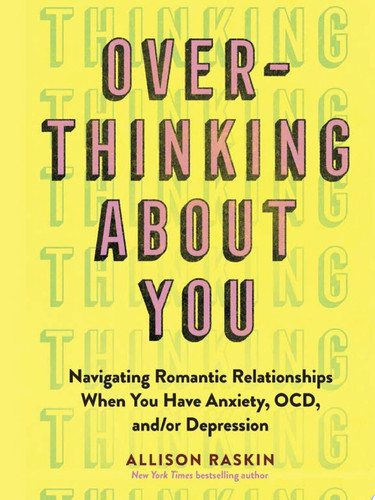
Overthinking about you: navigating romantic relationships when you have anxiety, OCD, and/or depression

Raskin, Allison
"Dating is hard-but when you live with anxiety, OCD, and/or depression, dating can feel like a minefield. At last, a book that focuses solely on mental health and dating-an intersection that demands attention, given that one in five Americans will experience a mental illness in a given year. Overthinking About You is a memoir-driven self-help book that explores the complex connection between brain and heart, for an engaging, useful, and relatable read for anyone whose mental health has gotten in the way of successful romantic relationships"--
Workman Publishing 2022-05-03 197 pages

Why the Germans do it better: notes from a grown-up country

Kampfner, John
Emerging from a collection of city states 150 years ago, no other country has had as turbulent a history as Germany or enjoyed so much prosperity in such a short time frame. Today, as much of the world succumbs to authoritarianism and democracy is undermined from its heart, Germany stands as a bulwark for decency and stability. Mixing personal journey and anecdote with compelling empirical evidence, this is a critical and entertaining exploration of the country many in the West still love to hate. Raising important questions for our post-Brexit landscape, Kampfner asks why, despite its faults, Germany has become a model for others to emulate, while Britain fails to tackle contemporary challenges. Part memoir, part history, part travelogue, Why the Germans Do It Better is a rich and witty portrait of an eternally fascinating country.
Atlantic Books 2021-06 315 pages

The Martin Duberman reader: the essential historical, biographical, and autobiographical writings

Duberman, Martin B.
For the past fifty years, prize-winning historian Martin Duberman’s groundbreaking writings have established him as one of our preeminent public intellectuals. Founder of the first graduate program in LGBT studies in the country, he is perhaps best known for his biographies of Paul Robeson, Lincoln Kirstein, and Howard Zinn—works that have been hailed as “magnificent” (USA Today), “enthralling” (The Washington Post), “splendid” and “definitive” (Studs Terkel, Chicago Sun-Times), and “refreshing and inspiring” (The New York Times). Duberman is also an equally gifted playwright and essayist, whose piercingly honest memoirs Cures and Midlife Queer have been called “witty and searingly candid” (Publishers Weekly), “wrenchingly eloquent” (Newsday), and “a moving chronicle” (The Nation). His writings have explored the shocking attempts by the medical establishment to “cure” homosexuality; Stonewall, before and after; the age of AIDS; the struggle for civil rights; the fight for economic and racial justice; and Duberman’s vision for reclaiming a radical queer past from the creeping centrism of the gay movement. The Martin Duberman Reader assembles the core of Duberman’s most important writings, offering a wonderfully comprehensive overview of our lives and times—and giving us a crucial touchstone for a new generation of activists, scholars, and readers.
The New Press 2013-05-07 374 pages

Inside the Stalin archives: discovering the new Russia

Brent, Jonathan
From the first publisher granted access to Stalin's personal archive, a provocative and insightful portrait of modern Russia—the most compelling since David Remnick's Lenin's Tomb. To most Americans, Russia remains as enigmatic today as it was during the Iron Curtain era. With the collapse of the Soviet Union, the country had an opportunity to face its tortured past. In Inside the Stalin Archives, Jonathan Brent asks, why didn't this happen? Why are the anti-Semitic Protocols of Zion sold openly in the lobby of the State Duma? Why are archivists under surveillance and phones still tapped? Why does Stalin, a man responsible for the deaths of millions of his own people, remain popular enough to appear on boxes of chocolate sold in Moscow's airport? Brent draws on fifteen years of unprecedented access to high-level Soviet Archives to answer these questions. He shows us a Russia where, in 1992, used toothbrushes were sold on the sidewalks, while now shops are filled with luxury goods and the streets are jammed with Mercedes. Stalin's specter hovers throughout, and in the book's crescendo Brent takes us deep into the dictator's personal papers to glimpse the dark heart of the new Russia. Both cultural history and personal memoir, Inside the Stalin Archives is a deeply felt and vivid portrait of Russia in the twenty-first century.
Atlas 2008 335 pages

Real estate: a living autobiography

Levy, Deborah
"Virginia Woolf wrote that in order to be a writer, a woman needs a room of one's own. Now, in [this book], acclaimed author Deborah Levy concludes her ground-breaking trilogy of living autobiographies with an exhilarating, boldly intimate meditation on home and the specters that haunt it. In this vibrant memoir, Levy employs her characteristic indelible writing, sharp wit, and acute insights to craft a searing examination of womanhood and ownership. Her inventory of possessions, real and imagined, pushes readers to question our cultural understanding of belonging and belongings and to consider the value of a woman's intellectual and personal life. Blending personal history, gender politics, philosophy, and literary theory, [this book] is a brilliant, compulsively readable narrative" --
Bloomsbury Publishing 2021-08-24 208 pages

The fear: the last days of Robert Mugabe

Godwin, Peter
In mid-2008, after thirty years of increasingly tyrannical rule, Robert Mugabe, the eighty-four-year-old ruler of Zimbabwe, met his politburo. He had just lost an election. But instead of conceding power, he was persuaded to launch a brutal campaign of terror to cower his citizens. Journalist and author Peter Godwin was one of the few observers to slip into the country and bear witness to the terrifying period that Zimbabweans call, simply, the Fear. Following on from his compelling and moving memoirs, Mukiwa and When a Crocodile Eats the Sun , this is a personal journey through the country Peter Godwin grew up in and knows so well – a landscape and a people, grotesquely altered, laid waste by a raging despot. At considerable risk, he travels widely to see the torture bases, the burned villages, the death squads, the opposition leaders in hiding, the last white farmers, the churchmen and the diplomats putting their own lives on the line to stop the carnage. Told with Godwin’s brilliant eye for character and natural story-telling gifts, this dark story of Africa’s corruption and violence is populated by extraordinary characters whose lives have been shaped by the Fear.
Picador 2010 353 pages

Children of the city: at work and at play

Nasaw, David
The turn of the century was a time of explosive growth for American cities, a time of nascent hopes and apparently limitless possibilities. In Children of the City, David Nasaw re-creates this period in our social history from the vantage point of the children who grew up then. Drawing on hundreds of memoirs, autobiographies, oral histories and unpublished—and until now unexamined—primary source materials from cities across the country, he provides us with a warm and eloquent portrait of these children, their families, their daily lives, their fears, and their dreams. Illustrated with 68 photographs from the period, many never before published, Children of the City offers a vibrant protrait of a time when our cities and our grandparents were young.
Oxford University Press 1986-05-22 244 pages

Diario de Oaxaca

Kuper, Peter
Painting a vivid, personal portrait of social and political upheaval in Oaxaca, Mexico, this unique memoir employs comics, bilingual essays, photos, and sketches to chronicle the events that unfolded around a teachers' strike and led to a seven-month siege. When award-winning cartoonist Peter Kuper and his wife and daughter moved to the beautiful, 15th-century colonial town of Oaxaca in 2006, they planned to spend a quiet year or two enjoying a different culture and taking a break from the U.S. political climate under the Bush administration. What they hadn't counted on was landing in the epicenter of Mexico's biggest political struggle in recent years. Timely and compelling, this extraordinary firsthand account presents a distinct artistic vision of Oaxacan life, from explorations of the beauty of the environment to graphic portrayals of the fight between strikers and government troops that left more than 20 people dead, including American journalist Brad Will.
PM Press 2009 208 pages

My mantelpiece: a memoir of survival and social justice

Goodman, Carolyn,Angelou, Maya
Carolyn Goodmans life was punctuated by tragedy, including a brothers premature death, childhood molestation, a fathers suicide, and a sons infamous murder. But hers is foremost a tale of survival, of turning personal anguish into social conscience. When her twenty-year-old son, Andy, was one of three civil rights volunteers to disappear in Mississippi in the summer of 1964, the story galvanized the nation. A half century after the Mississippi murders, this is the first time that a victims family member has expounded about the experience and the myriad emotions--from guilt to resolve--that it spawned. More than simply a memoir, My Mantelpiece is the story of a centurys seminal progressive movements seen through the lens of a remarkable womans singular journey. **Along with a foreword by National Book Award-winner Maya Angelou, MY MANTELPIECE includes back-cover testimonials from Senator Elizabeth Warren, Congressman John Lewis, former New York City mayor Michael Bloomberg, and performer-activist Harry Belafonte.
Why Not Books 2014 200 pages

Gang nation: delinquent citizens in Puerto Rican, Chicano, and Chicana narratives

Brown, Monica
Explores how Latino gang culture mirrors the most destructive aspects of the American Dream through a look at novels and memoirs "There's a place for us / Somewhere a place for us." With the emergence of a rich body of literature chronicling the experiences of Latino and Latina gang members, popular understanding of this outlaw culture has advanced far beyond West Side Story. However, the diverse works discussed in this important book--ranging from the breakthrough 1967 memoir Down These Mean Streets and the crime novel Carlito's Way to the play Zoot Suit and the World War II-era historical novel Don't Spit on My Corner, to more recent works such as Always Running/La Vida Loca: Gang Days in L.A. and Chicana gang narratives like Locas and Two Badges--all share with the award-winning musical a crucial discourse on nationality, citizenship, and belonging. In Gang Nation, Monica Brown offers a sophisticated analysis of these narratives produced by former gang members and by "outside" observers writing within the Latino community. She examines the ubiquity of language and behavior within this literature that reveal the frustrated longings within gangs for greater participation in America's national culture and the desire of members to craft an alternative environment in which they are welcome. Through literature and memoirs written from within the culture, Brown illustrates how these youth mimic the rhetoric and rituals of American nationalism's most destructive aspects--intense territoriality, justification of violence, and cultural chauvinism--to assert their citizenship in an alternative nation. Before now, studies of gang culture have centered on either the choices of individual members or the social forces that inspire their unfocused rage. But through Latino and Chicano gang literature, Brown provides a more nuanced portrait of that culture, one that raises broader concerns about dominant nationalism, civil rights, the criminalization of urban youth of color, and the often unfulfilled sense of communal identity and acceptance among American youth.
University of Minnesota Press 2002 212 pages