8 results for "Mental Health"

Getting Past the Pain Between Us Healing and Reconciliation Without Compromise

Marshall B. Rosenberg
In this important and insightful work, Marshall B. Rosenberg, PhD, demonstrates the powerful healing potential of the Nonviolent Communication (NVC) process. You can transform emotional pain, depression, shame, and conflict into empowering connections. Rosenberg shares that behind all emotional pain are unmet needs. He provides simple steps to create the heartfelt presence necessary for healing to occur. Learn how to transform your relationships, find satisfying reconciliation, and move beyond pain to a place of clear, honest communication. Through role-play dialogues and every-day examples, Rosenberg demonstrates the keys to healing pain and conflict without compromise. The healing power of NVC provides practical and effective tools for individuals, mental health practitioners, mediators, families and couples.
PuddleDancer Press 2004-09 48 pages

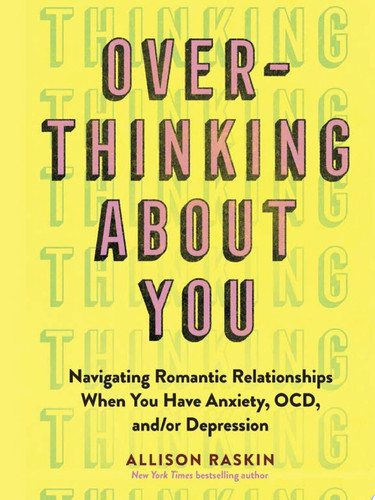
Overthinking about you: navigating romantic relationships when you have anxiety, OCD, and/or depression

Raskin, Allison
"Dating is hard-but when you live with anxiety, OCD, and/or depression, dating can feel like a minefield. At last, a book that focuses solely on mental health and dating-an intersection that demands attention, given that one in five Americans will experience a mental illness in a given year. Overthinking About You is a memoir-driven self-help book that explores the complex connection between brain and heart, for an engaging, useful, and relatable read for anyone whose mental health has gotten in the way of successful romantic relationships"--
Workman Publishing 2022-05-03 197 pages

Moments of Engagement Intimate Psychotherapy in a Technological Age

Peter D. Kramer
Through fascinating case histories and revealing encounters with patients, Dr. Peter Kramer, author of the international bestseller Listening to Prozac , provides a compassionate, immensely eloquent view of how psychiatry really works. Dr. Kramer was recently asked to guest host The Infinite Mind , a weekly public radio show focusing on the art and science of the human mind and spirit, behavior, and mental health. Listen to the show now.
Penguin 1994-05-01 272 pages

Crazy Hope and Finite Experience Final Essays of Paul Goodman

Paul Goodman
From the publication of Growing Up Absurd in 1960 until his death in 1972, Paul Goodman had the ear of the young radicals of the New Left, pouring forth books and articles on education, technology, decentralization, and of course, the war in Vietnam. Yet Goodman saw himself primarily as an artist rather than a political thinker or sociologist, and many of his books, even during the 1960s, were works of poetry, drama, and fiction. He had also practiced as a psychotherapist and joined with Frederick Perls and Ralph Hefferline in producing a new synthesis in psychological thought, Gestalt therapy, which has since become an international movement. In an age of specialization, few writers have taken on so broad a range of concerns. Crazy Hope and Finite Experience is a final summing up of the thought and life of this self-described "old-fashioned man of letters." This book brings together for the first time five personal essays, all written near the end of his life, in which Goodman discusses his sense of the world and how he was "in" it, his politics, his spiritual and religious attitude, his sexuality, and his calling as a literary artist. For those already familiar with one or another aspect of his work, Goodman's self-assessment will provide new insight into the credo that underlies his whole career. For those learning about him for the first time, it offers a vivid sense of the man and his perspective. And for psychotherapists - especially Gestalt therapists - the book will fill in the picture of Goodman as a theorist whose work was crucial to the development of a new approach to therapy.
Jossey-Bass 1994 144 pages

Personal Reconstruction A Psychological, Spiritual, Financial and Legal Course in the Art of Preventing Personal Crises, and Recovering from Them

Peter Tarlow,Nathaniel Tarlow,Thomas Marrs
A guide for dealing with personal crises, either for self-help or as an accompanying book for a course, teaching methods for averting personal crises and for recovering from the ones experienced. It covers the four main areas of life that are the foundation for happiness: mental health, spiritual balance, personal finances, and lawful-ethical behavior. Although this book's audience can include anyone, it is focused on common issues for four main categories of people: adolescents, those afoul of the law, midlifers, and the elderly. Each lesson in the book includes exercises and worksheets to help the reader in several ways: Identify personal risks that can turn into crises, Assess the likely causes of an existing crisis, Formulate strategies for avoiding and managing crises, and Create an action plan for recovering from an ongoing crisis. These are imparted by four accomplished experts in their fields who give you actionable insights for achieving happiness: Dr. Peter Tarlow, a world-renowned speaker and columnist writing about philosophy and religion, discusses spirituality; Dr. Tom Marrs, a licensed psychologist and behaviorist, shows you what you can do to attain and maintain good mental health; Dr. Eduardo Leite, a management and finances expert, helps you establish essential personal finances; and Nathaniel Tarlow, a successful civil and criminal defense attorney, explains how society and laws affect you before and after a personal crisis. By the end of Personal Reconstruction, the reader have a good understanding of the psychological, spiritual, financial and legal factors that affect happiness. The reader will also know which actions to take before suffering a crisis, and will have tools and strategies for recovery that can be applied after experiencing a personal crisis that is not averted .
Quest Publishing 2018-01-25 198 pages

The Foundations of Personality

MYERSON. MYERSON,Myerson Abraham
Unlike some other reproductions of classic texts (1) We have not used OCR(Optical Character Recognition), as this leads to bad quality books with introduced typos. (2) In books where there are images such as portraits, maps, sketches etc We have endeavoured to keep the quality of these images, so they represent accurately the original artefact. Although occasionally there may be certain imperfections with these old texts, we feel they deserve to be made available for future generations to enjoy.
HARDPRESS Limited 2016-06-21 370 pages