18 results for "Neuroscience"

The brain: the story of you

Eagleman, David
"The dramatic story of the brain's role in creating our world, our experience of it, and ourselves; the basis for a PBS television series by the bestselling David Eagleman. How does a three pound mass of biological matter locked in the dark, silent fortress of the skull produce the extraordinary multi-sensory experience that comprises us, while also constructing reality and guiding us through the endless need to make decisions and determine our judgments and into a future that we are convinced we are shaping? David Eagleman compares the brain to a cityscape with different neighborhoods where neural networks vie for supremacy and determine our behavior in ways we are not always aware or in control of. At the same time, he suggests that the brain works as a storyteller--creating a narrative that allows us to navigate and make sense of a world that it is busy constructing for us"--
Vintage Books 2017-03-07 246 pages

The future of the brain: the promise and perils of tomorrow's neuroscience

Rose, Steven P. R.
Brain repair, smart pills, mind-reading machines--modern neuroscience promises to soon deliver a remarkable array of wonders as well as profound insight into the nature of the brain. But these exciting new breakthroughs, warns Steven Rose, will also raise troubling questions about what it means to be human. In The Future of the Brain, Rose explores just how far neuroscience may help us understand the human brain--including consciousness--and to what extent cutting edge technologies should have the power to mend or manipulate the mind. Rose first offers a panoramic look at what we now know about the brain, from its three-billion-year evolution, to its astonishingly rapid development in the embryo, to the miraculous process of infant development. More important, he shows what all this science can--and cannot--tell us about the human condition. He examines questions that still baffle scientists and he explores the potential threats and promises of new technologies and their ethical, legal, and social implications, wondering how far we should go in eliminating unwanted behavior or enhancing desired characteristics, focusing on the new "brain steroids" and on the use of Ritalin to control young children. The Future of the Brain is a remarkable look at what the brain sciences are telling us about who we are and where we came from--and where we may be headed in years to come.
Oxford University Press 2006 344 pages

In search of memory: the emergence of a new science of mind

Kandel, Eric R.
Nobelist Eric Kandel's account of how his personal quest to understand memory intersected with the emergence of a new science. In Search of Memory relates the astonishing story of how four different and distinct disciplinesbehaviorist psychology, cognitive psychology, neuroscience, and molecular biologyconverged into a powerful new science of mind. Through its profound insights into thought, perception, action, recollection, and mental illness, this new science is revolutionizing our understanding of learning and memory while simultaneously showing great promise for more effective healing. The narrative follows Eric R. Kandel through the last five decades, focusing on Vienna, where he became fascinated with memory. With intrepid scientific ardor, Kandel was captivated first by history and psychoanalysis, then by neurobiology, and finally by the biological processes of memory. His resulting, multifaceted perspective was the foundation for his path-breaking research that will continue to dominate modern thoughtnot only in science but in culture at large. 50 illustrations.
W. W. Norton & Company 2006 510 pages

The hard problem

Stoppard, Tom
"Hilary, a young psychology researcher at the Krohl Institute for Brain Science, is nursing a private sorrow and a troubling question. She and other researchers at the institute are grappling with what science calls the 'hard problem'--if there is nothing but matter, what is consciousness? What Hilary discovers puts her fundamentally at odds with her colleagues, who include her first mentor and onetime lover, Spike; her boss, Leo; and the billionaire founder of the institute, Jerry. Hilary needs a miracle, and she is prepared to pray for one."--Back cover.
Grove Press 2015 76 pages

Can neuroscience change our minds?

Rose, Hilary,Rose, Steven P. R.
"Neuroscience, with its astounding new technologies, is uncovering the workings of the brain and with this perhaps the mind. The 'neuro' prefix spills out into every area of life, from neuroaesthetics to neuroeconomics, neurogastronomy and neuroeducation. With its promise to cure physical and social ills, government sees neuroscience as a tool to increase the 'mental capital' of the children of the deprived and workless. It sets aside intensifying poverty and inequality, instead claiming that basing children's rearing and education on brain science will transform both the child's and the nation's health and wealth. Leading critic of such neuropretensions, neuroscientist Steven Rose and sociologist of science Hilary Rose take a sceptical look at these claims and the science underlying them, sifting out the sensible from the snake oil. Examining the ways in which science is shaped by and shapes the political economy of neoliberalism, they argue that neuroscience on its own is not able to bear the weight of these hopes. "--Publisher's website
Polity Press 2016 170 pages

You and me: the neuroscience of identity

Greenfield, Susan
"What is it that makes you distinct from me? Identity is a term much used but hard to define. For that very reason, it has long been a topic of fascination for philosophers but has been regarded with aversion by neuroscientists - until now. Susan Greenfield takes us on a journey in search of a biological interpretion of this most elusive of concepts, guiding us through the social and psychiatric perspectives and ultimately into the heart of the physical brain. As the brain adapts exquisitely to environment, do cultural challenges of the 21st century mean that we are facing unprecedented changes to identity itself?"--Back cover.
Notting Hill Editions 2011 145 pages

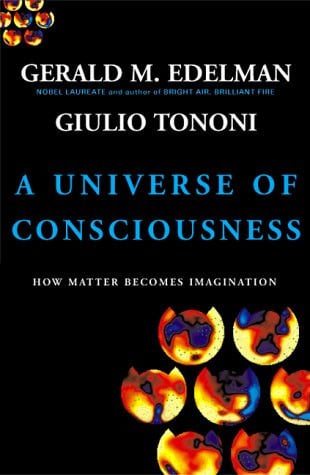
A universe of consciousness: how matter becomes imagination

Edelman, Gerald Maurice
In A Universe of Consciousness, Gerald Edelman builds on the radical ideas he introduced in his monumental trilogy-Neural Darwinism, Topobiology, and The Remembered Present-to present for the first time an empirically supported full-scale theory of consciousness. He and the neurobiolgist Giulio Tononi show how they use ingenious technology to detect the most minute brain currents and to identify the specific brain waves that correlate with particular conscious experiences. The results of this pioneering work challenge the conventional wisdom about consciousness.
Basic Books 2000 274 pages

The social neuroscience of empathy

Jean Decety
In recent decades, empathy research has blossomed into a vibrant and multidisciplinary field of study. The social neuroscience approach to the subject is premised on the idea that studying empathy at multiple levels (biological, cognitive, and social) will lead to a more comprehensive understanding of how other people's thoughts and feelings can affect our own thoughts, feelings, and behavior. In these cutting-edge contributions, leading advocates of the multilevel approach view empathy from the perspectives of social, cognitive, developmental, and clinical psychology and cognitive/affective neuroscience. Chapters include a critical examination of the various definitions of the empathy construct; surveys of major research traditions based on these differing views (including empathy as emotional contagion, as the projection of one's own thoughts and feelings, and as a fundamental aspect of social development); clinical and applied perspectives, including psychotherapy and the study of empathy for other people's pain; various neuroscience perspectives; and discussions of empathy's evolutionary and neuroanatomical histories, with a special focus on neuroanatomical continuities and differences across the phylogenetic spectrum. The new discipline of social neuroscience bridges disciplines and levels of analysis. In this volume, the contributors' state-of-the-art investigations of empathy from a social neuroscience perspective vividly illustrate the potential benefits of such cross-disciplinary integration. Contributors : C. Daniel Batson, R. J. R. Blair, Karina S. Blair, Jerold D. Bozarth, Ann Buysse, Susan F. Butler, Michael Carlin, C. Sue Carter, Kenneth D. Craig, Mirella Dapretto, Jean Decety, Mathias Dekeyser, Ap Dijksterhuis, Robert Elliott, Natalie D. Eggum, Nancy Eisenberg, Norma Deitch Feshbach, Seymour Feshbach, Liesbet Goubert, Leslie S. Greenberg, Elaine Hatfield, James Harris, William Ickes, Claus Lamm, Yen-Chi Le, Mia Leijssen, Raymond S. Nickerson, Jennifer H. Pfeifer, Stephen W. Porges, Richard L. Rapson, Simone G. Shamay-Tsoory, Rick B. van Baaren, Matthijs L. van Leeuwen, Andries van der Leij, Jeanne C. Watson Social Neuroscience series
MIT Press 2009 255 pages

Second nature: brain science and human knowledge

Edelman, Gerald M.
Burgeoning advancements in brain science are opening up new perspectives on how we acquire knowledge. Indeed, it is now possible to explore consciousness the very center of human concern by scientific means. In this illuminating book, Dr. Gerald M. Edelman offers a new theory of knowledge based on striking scientific findings about how the brain works. And he addresses the related compelling question: Does the latest research imply that all knowledge can be reduced to scientific description? Edelman s brain-based approach to knowledge has rich implications for our understanding of creativity, of the normal and abnormal functioning of the brain, and of the connections among the different ways we have of knowing. While the gulf between science and the humanities and their respective views of the world has seemed enormous in the past, the author shows that their differences can be dissolved by considering their origins in brain functions. He foresees a day when brain-based devices will be conscious, and he reflects on this and other fascinating ideas about how we come to know the world and ourselves.
Yale University Press 2006-10-24 203 pages

Scientists making a difference: one hundred eminent behavioral and brain scientists talk about their most important contributions

Robert J. Sternberg,Susan T. Fiske,Donald J. Foss
Scientists Making a Difference is a fascinating collection of first-person narratives from the top psychological scientists of the modern era. These readable essays highlight the most important contributions to theory and research in psychological science, show how the greatest psychological scientists formulate and think about their work, and illustrate how their ideas develop over time. In particular, the authors address what they consider their most important scientific contribution, how they got the idea, how the idea matters for the world beyond academic psychology, and what they would like to see as the next steps in research. The contributors, who were chosen from an objectively compiled list of the most eminent psychological scientists, provide a broad range of insightful perspectives. This book is essential reading for students, researchers and professionals interested in learning about the development of the biggest ideas in modern psychological science, described firsthand by the scientists themselves.
Cambridge University Press 2016-08-15 512 pages

Twentieth century neurology: the British contribution

Frank Clifford Rose
Neuroscience is one of the scientific fields where progress in the 20th century has been spectacular. With the coming of the new millennium, it is appropriate to look at some of the advances and the neurologists who helped to produce them. The original contributions in this volume reflect the background against which the rapid advances have taken place in the past 100 years.
Imperial College Press 2001 313 pages