19 results for "Novel"

Motherhood A Novel

Sheila Heti
From the author of How Should a Person Be? (“one of the most talked-about books of the year”— Time Magazine ) and the New York Times Bestseller Women in Clothes comes a daring novel about whether to have children. In Motherhood, Sheila Heti asks what is gained and what is lost when a woman becomes a mother, treating the most consequential decision of early adulthood with the candor, originality, and humor that have won Heti international acclaim and made How Should A Person Be? required reading for a generation. In her late thirties, when her friends are asking when they will become mothers, the narrator of Heti’s intimate and urgent novel considers whether she will do so at all. In a narrative spanning several years, casting among the influence of her peers, partner, and her duties to her forbearers, she struggles to make a wise and moral choice. After seeking guidance from philosophy, her body, mysticism, and chance, she discovers her answer much closer to home. Motherhood is a courageous, keenly felt, and starkly original novel that will surely spark lively conversations about womanhood, parenthood, and about how—and for whom—to live.
Henry Holt and Company 2019-05-07 304 pages

Crash

Cronenberg, David
'Crash' was awarded the Special Jury Prize at the 1996 Cannes Film Festival for its audacity, daring and originality. Based on J.G. Ballard's novel, the film is a complex work in which Cronenberg depicts, with shocking beauty, a world in which humans align their minds, bodies and sexuality to the technology of cars. Set in a bleak, passionless world of multi-lane freeways, Crash presents the story of James Ballard and his wife Catherine, whose search for authentic experience leads them into a relationship with a renegade scientist who seeks sexual release by crashing into cars on the freeway. In translating the world of J.G Ballard's 'Crash' into the language of the screen, Cronenberg has fashioned a script which is rigorous and taut, but suffused with emotional intensity and a deep feeling for human fraility and decay.
Faber 1996 65 pages

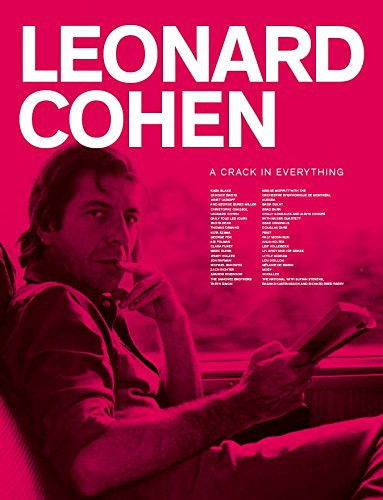
Leonard Cohen: a crack in everything

Victor Shiffman,Sylvie Simmons,Chantal Ringuet,John Zeppetelli
The world-renowned novelist, poet and singer/songwriter inspired generations of writers, musicians and artists. For decades, Leonard Cohen tenaciously supplied the world with melancholy but urgent observations on the state of the human heart. With equal parts gravitas and grace, he teased out a startlingly inventive and singular language, depicting both an exalted spirituality and an earthly sexuality. His interweaving of the sacred and the profane, of mystery and accessibility, was such a compelling combination it became seared into memory. Situated between monograph and devotional exercise, this visually striking publication documents a unique exhibition and pays homage to a global star's enormous cultural achievements. Visual artists, filmmakers, performers and musicians from around the world revisit Cohen's words, songs, and biography with new perspectives. Cohen himself makes an appearance as a visual artist with a projection of his many self-portraits. Co-curators John Zeppetelli and Victor Shiffman discuss the two years that went into bringing the ambitious event to fruition, from its original conception as a celebration to its final form of a tribute suffused in elegy. Cohen biographer Sylvie Simmons reviews Cohen's career from early promise to unexpected paths, through set-backs, and onto its astounding culmination. Chantal Ringuet draws upon specific moments in Cohen's life from early childhood to his last writings where he seems to be reciting his own Kaddish, the Jewish prayer for the dead. Also featured are artist statements from each of the 40 participants.
Musée d'art contemporain 2018 160 pages

The man who forgot how to read

Engel, Howard
"One hot midsummer morning, crime novelist Howard Engel picked up his newspaper from his front step and discovered he could no longer read it. The letters had mysteriously jumbled themselves into something that looked like Cyrillic one moment and Korean the next. While he slept, Engel had experienced a stroke and now suffered from a rare condition called alexia sine agraphia, meaning that while he could still write, he could no longer read"--Jacket flap.
HarperCollins 2007-08-14 157 pages

In a land without dogs the cats learn to bark

Garfinkel, Jonathan
"In 1975, Gary Ruckler attends classes at Moscow State University as part of the first American Fulbright program in the USSR. Here he befriends Anna, her boyfriend Zaza, and their enigmatic friend Aslan. When Aslan mysteriously disappears into the mountains of Kazbegi, Georgia, Gary is swept up in events beyond his understanding and control. Fifteen years later, Tamar and Giorgi struggle through the "lost" decade of the 1990s in Tbilisi. Through three civil wars, a refugee crisis, and near-total societal collapse, the pair come of age in the underground arts scene. Then Tamar meets Rachel Grabinsky, head of an international pro-democracy NGO, who changes her life forever. In Toronto, 2003, Tamar and Rachel's son Joseph uncover astonishing truths about a woman they thought they knew. Who was Rachel Grabinsky? What was she really doing in Georgia? And how was she connected to Gary Ruckler? Part political mystery and part family drama, In a Land Without Dogs the Cats Learn to Bark is an energetic, gritty, and darkly funny novel that unfolds across multiple generations and explores the fractured nature of identity, the necessity of lies, and the bloody legacy of the Soviet Empire."--
Anansi 2023 413 pages

Last impressions

Kertes, Joseph
"Zoltan Beck is dying. His devoted but long-suffering sons, Ben and Frank, are trying to prepare themselves and their families for Zoltan's eventual departure...but they can't quite bring themselves to believe that the end is really at hand, and neither can Zoltan himself. The head of a family marked by war and tragedy for decades, he "can't stand to be in a room with a miserable person" and has done his best to keep the pain of his refugee past from his beloved children. But as he faces the end of his life, he discovers a heartbreaking secret from the War that will ultimately bring the family together - or irrevocably disrupt it. Set in both mid-20th century Hungary and contemporary Toronto, this is a deeply moving novel that revels in the energy of its extraordinary characters. It is the story of lost love and newfound connections, of a father and his sons desperately reaching out to bridge an ever-widening gap...even as their time together ebbs away."--Provided by publisher.
Penguin Canada 2020-03-03 299 pages

Girl unwrapped

Goliger, Gabriella
Girl Unwrapped is a girl's coming-of-age story set in 1960s Montreal about the burdens and blessings of history, the divided self, and the quest to be whole. Toni Goldblatt's awakening to taboo desire conflicts with her Holocaust-scarred parents' expectations. Yearning to reinvent herself, she flees to Israel in the wake of the 1967 war, but the Zionist dream doesn't save her; only on her return, when she discovers kindred spirits in the underground lesbian bar scene, does Toni begin to find her own path. Girl Unwrapped is a novel about love, isolation, and the search for personal truth despite the stranglehold of family.
Arsenal Pulp Press 2011 335 pages

Saul Bellow: "I was a Jew and an American and a writer"

Sorin, Gerald
"Born in 1915 to Russian Jewish immigrants, Saul Bellow was raised in the small town - "a medieval" shtetl he called it - of Lachine, Quebec, and then in a predominantly Jewish section of Montreal until the age of nine. He had a trilingual childhood which included Yiddish as well as English and French. In an insightful new look at Bellow's life and career, Gerald Sorin argues that Bellow's immersion in Yiddish and childhood memories of the vibrant Jewish life on Montreal's Napoleon and Dominique streets continued to echo in his adult inner ear and permeated almost all of his writing. Much of Bellow's creative power, including the dynamic, comic, and lusty language that became his literary signature, was shaped and informed by the fact that he was Jewish"--
Indiana University Press 2024 583 pages

Control freaked

Breslin, Mark
This book defies categorization. It is an auto-biographical novel, a book about how to have fun, a cautionary tale for the sexually and socially inhibited. It is a political treatise on how to combat puritanism, a philosophical tract on the importance of humour to the human soul, a buyers' guide to outstanding porno tapes and a business book for the entertainment industry. It is the life of Mark Breslin. Beginning as the enfant terrible of Canadian comedy, Mark Breslin rose up and built an empire: the Yuk Yuk's chain of comedy clubs. He pulled Jim Carrey out of open-mic obscurity, gave dozens of other comics their big breaks and made an astounding contribution to the widely held belief that Canadians are the funniest people in the world. Along the way he learned how far some people will go for money, or for a dream; how truly puritanical North American society remains in this supposedly progressive age; how as you move closer to the top, the only thing you really get is a better view of the men pulling the strings. Written in the sort of irreverent, confessional prose style that will keep the Yuk Yuk's lawyers awake at night, Control Freaked takes us on a hilarious and shocking journey into the dark corners of the entertainment industry.
Insomniac Press 2000 227 pages

This Is My Country, What's Yours? A Literary Atlas of Canada

Noah Richler
Winner of the 2007 B.C. Award for Canadian Non-fiction A Globe and Mail Best 100 Book (2006) National Post Best Books (2006) A bold cultural portrait of contemporary Canada through the work of its most celebrated novelists, short story writers, and storytellers. Stories are the surest way to know a place, and at a time when the fabric of the country seems daily more uncertain, Noah Richler looks to our authors for evidence of the true nature of Canada. He argues why fiction matters and seeks to discover — in the extra-ordinary diversity of communities these writers represent — what stories, if any, bind us as a nation. Over two years, Richler has criss-crossed the country and interviewed close to one hundred authors — a who’s who of Canadian literature, including Wayne Johnston, Michael Crummey, Alistair MacLeod, Gil Courtemanche, Jane Urquhart, Joseph Boyden, Miriam Toews, Yann Martel, Fred Stenson, Douglas Coupland, and Rohinton Mistry — about the places and ideas that are most meaningful to their work. The result is a journey through the reality of Canada and its imagination at a critical point in the country’s evolution. Within thematic chapters he exposes our “Myths of Disappointment” and considers the stories of our native peoples, the rise of the city, and how our history as a colony shapes our society and politics even today. This Is My Country, What's Yours? is an impassioned literary travelogue and a vivid portrayal of our society, the work of Canadian authors, and the idea of writing itself. This Is My Country, What's Yours? is based on Noah Richler’s ten-part documentary of the same name originally broadcast on CBC Radio’s flagship Ideas program in spring 2005.
McClelland & Stewart 2007-05-29 496 pages

The fiddler is a good woman: a novel

Berner, Geoff
A biography that doesn’t quite exist, about a violinist who can’t be found, as told by people who don’t agree on much. Novelist Geoff Berner has been tasked with writing a biography of DD, a mysterious, charismatic, chimerical musician who has, it seems, dropped off the face of the earth. In the course of his search for DD, Berner interviews her friends, ex-bandmates, ex-lovers, and others. They paint such variable portraits of her that each successive attempt to describe her casts doubt on the previous testimony. As his project is taken over by the lively, infuriating, entertaining tales, a wounded, gifted, and complex DD starts to emerge from all the eyewitness accounts and swear-to-God true stories. Who is DD? Where did she go? And why didn’t that book get written? Travel through a world of knockabout musicians and chancers, on the trail of an inimitable artist who truly lives in the moment, for better or worse.
Dundurn 2017-11-07 227 pages

The thrilling life of Pauline de Lammermoor

Ravel, Edeet
Nearly 14, Pauline has discovered that her life is far more interesting if she records it as a great work of fiction -- featuring, of course, herself as the tragic heroine. Pauline's hand-wringing accounts of misbehaving boyfriends, backstabbing friends, and general angst are intermingled with more serious issues like her parents' divorce and her beloved teacher's loss of a best friend to AIDS. Laced with the pop-culture references young readers love, Pauline's "novel" reveals the realities of today's teenage life.
Raincoast Books 2007 212 pages

The Acrobats

Mordecai Richler
Living in a rat-infested hotel in Franco’s post-war Spain, André Bennett, a Canadian painter, loves Toni, his girl friend, who wants him to return home. Roger Kraus, a Nazi on the run, shadows the young artist day and night. They meet on a bridge during the last night of the fiesta, and as the sky is shredded by exploding fireworks, the story draws to its violent climax. Originally published in 1954, The Acrobats marks Mordecai Richler’s stunning debut as a novelist.
McClelland & Stewart 2016-10-11 224 pages

Champagne barn

Levine, Norman
Product description INCLUDES 23 STORIES WRITTEN BETWEEN 1954 AND 1984. HIGHLY AUTOBIOGRAPHICAL, THE STORIES ARE ALL ABOUT A MAN IN VARIOUS STAGES OF LIFE FROM BOYHOOD TO TH E RCAF IN WORLD WAR 2, RAISING A FAMILY OF DAUGHTERS IN ENGLAND, TO BECOMING A SUCCESSFUL WRITER. THE CHRONOLOGICAL ARRANGEMENT OF THE STORIES IS SUCH THAT THEY READ LIKE A NOVEL. From Publishers Weekly The son of Polish Jews who emigrated to Canada, Levine grew up in Ottawa, joined the Royal Canadian Air Force during World War II and thereafter lived in England for 31 years, where he wrote, married and raised a family. A good number of the 23 stories in this exceptional collection were written between 1958 and 1978 and are clearly autobiographical, centering on a Canadian writer living in England who relives his youth through trips back to Canada and visits from Canadian relatives. The narrator of Levine's stories recalls his past effortlesslyfamily relationships, lost loves, old friendships. And with pleasure the reader participates in these journeys, sharing Levine's experiences of fulfillment, disappointment and nostalgia. One doesn't easily leave Levine's tales behind, for as the narrator of the title story says in the volume's concluding line: "I would carry that sound with me long after I left." NovemberCopyright 1985 Reed Business Information, Inc.
Penguin 1984 253 pages

Lives of the mind slaves: selected stories

Cohen, Matt
Matt Cohen's stories have been widely anthologized and have appeared in distinguished periodicals and journals in Canada, Britain and the United States. "Lives of the Mind Slaves" features 7 short stories -- one of which (Trotsky's First Confessions') was written especially for this book -- and a brilliant novella. Cohen's novella, Golden Whore of the Heartland, explores the conflict between the spontaneity of passion -- a chance affair -- and the comfort of commitment and belonging. The Sins of Tomas Benares' explores the theme of love over generations. 'Caf? Le Dog' is a celebration of all that remains inexplicable in the attractions between men and women. Racial Memories' is vintage Cohen -- a story about a not-so-classic Jewish family. "Lives of the Mind Slaves" contains the best of Cohen's two previous short story collections, "Caf? Le Dog" and "Living on Water."
Porcupine's Quill 1994 191 pages

A.M. Klein, the father of Canadian Jewish literature: essays in the poetics of humanistic passion

Brenner, Rachel Feldhay
Analyzes the works of Canadian Jewish poet A.M. Klein (1909-1972) written in the late 1920s-early 1950s, reading them as a combative poetic response to history. Klein's early poetry in "Hath Not a Jew, " composed against the background of the rise of antisemitism in Europe and in Montreal, his hometown, reveals his deep identification with Jewish tradition and his disillusionment with the humanist inability to confront Nazism. Deeply affected by news of the Holocaust, he wrote his mock epic "The Hitleriad" in 1942, in which he presented Hitler's ugliness, mediocrity, and meanness of spirit. This seems an attempt to demystify Hitler, paralleled perhaps by Arendt's concept of the banality of evil. "The Rocking Chair, " a collection of poems, and the novel "The Second Scroll" represent Klein's attempt to come to terms with the post-Holocaust world. Ch. 4 (pp. 61-80), "The Hitleriad: Against the Silence of the Apocalypse, " appeared in "Studies in American Jewish Literature" 9 (1990).
E. Mellen Press 1990 144 pages