

15 results for "Poetry"

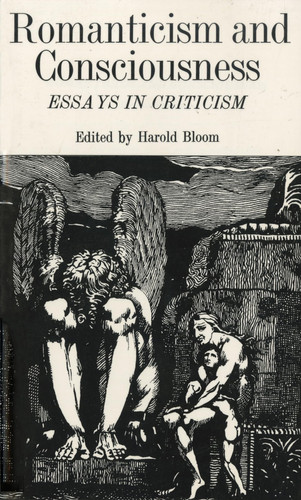
Romanticism and consciousness: essays in criticism
'Romanticism and Consciousness' is a comprehensive collection of essays on Romanticism-its intellectual and political backgrounds, its place in literary history, its continued relevance to the present age, its relation to psychoanalysis and other modern trends of thought-and on the major English Romantic poets. The topics covered include the relations between nature and consciousness, nature and revolution, and nature and literary form; the principal poets studied are Blake, Wordsworth, Coleridge, Byron, Shelley, and Keats.
The truth and beauty: how the lives and works of England's greatest poets point the way to a deeper understanding of the words of Jesus
"The words of Jesus can be as mysterious as they are familiar. For those seeking greater understanding of the Gospels through storytelling and poetry comes this book by Andrew Klavan, who chronicles his own inspiring, late-in-life journey to achieve a fresh perspective and deep connection to Jesus's most well-known and complex biblical passages"--

Equal to everything: Judge Brenda and the Supreme Court

Kings and queens
In this collection of poems about all 41 English kings and queens, the bad kings are bad and the good kings are good - make no mistake about it.

A strong dose of myself
A Strong Dose of Myself

Images of voice: music and sound in Romantic poetry

Monarchy and matrimony: the courtships of Elizabeth I
Monarchy and Matrimony is the first comprehensive study of Elizabeth I's courtships. Susan Doran argues that the cult of the `Virgin Queen' was invented by her ministers, and that Elizabeth was forced into celibacy by political necessity. Doran's detailed examination of the different suits is based on extensive archival research across Europe. Rather than focusing on Elizabeth's personality and image, she views the question within a wider political and religious context. She shows how the question of Elizabeth's marriage was divisive for England, affecting both political life and international relations, and provoking popular propaganda in the form of plays, poetry and paintings.

Archangel
"[Shukman] explores a little-known piece of Jewish history, in a sequence of poems that forms the centrepiece of this book. In 1917 several thousand Jewish tailors were deported from London and shipped back to Archangel and the Russian Empire they had recently fled, ostensibly to fight on the Eastern Front. They arrived just as the Revolution was unfolding and the old regime was collapsing into chaos. Among them were Shukman's grandfather and great-uncle, and these poems chronicle their four-year struggle to return to their wives and children in London. ..."--Book flap.

Where did it all go right?
English poet and critic Alvarez begins this autobiography with his recollections of his childhood as the sickly son of deeply unhappy parents. Alvarez courted danger as a way of overcoming his infirmities and found in the deadly ballet of the Battle of Britain - Messerschmitts and Spifires dancing and dueling across the London sky - an image of beauty and risk that would never leave him. And, yet, poetry and the literary life were his first loves as an adult, and he describes the excitement of his early successes at Oxford and as poetry critic at the Observer.

Surprised by Sin
In 1967 the world of Milton studies was divided into two armed camps: one proclaiming (in the tradition of Blake and Shelley) that Milton was of the devil's party with or without knowing it, the other proclaiming (in the tradition of Addison and C. S. Lewis) that the poet's sympathies are obviously with God and the angels loyal to him. The achievement of Stanley Fish's Surprised by Sin was to reconcile the two camps by subsuming their claims in a single overarching thesis: Paradise Lost is a poem about how its readers came to be the way they are--that is, fallen--and the poem's lesson is proven on a reader's impulse every time he or she finds a devilish action attractive or a godly action dismaying. Fish's argument reshaped the face of Milton studies; thirty years later the issues raised in Surprised by Sin continue to set the agenda and drive debate.

Kings and queens
Kings and Queens by Eleanor and Herbert Farjeon is a highly entertaining collection of poems about all forty-one English Kings and Queens since William I. Reissued in Puffin Poetry Kings and Queens is an authentic classic that has delighted young readers and adults alike. With wonderfully witty illustrations by Robin Jacques, history has never been so much fun! Eleanor and Herbert Farjeon were born in the 1880s into a highly literary family. Eleanor published nearly 70 books, mostly for children. Together with Herbert, her younger brother, she also wrote a children's panto, two operettas and a musical fairy story.

Maria Stuart
"Mary Stuart's execution remains an entirely unacceptable crime morally (...) However, it is equally difficult to deny that the destruction of Mary Stuart was a prudent course of action from a public policy standpoint. Because, regrettably, in politics, the determining issue is not the correctness of a legislation, but its success." Stefan Zweig was enchanted with Mary Stuart, whose life he perceived as immensely paradoxical and from whom he perceived a "inexhaustible attraction of mystery." Thus, he investigated the queen of Scotland and Elizabeth I's fierce rival through the lens of a novelistic biography. Zweig is the undisputed master of this genre: he meticulously details the tumultuous life of this amazing woman, who culminated on the scaffold. Biography Stefan Zweig (1881-1942) was born into a Jewish commercial family in Vienna. He created poetry, stories, plays, and essays, all of which were burned by the Nazis in 1933. He resided in Salzburg from 1919 until 1934, then moved to England and then to Brazil in 1941. His epic works, like his historical miniatures and biographical works, made him famous. He deliberately put up his life in Petrópolis, Brazil, on February 23, 1942.

Double talk: the erotics of male literary collaboration
Sigmund Freud and Josef Breuer on hysteria, J.A. Symonds and Havelock Ellis on sexuality, a novel by Ford Madox Ford and Joseph Conrad, The Waste Land of T.S. Eliot (and Ezra Pound), even the Lyrical Ballads of Wordsworth and Coleridge: men making books together. Wayne Koestenbaum's startling interpretation of literary collaboration focuses on homosexual desire: men write together, he argues, in order either to express or to evade homosexual feelings. Their writing becomes a textual intercourse, the book at once a female body they can share and the child of their partnership. These man-made texts steal a generative power that women's bodies seem to represent. Seen as the site of a struggle between homosexual and homophobic energies, the texts Koestenbaum explores - works of psychoanalysis, sexology, fiction, and poetry - emerge as more complex, more revealing. They crystallize and refract the anxiety of male sexuality at the end of the last century, and open up a deeper understanding of connections today between the erotic and the literary. Drawing upon the work of feminist critics, Koestenbaum connects male collaboration and the exchange of women within patriarchy: he peers into both medical texts and imaginative literature, disturbing our ready acceptance of the co-authored work. This strong and unsettling book transforms our understanding of the creative process, providing a new sense of what both collaborative and solitary artistry mean.

