131 results for "Poetry"

The blues: a very short introduction

Wald, Elijah
"In The Blues, Wald surveys a genre at the heart of American culture. Wald sees blues less as a style than as a broad musical tradition within a constantly evolving pop culture. He traces its roots in work and praisse songs and shows how it was transformed by such professional performers as W.C. Hardy, who first popularized the blues a century ago. He follows its evolution from Ma Rainey and Bessie Smith through Bob Dylan and Jimi Hendrix; identifies the impace of rural field recordings of Blind Lemon Jefferson, Charley Patton, and others; explores the role of blues in the development of both country music and jazz; and looks at the popular rhythm and blues trends of the 1940s and 1950s, from the uptown West Coast style of T-Bone Walker to the "down home" Chicago sound of Muddy Waters. Wald brings the story up to the present, touching on the effects of blues on American poetry and its connection to modern styles such as rap."--Front flap.
Oxford University Press 2010 140 pages

Take arms against a sea of troubles: the power of the reader's mind over a universe of death

Bloom, Harold
"The great poems, plays, novels, stories teach us how to go on living. . . . Your own mistakes, accidents, failures at otherness beat you down. Rise up at dawn and read something that matters as soon as you can." So Harold Bloom, the most famous literary critic of his generation, exhorts readers of his last book: one that praises the sustaining power of poetry. "Passionate. . . . Perhaps Bloom's most personal work, this is a fitting last testament to one of America's leading twentieth-century literary minds." -- Publishers Weekly "An extraordinary testimony to a long life spent in the company of poetry and an affecting last declaration of [Bloom's] passionate and deeply unfashionable faith in the capacity of the imagination to make the world feel habitable"--Seamus Perry, Literary Review "Reading, this stirring collection testifies, 'helps in staying alive.'"-- Kirkus Reviews , starred review This dazzling celebration of the power of poetry to sublimate death--completed weeks before Harold Bloom died--shows how literature renews life amid what Milton called "a universe of death." Bloom reads as a way of taking arms against the sea of life's troubles, taking readers on a grand tour of the poetic voices that have haunted him through a lifetime of reading. "High literature," he writes, "is a saving lie against time, loss of individuality, premature death." In passages of breathtaking intimacy, we see him awake late at night, reciting lines from Dante, Shakespeare, Milton, Montaigne, Blake, Wordsworth, Hart Crane, Jay Wright, and many others. He feels himself "edged by nothingness," uncomprehending, but still sustained by reading. Generous and clear‑eyed, this is among Harold Bloom's most ambitious and most moving books.
Yale University Press 2021-10-12 672 pages

Less than one: selected essays

Brodsky, Joseph
This collection of essays thrusts Brodsky--heretofore known more for his poetry and translations--into the forefront of the "Third Wave" of Russian emigre writers. His insights into the works of Dostoyevsky, Mandelstam, Platonov, as well as non-Russian poets Auden, Cavafy and Montale are brilliant. While the Western popularity of many other Third Wavers has been stunted by their inability to write in English, Brodsky consumed the language to attain a "closer proximity" to poets such as Auden. The book, which won a National Book Critics Circle Award, opens and closes with revealing autobiographical essay.
Farrar, Straus & Giroux 1986 501 pages

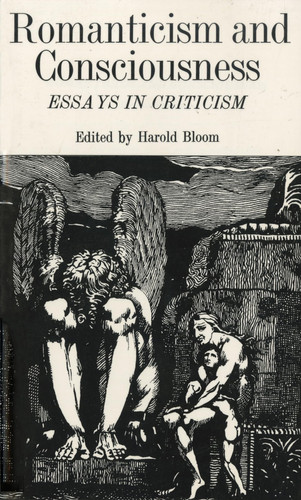
Romanticism and consciousness: essays in criticism

Bloom, Harold
'Romanticism and Consciousness' is a comprehensive collection of essays on Romanticism-its intellectual and political backgrounds, its place in literary history, its continued relevance to the present age, its relation to psychoanalysis and other modern trends of thought-and on the major English Romantic poets. The topics covered include the relations between nature and consciousness, nature and revolution, and nature and literary form; the principal poets studied are Blake, Wordsworth, Coleridge, Byron, Shelley, and Keats.
Norton 1970 405 pages

A new literary history of America

Greil Marcus,Werner Sollors,Henry B and Anne M Cabot Professor of English Literature and Professor of African and African American Studies Werner Sollors
America is a nation making itself up as it goes along--a story of discovery and invention unfolding in speeches and images, letters and poetry, unprecedented feats of scholarship and imagination. In these myriad, multiform, endlessly changing expressions of the American experience, the authors and editors of this volume find a new American history. In more than two hundred original essays, this book brings together the nation's many voices. From the first conception of a New World in the sixteenth century to the latest re-envisioning of that world in cartoons, television, science fiction, and hip hop, the book gives us a new, kaleidoscopic view of what "Made in America" means. Literature, music, film, art, history, science, philosophy, political rhetoric--cultural creations of every kind appear in relation to each other, and to the time and place that give them shape.--From publisher description.
Belknap Press of Harvard University Press 2009 1095 pages

Poetry and repression: revisionism from Blake to Stevens

Bloom, Harold
This reinterpretation of the full sweep of English and American romantic poetry offers close readings of poems of Blake, Wordsworth, Shelley, Keats, Tennyson, Browning, Whitman, Yeats, and Stevens. It also reviews the crucial ideas of Emerson, Nietzsche, and in particular Freud, whose psychoanalytic theory of repression and defense Bloom undertakes to revise for purposes of literary criticism. "Bloom offers a fully defined alternative to the principal modes of contemporary criticism, from Freudian literary criticism (which he insists is neither Freudian nor literary criticism) to the New Criticism and structuralist and archetypal approaches. It is an original, vigorous, and passionate study which is both compelling and provocative."-The British Studies Monitor "Show me but one paragraph of Bloom's approaches to texts, and I'm hooked. . . . I find sheer delight in his ingenious ways."-Kenneth Burke "Bloom has made a remarkable contribution to poetic theory."-Phoebe Pettingell, The New Leader
Yale University Press 1976 293 pages

The fourth dimension of a poem: and other essays

Abrams, M. H.
A new collection of essays by the legendary literary scholar and critic. In the year of his one-hundredth birthday, preeminent literary critic, scholar, and teacher M. H. Abrams brings us a collection of nine new and recent essays that challenge the reader to think about poetry in new ways. In these essays, three of them never before published, Abrams engages afresh with pivotal figures in intellectual and literary history, among them Kant, Keats, and Hazlitt. The centerpiece of the volume is Abrams’s eloquent and incisive essay “The Fourth Dimension of a Poem” on the pleasure of reading poems aloud, accompanied by online recordings of Abrams’s revelatory readings of poems such as William Wordsworth’s “Surprised by Joy,” Alfred Tennyson’s “Here Sleeps the Crimson Petal,” and Ernest Dowson’s “Cynara.” The collection begins with a foreword by Abrams’s former student Harold Bloom.
W. W. Norton & Co 2012-09-03 240 pages

The wounded surgeon: confession and transformation in six American poets : Robert Lowell, Elizabeth Bishop, John Berryman, Randall Jarrell, Delmore Schwartz, and Sylvia Plath

Kirsch, Adam
"One of the most promising young poet-critics in America" ( Los Angeles Times ) examines a revolutionary generation of poets. Robert Lowell, Elizabeth Bishop, Sylvia Plath, John Berryman, Randall Jarrell, and Delmore Schwartz formed one of the great constellations of talent in American literature. In the decades after World War II, they changed American poetry forever by putting themselves at risk in their poems in a new and provocative way. Their daring work helped to inspire the popular style of poetry now known as "confessional." But partly as a result of their openness, they have become better known for their tumultuous lives—afflicted by mental illness, alcoholism, and suicide—than for their work. This book reclaims their achievement by offering critical "biographies of the poetry"—tracing the development of each poet's work, exploring their major themes and techniques, and examining how they transformed life into art. An ideal introduction for readers coming to these major American poets for the first time, it will also help veteran readers to appreciate their work in a new light.
W.W. Norton & Co 2005-04-17 299 pages

San Francisco beat: talking with the poets

Meltzer, David
San Francisco Beat is an essential archive of the Beat Generation, a rich moment in a fortunate place. America-somnolent, conformist, and paranoid in the 1950s-was changed forever by a handful of people who refused an existence of drudgery and enterprise, opting instead for a life of personal, spiritual, and artistic adventure. In these intimate, free-wheeling conversations, a baker's dozen of the poets of San Francisco talk about the scene then and now, the traditions of poetry, and about anarchism, globalism, Zen, the Bomb, the Kabbalah, and the Internet. Thirty years ago, poet David Meltzer interviewed his poet friends for The San Francisco Poets. Now in San Francisco Beat he has combined these classic interviews with recent follow-up. San Francisco Beat features major new interviews with Philip Lamantia, Joanne Kyger, Gary Snyder, Jack Hirschman, Diane di Prima, Jack Micheline, Philip Whalen, and David Meltzer himself. David Meltzer is the author of many books of poetry, including Tens, The Name, Arrows: Selected Poetry 1957-1992, and No Eyes: Lester Young. He is the editor of Birth, The Secret Garden, Reading Jazz, and Writing Jazz, among other collections. His agit-smut fictions include The Agency Trilogy. Meltzer read poetry at the Jazz Cellar in the 1950s and in the 1960s fronted the band, Serpent Power. Meltzer teaches poetics at New College of California. Table of Contents/Interviewed Authors Preface Acknowledgments Diane di Prima (1999) William Everson (1971) Remembering Everson (1999) Lawrence Ferlinghetti I (1969) Lawrence Ferlinghetti II (1999) Jack Hirschman (1998) Joanne Kyger (1998) Philip Lamantia (1998) Michael McClure I (1971) Michael McClure II (1999) David Meltzer (1999) Jack Micheline (1994) Kenneth Rexroth (1971) Remembering Rexroth (1971) Gary Snyder (1999) Lew Welch (1971) Philip Whalen (1999) Bibliographies Preface Nothing is hidden; As of old All is clear as daylight -Anonymous haiku, 16th century San Francisco Beat: Talking with the Po
City Lights Books 2001-05 364 pages

Don't read poetry: a book about how to read poems

Burt, Stephanie
"In Don't Read Poetry, award-winning poet and literary critic Stephanie Burt offers an accessible introduction to the seemingly daunting task of reading, understanding, and appreciating poetry. Burt dispels preconceptions about poetry and explains how poems speak to one another--and how they can speak to our lives. She shows readers how to find more poems once they have some poems they like, and how to connect the poetry of the past to the poetry of the present. Burt moves seamlessly from Shakespeare and other classics to the contemporary poetry circulated on Tumblr and Twitter. She challenges the assumptions that many of us make about 'poetry, ' whether we think we like it or think we don't, in order to help us cherish--and distinguish among--individual poems. A masterful guide to a sometimes confounding genre, Don't Read Poetry will instruct and delight ingénues and cognoscenti alike"--
Basic Books 2023-05-09 306 pages

The evolution of the Gilgamesh epic

Tigay, Jeffrey H.
The Epic of Gilgamesh is one of the world's oldest known epics-it predates Homer by several centuries and is recognized as seminal to the cultural history of the Ancient Near East. Interpretation and decipherment of the story of Gilgamesh--fragmentary and contradictory as its several variants are--has been a monumental scholarly task, spanning more than a century...until Jeffrey Tigay teased out the epic's evolution. In this volume, Tigay traces the development of the composition of The Gilgamesh Epic over nearly two millennia and through the several languages in which it has been transmitted. The result is a study both comprehensive in breadth and impressive in methodology. The author breaks from his scholarly predecessors in relying on documented textual evidence rather than on critical analysis and hypotheses.The immense contribution represented by this study has been acknowledged since its first publication in 1982. This reprint edition once again makes Tigay's groundbreaking work readily available to humanists, historians of literature and religion, biblical and classical scholars, anthropologists, and folklorists.
University of Pennsylvania Press 1982-06-29 384 pages

Holocaust literature: a history and guide

Roskies, David G.,Diamant, Naomi
"What is Holocaust literature? When does it begin and how is it changing? Is there an essential core of diaries, eyewitness accounts of the concentration camps, tales of individual survival in hiding? Is it the same everywhere: in the West as in the East, in Australia as in the Americas, in poetry as in prose? Is this literature sacred and sui generis, or can it be studied in the light of other literatures? What of the perpetrators and bystanders, the hidden children, the children of Holocaust survivors: Do they speak with the same authority? What works of Holocaust literature will be read a hundred years from now--and why? Here, for the first time and told from beginning to end, is an historical survey of Holocaust literature in all genres, countries, and major languages. Beginning in wartime, it proceeds from the literature of mobilization and mourning in the Free World to the vast and varied literature produced in the Nazi-occupied ghettos, the bunkers and places of hiding, the transit and concentrations camps. Within weeks of the liberation, in displaced persons camps, a new memorial and testamentary literature begins to take shape. Moving from Europe to Israel, the U.S., and beyond, the authors situate the writings by real and proxy witnesses within three distinct postwar periods: a period of "communal memory," still internal and internecine; a period of "provisional memory" in the '60s and '70s that witnesses the birth of a self-conscious Holocaust genre; to the period of "authorized memory" in which we live today, following the collapse of the Soviet Union (1989-91), and the opening of the US Holocaust Museum (1993). Twenty book covers - first editions in their original languages - and an eminently readable guide to the "first hundred books" together show the multilingual scope, historical depth, the moral and artistic range of this extraordinary body of writing."--Publisher's website.
Brandeis University Press 2012 355 pages

The truth and beauty: how the lives and works of England's greatest poets point the way to a deeper understanding of the words of Jesus

Klavan, Andrew
"The words of Jesus can be as mysterious as they are familiar. For those seeking greater understanding of the Gospels through storytelling and poetry comes this book by Andrew Klavan, who chronicles his own inspiring, late-in-life journey to achieve a fresh perspective and deep connection to Jesus's most well-known and complex biblical passages"--
Zondervan Books 2022 255 pages

Proofs & theories: essays on poetry

Glück, Louise
"Proofs & Theories is a long-awaited first gathering of essays by one of this country's most brilliant poets. Like her poems, the prose of Ms. Gluck, who won the Pulitzer Prize for poetry in 1993 for The Wild Iris, is compressed, fastidious, fierce, alert, and absolutely unconsoled. The force of her thought is apparent everywhere in her writing and whether she is contemplating - skeptically - the critical currency of ideas like "courage" and "sincerity," T.S. Eliot's reduced reputation as a poet of impersonality, the loyalties of the objectivist George Oppen, or the ferocity in the headlong art of Sylvia Plath, there is something exhilarating about her seriousness, spare, austere, mind-clearing, and adamantly alive. She shares her skepticism with a whole temper of post-modern critical thought. But post-modernism, on the whole, has stood aside from what artists have thought was at stake in their art in order to dissect it. Ms. Gluck is also quite expert - wry sometimes, darkly funny even - at dissection but in these essays one never doubts what is at stake: an art as truthful, adamant, and unflinching as the intelligence that she brings to her own. Proofs & Theories is not a casual collection. It is the testament of a major poet"--OCLC
Ecco Press 1994 134 pages

Homeric moments: clues to delight in reading the Odyssey and the Iliad

Brann, Eva T. H.
Fifty years of reading Homer—both alone and with students—prepared Eva Brann to bring the Odyssey and the Iliad back to life for today's readers. In Homeric Moments, she brilliantly conveys the unique delights of Homer's epics as she focuses on the crucial scenes, or moments, that mark the high points of the narratives: Penelope and Odysseus, faithful wife and returning husband, sit face to face at their own hearth for the first time in twenty years; young Telemachus, with his father Odysseus at his side, boldly confronts the angry suitors; Achilles gives way to boundless grief at the death of his friend Patroclus. Eva Brann demonstrates a way of reading Homer's poems that yields up their hidden treasures. With an alert eye for Homer's extraordinary visual effects and a keen ear for the musicality of his language, she helps the reader see the flickering campfires of the Greeks and hear the roar of the surf and the singing of nymphs. In Homeric Moments, Brann takes readers beneath the captivating surface of the poems to explore the inner connections and layers of meaning that have made the epics "the marvel of the ages." "Written with wit and clarity, this book will be of value to those reading the Odyssey and the Iliad for the first time and to those teaching it to beginners."—Library Journal "Homeric Moments is a feast for the mind and the imagination, laid out in clear and delicious prose. With Brann, old friends of Homer and new acquaintances alike will rejoice in the beauty, and above all the humanity, of the epics." —Jacob Howland, University of Tulsa, Author of The Paradox of Political Philosophy "In Homeric Moments, Eva Brann lovingly leads us, as she has surely led countless students, through the gallery of delights that is Homer's poetry. Brann's enthusiasm is as infectious as her deep familiarity with the works is illuminating."—Rachel Hadas "Brann invites us to enter a conversation [about Homer] in which information and formal arguments jostle with appreciations and frank conjectures and surmises to increase our pleasure and deepen the inward dimension of our humanity."—Richard Freis, Millsaps College "For anyone eager to experience the profundity and charm of Homer's great epic poems, Eva Brann's book will serve as a passionate and engaging guide. Brann displays a deep sensitivity to the cadence and flow of Homeric poetry, and the kind of knowing intimacy with its characters that comes from years of teaching and contemplation. Her relaxed but informative approach succeeds in conveying the grandeur of the great Homeric heroes, while making them continually resonate for our own lives. Brann helps us see that this poetry has an urgency for our own era as much as it did for a distant past."—Ralph M. Rosen, University of Pennsylvania, Author of Old Comedy and The Iambographic Tradition "The most enjoyable books about Homer are always written by those who have read and taught him the most. Eva Brann's collection of astute observations, unusual asides, and visual snapshots of the Iliad and the Odyssey reveals a lifelong friendship with the poet, and is as pleasurable as it is informative. Homeric Moments is rare erudition without pedantry, in a tone marked by good sense without levity."—Victor Davis Hanson, author of The Other Greeks and co-author of Who Killed Homer? Eva Brann is a member of the senior faculty at St. John's College in Annapolis, Maryland, where she has taught for fifty years. She is a recipient of the National Humanities Medal. Her other books include The Logos of Heraclitus, Feeling Our Feelings, Homage to Americans, Open Secrets / Inward Prospects, The Music of the Republic, Un-Willing, and Then and Now (all published by Paul Dry Books).
Paul Dry Books 2002 326 pages