6 results for "Poetry"

Natural supernaturalism: tradition and revolution in romantic literature

Abrams, M. H.
"In this remarkable new book, M. H. Abrams definitively studies the Romantic Age (1789-1835)--the age in which Shelley claimed that "the literature of England has arisen as it were from a new birth." Abrams shows that the major poets of the age had in common important themes, modes of expression, and ways of feeling and imagining; that the writings of these poets were an integral part of a comprehensive intellectual tendency which manifested itself in philosophy as well as poetry, in England and in Germany; and that this tendency was causally related to drastic political and social changes of the age. But Abrams offers more than a work of scholarship, for he ranges before and after, to place the age in Western culture. he reveals what is traditional and what is revolutionary in the period, providing insights into those same two forces in the ideas of today. He shows that central Romantic ideas and forms of imagination were secularized versions of traditional theological concepts, imagery, and design, and that modern literature participates in the same process. Our comprehension of this age and of our own time is deepened by a work astonishing in its learning, vision, and humane understanding." -- Provided by publisher.
W. W. Norton and Company 1973 550 pages

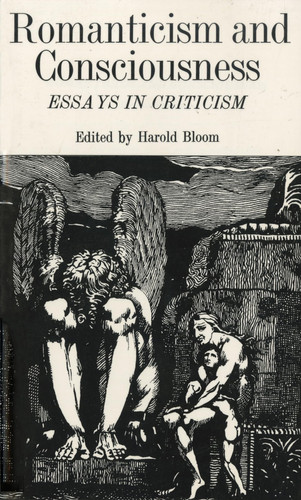
Romanticism and consciousness: essays in criticism

Bloom, Harold
'Romanticism and Consciousness' is a comprehensive collection of essays on Romanticism-its intellectual and political backgrounds, its place in literary history, its continued relevance to the present age, its relation to psychoanalysis and other modern trends of thought-and on the major English Romantic poets. The topics covered include the relations between nature and consciousness, nature and revolution, and nature and literary form; the principal poets studied are Blake, Wordsworth, Coleridge, Byron, Shelley, and Keats.
Norton 1970 405 pages

The truth and beauty: how the lives and works of England's greatest poets point the way to a deeper understanding of the words of Jesus

Klavan, Andrew
"The words of Jesus can be as mysterious as they are familiar. For those seeking greater understanding of the Gospels through storytelling and poetry comes this book by Andrew Klavan, who chronicles his own inspiring, late-in-life journey to achieve a fresh perspective and deep connection to Jesus's most well-known and complex biblical passages"--
Zondervan Books 2022 255 pages

The line's eye: poetic experience, American sight

New, Elisa
Is American vision implicitly possessive, as a generation of critics contends? By viewing the American poetic tradition through the prism of pragmatism, Elisa New contests this claim. A new reading of how poetry "sees," her work is a passionate defense of the power of the poem, the ethics of perception, and the broader possibilities of American sight. American poems see more fully, and less invasively, than accounts of American literature as an inscription of imperial national ideology would allow. Moreover, New argues, their ways of seeing draw on, and develop, a vigorous mode of national representation alternative to the appropriative sort found in the quintessential American genre of encounter, the romance. Grounding her readings of Dickinson, Frost, Moore, and Williams in foundational texts by Edwards, Jefferson, Audubon, and Thoreau, New shows how varieties of attentiveness and solicitude cultivated in the early literature are realized in later poetry. She then discloses how these ideas infuse the philosophical notions about pragmatic experience codified by Emerson, James, and Dewey. As these philosophers insisted, and as New's readings prove, art is where the experience of experience can be had: to read, as to write, a poem is to let the line guide one's way.
Harvard University Press 1998 342 pages