51 results for "Psychology"

Trigger warning: short fictions and disturbances

Gaiman, Neil
This third collection of short fiction by Gaiman includes previously published pieces of short fiction--stories, verse, and a Doctor Who story written for the series' fiftieth anniversary (Nothing o'clock). There is also "Black Dog," a new tale that revisits the world of his novel American Gods. The collection explores the masks we all wear and the people we are beneath them to reveal our vulnerabilities and our truest selves. Horror and ghosts stories, science fiction and fairy tales, fabulism and poetry explore the realm of experience and emotion. In "Adventure Story"--a thematic companion to The Ocean at the End of the Lane--Gaiman ponders death and the way people take their stories with them when they die. His social media experience "A Calendar of Tales" are short takes inspired by replies to fan tweets about the months of the year--stories of pirates and the March winds, an igloo made of books, and a Mother's Day card that portends disturbances in the universe. Gaiman offers his own spin on Sherlock Holmes in his award-nominated mystery tale "The Case of Death and Honey". And "Click-Clack the Rattlebag" explains the creaks and clatter we hear when we're all alone in the darkness.
William Morrow, an imprint of HarperCollins Publishers 2015-02-03 310 pages

The emotional life of your brain: how its unique patterns affect the way you think, feel, and live--and how you can change them

Davidson, Richard J.
In this book the author, a pioneer in brain research offers an entirely new model of our emotions, their origins, their power, and their malleability. For more than thirty years, the author has been at the forefront of brain research. Now he gives us an entirely new model for understanding our emotions, as well as practical strategies we can use to change them. He has discovered that personality is composed of six basic emotional "styles," including resilience, self-awareness, and attention. Our emotional fingerprint results from where on the continuum of each style we fall. He explains the brain chemistry that underlies each style in order to give us a new model of the emotional brain, one that will even go so far as to affect the way we treat conditions like autism and depression. And, finally, he provides strategies we can use to change our own brains and emotions if that is what we want to do. By giving us a new and useful way to look at ourselves, we can develop a sense of well-being, and live more meaningful lives.
Plume 2013 279 pages

A Guide to Rational Living

Albert Ellis Ph D
This book, unlike others you have probably read, employs none of the jargon usually associated with psychology or psychiatry, and it may well prove to be the best book on psychotherapy for laymen ever written. It can provide emotionally disturbed individuals with many answers they seek, and it can help everyone to feel better about themselves and to deal with their lives more effectively. The authors use a unique method of projecting their solutions to common problems. Thus, they point out that the individual who feels inadequate and insecure suffers from, for example, "Irrational Belief No. 2: The idea that you must be thoroughly competent, adequate, and achieving." Drs. Ellis and Harper use ten such ideas to bring out the scope of their psychotherapy, with subtle, helpful solutions that reflect their vast experience as therapists. They have training and a host of case histories, to buttress their advice. This not only makes for a more interesting book but creates confidence in the reader concerning the techniques suggested, all of which have proven effective in a clinical setting. Their direct, get-to-the-heart-of-the-problem methods show wide variance with most orthodox treatments that drag on interminably with clients never quite knowing where they stand. As far as I can see, here certainly lies, along with group therapy, the direction psychotherapy will take if it intends to make a real contribution to comprehensive health. If you feel you have the rigorous honesty necessary to conduct self-analysis, this book will be the most important one you have ever read. And it will seem a boon to those who cannot pay the high fees charged for individual treatment.
Wilshire Book Company 1975-08 306 pages

Emotional Freedom Liberate Yourself from Negative Emotions and Transform Your Life

Judith Orloff, M.D.
A New York Times bestseller, Emotional Freedom is a road map for those who are stressed out, discouraged, or overwhelmed as well as for those who are in a good emotional place but want to feel even better. Picture yourself trapped in a traffic jam feeling utterly calm. Imagine being unflappable and relaxed when your supervisor loses her temper. What if you were peaceful instead of anxious? What if your life were filled with nurturing relationships and a warm sense of belonging? This is what it feels like when you’ve achieved emotional freedom. Bestselling author Dr. Judith Orloff invites you to take a remarkable journey, one that leads to happiness and serenity, and a place where you can gain mastery over the negativity that pervades daily life. No matter how stressed you currently feel, the time for positive change is now. You possess the ability to liberate yourself from depression, anger, and fear. Synthesizing neuroscience, intuitive medicine, psychology, and subtle energy techniques, Dr. Orloff maps the elegant relationships between our minds, bodies, spirits, and environments. With humor and compassion, she shows you how to identify the most powerful negative emotions and how to transform them into hope, kindness, and courage. Compelling patient case studies and stories from her online community, her workshop participants, and her own private life illustrate the simple, easy-to-follow action steps that you can take to cope with emotional vampires, disappointments, and rejection. As Dr. Orloff shows, each day presents opportunities for us to be heroes in our own lives: to turn away from negativity, react constructively, and seize command of any situation. Complete emotional freedom is within your grasp.
Harmony/Rodale/Convergent 2010-12-28 416 pages

Emotional

Mlodinow, Leonard
You make hundreds of decisions every day, from what to eat for breakfast to how you should invest, and not one of those decisions would be possible without emotion. It has long been said that thinking and feeling are separate and opposing forces in our behavior. But as Leonard Mlodinow, the best-selling author of Subliminal, tells us, extraordinary advances in psychology and neuroscience have proven that emotions are as critical to our well-being as thinking. How can you connect better with others? How can you make sense of your frustration, fear, and anxiety? What can you do to live a happier life? The answers lie in understanding your emotions. Journeying from the labs of pioneering scientists to real-world scenarios that have flirted with disaster, Mlodinow shows us how our emotions can help, why they sometimes hurt, and what we can learn in both instances. Using deep insights into our evolution and biology, Mlodinow gives us the tools to understand our emotions better and to maximize their benefits. Told with his characteristic clarity and fascinating stories, Emotional explores the new science of feelings and offers us an essential guide to making the most of one of nature's greatest gifts.[Bokinfo]
Random House US 2023-02-14 272 pages

What doctors feel: how emotions affect the practice of medicine

Ofri, Danielle
"By shedding light on how doctors cope with the stresses and responsibilities of patients, colleagues, lawyers, and their personal lives, she explains why it is important that patients know how emotions influence the way physicians treat their patients both medically and interpersonally. Exploring the full range of human emotion--from the fear of making a fatal mistake to the pride and elation of triumphing over death, What Doctors Feel allows patients at the other end of the stethoscope to have a good listen to the beat of the emotional life behind the white coat."--Beacon Press
Beacon Press 2014 224 pages

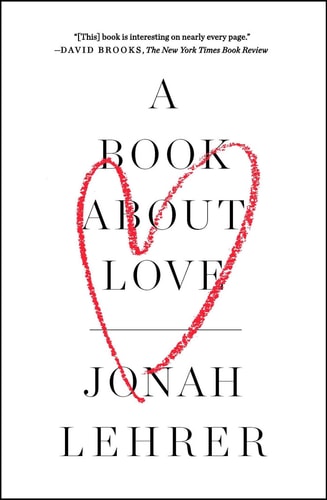
A Book About Love

Jonah Lehrer
Number one bestselling science writer Jonah Lehrer explores the “only happiness that lasts”—love—in a book that “is interesting on nearly every page” (David Brooks, The New York Times Book Review ). Weaving together scientific studies from clinical psychologists, longitudinal studies of health and happiness, historical accounts and literary depictions, child-rearing manuals, and the language of online dating sites, Jonah Lehrer’s A Book About Love plumbs the most mysterious, most formative, most important impulse governing our lives. Love confuses and compels us—and it can destroy and define us. It has inspired our greatest poetry, defined our societies and our beliefs, and governs our biology. From the way infants attach to their parents, to the way we fall in love with another person, to the way some find a love for God or their pets, to the way we remember and mourn love after it expires, this book focuses on research that attempts, even in glancing ways, to deal with the long-term and the everyday. The most dangerous myth of love is that it’s easy, that we fall into the feeling and then the feeling takes care of itself. While we can easily measure the dopamine that causes the initial feelings of “falling” in love, the partnerships and devotions that last decades or longer remain a mystery. “Lehrer uses scores of detailed vignettes to traverse a complicated intellectual landscape, eventually arriving at modern theories of love…He is a talent” ( USA TODAY ), and A Book About Love decodes the set of skills necessary to cultivate a lifetime of love. Love, Lehrer argues, is not built solely on overwhelming passion, but, fascinatingly, on a set of skills to be cultivated over a lifetime.
Simon and Schuster 2017-07-25 304 pages

Conquering Fear Living Boldly in an Uncertain World

Harold S. Kushner
From the #1 bestselling author of When Bad Things Happen to Good People, an illuminating book about fear—and what we can do to overcome it. An inescapable component of our lives, fear comes in many guises. In uncertain times, coping with these fears can be especially challenging, but in this indispensable book, Harold S. Kushner teaches us to confront, master, and even embrace fear for a more fulfilling life. Drawing on the teachings of religious and secular literature and on the true stories of people who have faced their fears, we are again inspired by Kushner’s wisdom, at once deeply spiritual and eminently practical.
Knopf Doubleday Publishing Group 2010-11-02 192 pages

Defeating SAD (seasonal affective disorder): A Guide to Health and Happiness Through All Seasons

Norman E. Rosenthal
Dr. Norman Rosenthal, is the author of the bestselling Poetry Rx released last year to rave reviews including: NY Times The Well Book List of 8 Favorite Books in 2021 for Healthy Living And The subject of a NY Times op ed by Jane Brody Now in his landmark new book, Defeating SAD, Rosenthal, who first described Seasonal Affective Disorder (SAD) and is the foremost authority on the subject, offers an up to date guide to overcoming the miseries and that millions experience with the changing seasons. In his lively style, Rosenthal offers advice on how to identify, treat and overcome both winter and summer varieties of seasonal affective disorder, as well as the less severe yet bothersome winter blues. Having pioneered the use of bright light therapy for SAD and relying on his decades of experience treating SAD patients Rosenthal offers strategies and techniques for defeating the condition, including cognitive-behavioral approaches, diet and exercise advice, medication and meditation. Rosenthal's warm and friendly professional style will leave the reader feeling as though he has been treated to a consultation with a consummate professional, who has fascinating insights into the condition. The book will help show how to optimize your health and well-being through the seasons.
G&D Media 2023-08-15 230 pages

The Sweet Spot The Pleasures of Suffering and the Search for Meaning

Paul Bloom
"This book will challenge you to rethink your vision of a good life. With sharp insights and lucid prose, Paul Bloom makes a captivating case that pain and suffering are essential to happiness. It's an exhilarating antidote to toxic positivity." --Adam Grant, #1 New York Times bestselling author of Think Again and host of the TED podcast WorkLife One of Behavioral Scientist's "Notable Books of 2021" From the author of Against Empathy, a different kind of happiness book, one that shows us how suffering is an essential source of both pleasure and meaning in our lives Why do we so often seek out physical pain and emotional turmoil? We go to movies that make us cry, or scream, or gag. We poke at sores, eat spicy foods, immerse ourselves in hot baths, run marathons. Some of us even seek out pain and humiliation in sexual role-play. Where do these seemingly perverse appetites come from? Drawing on groundbreaking findings from psychology and brain science, The Sweet Spot shows how the right kind of suffering sets the stage for enhanced pleasure. Pain can distract us from our anxieties and help us transcend the self. Choosing to suffer can serve social goals; it can display how tough we are or, conversely, can function as a cry for help. Feelings of fear and sadness are part of the pleasure of immersing ourselves in play and fantasy and can provide certain moral satisfactions. And effort, struggle, and difficulty can, in the right contexts, lead to the joys of mastery and flow. But suffering plays a deeper role as well. We are not natural hedonists--a good life involves more than pleasure. People seek lives of meaning and significance; we aspire to rich relationships and satisfying pursuits, and this requires some amount of struggle, anxiety, and loss. Brilliantly argued, witty, and humane, Paul Bloom shows how a life without chosen suffering would be empty--and worse than that, boring.
HarperCollins Publishers 2021-11-02 304 pages

The Peace of Mind Prescription An Authoritative Guide to Finding the Most Effective Treatment for Anxiety and Depression

Dennis S. Charney,Charles B. Nemeroff
The Ultimate Guide to Identifying, Treating, and Overcoming Depression and Anxiety Two world-renowned psychiatrists have created a comprehensive and empowering guide to the science and treatment of anxiety and depression. At the heart of their message is the idea that treatment can and must be tailored to the individual and that armed with the right information, patients can get the support they need from their health-care providers. Practical and authoritative, The Peace of Mind Prescription has been unanimously praised as a valuable resource that offers hope to millions of sufferers. Dennis S. Charney, M.D., is the Dean of Research and the Anne and Joel Ehrenkranz Professor in the departments of psychiatry, neuroscience, and pharmacology and biochemistry at the Mount Sinai School of Medicine. Charles B. Nemeroff, M.D., Ph.D., is the Reunette W. Harris Professor and chairman of the department of psychiatry and behavioral sciences at Emory University's School of Medicine.
Houghton Mifflin 2006 259 pages

Saving the modern soul: therapy, emotions, and the culture of self-help

Illouz, Eva
The language of psychology is all-pervasive in American culture―from The Sopranos to Oprah, from the abundance of self-help books to the private consulting room, and from the support group to the magazine advice column. Saving the Modern Soul examines the profound impact of therapeutic discourse on our lives and on our contemporary notions of identity. Eva Illouz plumbs today's particular cultural moment to understand how and why psychology has secured its place at the core of modern identity. She examines a wide range of sources to show how self-help culture has transformed contemporary emotional life and how therapy complicates individuals' lives even as it claims to dissect their emotional experiences and heal trauma.
University of California Press 2008 294 pages

Imperfect Control Our Lifelong Struggles With Power and Surrender

Judith Viorst
In her remarkable national bestseller, Necessary Losses, Judith Viorst explored how we are shaped by the various losses we experience throughout our lives. Now, in her wise and perceptive new book, Imperfect Control, she shows us how our sense of self and all our important relationships are colored by our struggles over control: over wanting it and taking it, loving it and fearing it, and figuring out when the time has come to surrender it. Writing with compassion, acute psychological insight, and a touch of her trademark humor, Viorst invites us to contemplate the limits and possibilities of our control. She shows us how our lives can be shaped by our actions and our choices. She reminds us, too, that we sometimes should choose to let go. And she encourages us to find our own best balance between power and surrender.
Simon and Schuster 1999-03 448 pages

The nature of emotion: fundamental questions

Davidson Ekman,Professor of Psychology Paul Ekman, PH D,Richard Davidson, PhD
The editors of this unique volume have selected 24 leading emotion theorists and asked them to address 12 fundamental questions about the subject of emotion. For example; Are there basic emotions? How do you distinguish emotions from moods, temperament, and emotional traits? Can we control our emotions? Can emotions be non-conscious? What is the relation between emotion and memory? What develops in emotional development? Each chapter addresses a different one of these fundamental questions about emotion, with often divergent answers from 3 to 7 of the following leading researchers: James Averill, Gordon Bower, Linda Camras, Lee Clark, Gerald Clore, Richard Davidson, Judy Dunn, Paul Ekman, Phoebe Ellsworth, Nico Frijda, Hill Goldsmith, Jeffrey Gray, Carroll Izard, Jerome Kaga, Richard Lazarus, Joseph Le Doux, Robert Levenson, Jaak Panksepp, Mary Rothbart, Klaus Shere, Richard Shweder, David Watson, and Robert Zajonc. At the end of each chapter the editors -- Ekman and Davidson -- highlight the areas of agreement and disagreement about each of the 12 questions about emotion. In the final chapter Affective Science: A Research Agenda, the editors describe the research they believe would help answer each of the questions. Not a textbook offering a single viewpoint, The Nature of Emotion, uniquely reveals the central issues in emotion research and theory in the words of many of the leading scientists working in the field today. It is ideal for students, researchers, and clinicians interested in emotion.
Oxford University Press 1994-12-22 496 pages

Emotion and adaptation

Lazarus, Richard S.
In this work, Richard Lazarus offers a treatment of the psychology of emotion, its role in adaptation, and the issues that must be addressed to understand it. The work provides a complete theory of emotional processes, explaining how different emotions are elicited and expressed, and how the emotional range of individuals develops over their lifetime. The author's approach puts emotion in a central role as a complex, patterned, organic reaction to both daily events and long-term efforts on the part of the individual to survive, flourish, and achieve. In his view, emotions cannot be divorced from other functions--whether biological, social, or cognitive--and express the intimate, personal meaning of what individuals experience. As coping and adapting processes, they are seen as part of the ongoing effort to monitor changes, stimuli, and stresses arising from the environment. After defining emotion and discussing issues of classification and measurement, Lazarus turns to the topics of motivation, cognition, and causality as key concepts in this theory. Next he looks at individual emotions, both negative and positive, and examines their development in terms of social influences and individual events. Finally, he considers the long-term consequences of emotion on physical health and well-being, and the treatment and prevention of emotional dysfunction. --From publisher's description.
Oxford University Press 1991 557 pages

Me, but better: the science and promise of personality change

Khazan, Olga
"In the vein of 10% Happier and Year of Yes, The Atlantic journalist Olga Khazan embarks on a year-long experimental romp through the riveting, emerging scientific field of personality change. For years, Olga Khazan had been spiraling toward an existential crisis. Though she treasured her loving long-term relationship and her dream job, she often caught herself snatching dissatisfaction from the jaws of happiness. Her anxious and neurotic overachieving had always been a professional asset, but lately, Olga felt that her brittle disposition would shatter at any moment under the weight of just one more thing. She knew something had to give-but was it really possible to do something as radical as change her personality? In The Personality Test, Olga embarks on a year-long experiment to see if it's truly possible to change your personality, sample size: one. Scientifically, personality consists of five sliding-scale traits: extroversion, or how sociable you are; conscientiousness, or how self-disciplined and organized you are; agreeableness, or how warm and empathetic you are; openness, or how receptive you are to new ideas and activities; and neuroticism, or how depressed or anxious you are. But research shows that you can alter these traits by consistently behaving in ways that align with the kind of person you'd like to be. And that, in turn, can actually make you happier, healthier, and more successful. So, for a year, Olga decides to fake it until she makes it. She reluctantly clicks 'yes' on a bucket list of new experiences, from meditation to improv to sailing, that will force her to at least act happy, healthy, and well-adjusted, in the hope she might actually become those things. With a skeptic's eye, Olga brings readers on her personal journey through the science of personality, presenting evidence-backed techniques to change our minds for the better. Deeply reflective and sharply witty, The Personality Test is a probing inquiry into what it means to live a fulfilling life, and how we can keep diving into change, even against our better judgment"-- Provided by publisher.
Simon Element 2025 288 pages

Compassion and Self Hate An Alternative to Despair

Theodore I. Rubin
Free yourself from destructive behavior and learn how to break your patterns of self-hate and achieve personal fulfillment with this sympathetic and practical guide from the author of The Angry Book . Many of us know that self-destructive patterns are rooted in self-dislike, but few of us understand how to break them. In this wise and compassionate book, bestselling author and eminent psychiatrist Theodore Rubin shows us realistic ways to break these negative mental and emotional attitudes and build a strong sense of well-being and self-understanding. Dr. Rubin looks of how self-hate begins, is sustained, and eventually leads to destructive and defeating behavior—from alcoholism and drug dependency to perfectionism and fear of failure (or success). Offering practical and reassuring advice, he shows that the key to freeing yourself from these restricting emotions and habits is to find and examine the self-hate that generates them, and then to release your innate and powerful capacity for compassion. This warm, sympathetic, and ultimately practical guide to personal growth and fulfillment is timelier and more helpful than ever.
Simon and Schuster 1998-04-28 288 pages

Affect Imagery Consciousness Volume I: The Positive Affects

Silvan Tomkins
Tomkins' magnum opus, Affect, Imagery, Consciousness , was published by Springer Publishing Company in four volumes over 30 years. When Tomkins began writing the book in the 1950's, American psychology was dominated by psychoanalytic and behaviorist theories - neither of which placed much importance on the role of basic emotions in everyday human behavior. Tomkins challenged the status quo by developing - over the span of nearly 2,000 pages -- a theory of consciousness and motivation that placed emotion at the core of the human experience. Because so few psychologists were studying emotion at that time, Tomkins drew liberally from other academic disciplines to help formulate his ideas and support his arguments: evolutionary biology, ethology, cybernetics, literature, philosophy, psychoanalysis, and neurophysiology, among others. In the process, Tomkins practically invented the field of "nonverbal behavior" through close observation of emotional expressions in people, including his own infant son. His work was a brilliantly eccentric pastiche of ideas that adhered to no strict disciplinary or ideological boundaries. In time, however, AIC came to prominence through the research of his disciples, notably Paul Ekman and Carroll Izzard, who went on to become major researchers in the psychology of emotion. Today, Tomkins's book is influential not just in psychology but in philosophy, sociology, communication studies, even in "affective computing. Springer Publishing Company is pleased to continue to offer this magisterial work in four volumes.
Springer Publishing Company 1962-01-15 536 pages