55 results for "Psychology"

Games People Play

Eric Berne
Dr. Eric Berne, as the originator of transactional analysis, has attained recognition for developing one of the most innovative approaches to modern psychotherapy. Discover how many of these "secret games" you play everyday of your life: Iwfy (If it weren't for you); Sweetheart; Threadbare; Harried; Alcoholic, and many more. A groundbreaking book that bores deep into the heart of all our relationships, GAMES PEOPLE PLAY is a classic that should be read again and again.
Knopf Doubleday Publishing Group 1969-05 192 pages

Getting Past the Pain Between Us Healing and Reconciliation Without Compromise

Marshall B. Rosenberg
In this important and insightful work, Marshall B. Rosenberg, PhD, demonstrates the powerful healing potential of the Nonviolent Communication (NVC) process. You can transform emotional pain, depression, shame, and conflict into empowering connections. Rosenberg shares that behind all emotional pain are unmet needs. He provides simple steps to create the heartfelt presence necessary for healing to occur. Learn how to transform your relationships, find satisfying reconciliation, and move beyond pain to a place of clear, honest communication. Through role-play dialogues and every-day examples, Rosenberg demonstrates the keys to healing pain and conflict without compromise. The healing power of NVC provides practical and effective tools for individuals, mental health practitioners, mediators, families and couples.
PuddleDancer Press 2004-09 48 pages

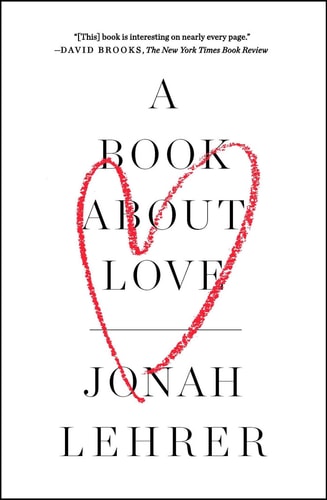
A Book About Love

Jonah Lehrer
Number one bestselling science writer Jonah Lehrer explores the “only happiness that lasts”—love—in a book that “is interesting on nearly every page” (David Brooks, The New York Times Book Review ). Weaving together scientific studies from clinical psychologists, longitudinal studies of health and happiness, historical accounts and literary depictions, child-rearing manuals, and the language of online dating sites, Jonah Lehrer’s A Book About Love plumbs the most mysterious, most formative, most important impulse governing our lives. Love confuses and compels us—and it can destroy and define us. It has inspired our greatest poetry, defined our societies and our beliefs, and governs our biology. From the way infants attach to their parents, to the way we fall in love with another person, to the way some find a love for God or their pets, to the way we remember and mourn love after it expires, this book focuses on research that attempts, even in glancing ways, to deal with the long-term and the everyday. The most dangerous myth of love is that it’s easy, that we fall into the feeling and then the feeling takes care of itself. While we can easily measure the dopamine that causes the initial feelings of “falling” in love, the partnerships and devotions that last decades or longer remain a mystery. “Lehrer uses scores of detailed vignettes to traverse a complicated intellectual landscape, eventually arriving at modern theories of love…He is a talent” ( USA TODAY ), and A Book About Love decodes the set of skills necessary to cultivate a lifetime of love. Love, Lehrer argues, is not built solely on overwhelming passion, but, fascinatingly, on a set of skills to be cultivated over a lifetime.
Simon and Schuster 2017-07-25 304 pages

You Were Always Mom's Favorite! Sisters in Conversation Throughout Their Lives

Deborah Tannen
NEW YORK TIMES BESTELLER Conversations between sisters reveal a deep and constant tug between two dynamics—an impulse toward closeness and an impulse toward competition. It takes just a word from your sister to start you laughing, or to summon up a past you both share. But it also takes just a word to send you into an emotional tailspin. For many women, a sister is both a devoted friend and a fierce rival. Wise and witty, You Were Always Mom’s Favorite! will leave you with a profound new understanding of the unique and precious sister bond, as well as provide practical advice that will open up communication, dispel tensions, and make a vital connection even stronger, deeper, and more resilient.
Random House Publishing Group 2010-09-07 256 pages

Joining the resistance

Gilligan, Carol
Since the publication of her landmark book In a Different Voice, Carol Gilligan has transformed the way we think about women and men and the relations between them. It was ‘the little book that started a revolution’, and with more than 800,000 copies in print it has become one of the most widely read and influential books ever written on gender and human development. In her new book Joining the Resistance Carol Gilligan reflects on the evolution of her thinking and shows how her key ideas were interwoven with her own life experiences. Her work began with the question of voice: who is speaking to whom, in what body, telling what stories about which relationships? By listening carefully she heard a voice that had been held in silence, and in the process realized the extent to which we – both women and men – had been telling false stories about ourselves. In her subsequent work Gilligan found that adolescent girls resisted pressures to disengage themselves from their honest voices, and by joining their resistance she opened the way for the development of a more humane way of thinking about personal and political relationships. For the central conviction of her work today – and the central thesis of this book – is that the requisites for love and the requisites for citizenship in a democratic society are one and the same. Both voice and the desire to live in relationships inherent in our human nature, together with the capacity to resist false authority. Combining autobiographical reflection with an analysis of key questions about gender and human development, this timely and highly readable book by one of America’s greatest contemporary thinkers will appeal to a wide readership.
Polity 2013-05-13 180 pages

Banished Knowledge Facing Childhood Injuries

Alice Miller
From the author of the bestselling classic The Drama of the Gifted Child— a book that believes that children are inherently good and traces all forms of criminal deeds to past mistreatments. In direct opposition to the Freudian drive theory, "Alice Miller writes lucidly and passionately, asks daring questions and sees through conventions that most of us take for granted" ( San Francisco Chronicle).
Knopf Doubleday Publishing Group 1991-09-01 192 pages

What Every Woman Should Know about Men

Joyce Brothers
Psychologist, writer, speaker, advisor Dr. Joyce Brothers knows WHAT EVERY WOMAN SHOULD KNOW ABOUT MEN, and she tells it all in this explicit and informative guide to understanding and coping with the opposite sex. FEATURING: * New explanations of male development and behavior * Guidelines for creating a better home life and family * Strategies on dealing with men at work -- and with sexual harrassment * Answers to the age-old question: why don't men call when they promise they will? * Numerous hints for making sex more exciting and fulfilling and much, more more. Here is the book that will help women and men increase communication, improve relationships, and achieve lasting love and happiness.
Random House Publishing Group 1983 288 pages

Toward a Psychology of Being

Maslow, Abraham H.
This book is a continuation of my Motivation and Personality, published in 1954. It was constructed in about the same way, that is, by doing one piece at a time of the larger theoretical structure. It is a predecessor to work yet to be done toward the construction of a comprehensive, systematic and empirically based general psychology and philosophy which includes both the depths and the heights of human nature. The last chapter is to some extent a program for this future work, and serves as a bridge to it. It is a first attempt to integrate the "health-and-growth psychology" with psychopathology and psychoanalytic dynamics, the dynamic with the holistic, Becoming with Being, good with evil, positive with negative. Phrased in another way, it is an effort to build on the general psychoanalytic base and on the scientific-positivistic base of experimental psychology, the Eupsychian, B-psychological and metamotivational superstructure which these two systems lack, going beyond their limits. It is very difficult, I have found, to communicate to others my simultaneous respect for and impatience with these two comprehensive psychologies. So many people insist on being either pro-Freudian or anti-Freudian, pro-scientific-psychology or anti-scientific-psychology, etc. In my opinion all such loyalty-positions are silly. Our job is to integrate these various truths into the whole truth, which should be our only loyalty.
Sublime Books 2014-03-07 182 pages

Beyond doer and done to: recognition theory, intersubjectivity and the third

Benjamin, Jessica
In Beyond Doer and Done To, Jessica Benjamin, author of the path-breaking Bonds of Love, expands her theory of mutual recognition and its breakdown into the complementarity of "doer and done to." Her innovative theory charts the growth of the Third in early development through the movement between recognition and breakdown, and shows how it parallels the enactments in the psychoanalytic relationship. Benjamin's recognition theory illuminates the radical potential of acknowledgment in healing both individual and social trauma, in creating relational repair in the transformational space of thirdness. Benjamin's unique formulations of intersubjectivity make essential reading for both psychoanalytic therapists and theorists in the humanities and social sciences. Book jacket
Routledge, Taylor & Francis Group 2018 278 pages

How to Ruin Your Love Life

Ben Stein
Good love relationship isn't really that important. In fact, it uses up a lot of time you could spend thinking about yourself . . . and doing things all alone or with your drunken, loser friends. That's why Ben Stein has written How to Ruin Your Love Life. Following up on the wild success of his pioneering ''do-the-opposite-of-what-I-say''self-help book, How to Ruin Your Life, he now brings you, in 35 easy to follow steps, ways to definitively and absolutely . . . ruin your love life. Learn from this book and for heaven's sake, do the opposite right now.
ReadHowYouWant.com 2010-12 124 pages

Romantic longings: love in America, 1830-1980

Seidman, Steven
In Romantic Longings Steven Seidman offers an original perspective on the origins and current meaning of the American intimate culture. Drawing on a wide range of sources--sex surveys, advice literature, autobiographies, novels--he charts a change from a Victorian spiritual ideal to efforts by current reformers to sexualize love. Stressing that contemporary notions of intimacy are grounded in twentieth-century historical developments, he observes the birth of a culture of eroticism in the post-World War II years--a culture where sexuality is conceived as both a sphere of love and intimacy and a domain of pleasure and self-expression.
Routledge 1991 247 pages

Love & life

Schlessinger, Laura
Dr. Laura dives into the controversial topics and thorniest problems that face today's parents and grandparents, husbands and wives, men and women, and everyone seeking love, fulfillment, success -- or simply anyone who wants to be a decent and productive human being. With her trademark provocative, firm, but always thought-provoking and values-centered advice, Dr. Laura provides guidance that will inspire readers to be the very best they can be. Based on the tough-love advice from the calls and letters Dr. Laura receives.
Humanix Books 2020 223 pages

The Good, the Bad & the Difference How to Tell the Right From Wrong in Everyday Situations

Randy Cohen
The man behind the New York Times Magazine ’s immensely popular column “The Ethicist”–syndicated in newspapers across the United States and Canada as “Everyday Ethics”–casts an eye on today’s manners and mores with a provocative, thematic collection of advice on how to be good in the real world. Every week in his column on ethics, Randy Cohen takes on conundrums presented in letters from perplexed people who want to do the right thing (or hope to get away with doing the wrong thing), and responds with a skillful blend of moral authority and humor. Cohen’s wisdom and witticisms have now been collected in The Good, the Bad & the Difference , a collection of his columns as wise and funny as a combination of “Dear Abby,” Plato, and Mel Brooks. The columns are supplemented with second thoughts on (and sometimes complete reversals of) his original replies, follow-up notes on how his advice affected the actions of various letter writers, reactions from readers both pro and con, and observations from such “guest ethicists” as David Eggers and the author’s mom. Each chapter also features an “Ethics Pop Quiz,” and readers will be invited to post their answers on the book’s Web site. The best of them will appear in a future paperback edition of the book. The Good, the Bad & the Difference is divided into seven sections: •Civic Life (what we do in public) •Family Life (what we do at home) •Social Life (what we do in other people’s homes) •Commercial Life (what we do in situations where money is a factor) •Medical Life (the rights and obligations of patients and caregivers) •Work Life (ethics for the professional sphere) •School Life (moral questions from and about kids) Each section provides a window into how we live today, shedding light on the ways in which a more ethical approach to the decisions we make, and to our daily behavior, can make a big difference in how we feel about ourselves tomorrow.
Harmony/Rodale/Convergent 2003-03-25 304 pages

What Could He Be Thinking

Michael Gurian
Having studied how boys and girls develop differently, Michael Gurian turns his attention to adult men in this entertaining, informative, and groundbreaking book on the male brain. Following two decades of neurobiological research, "What Could He Be Thinking? answers the questions women and the world are asking about husbands, fathers, boyfriends, and coworkers. Mixing neurobiology with Gurian's very readable writing style, anecdotes from everyday life, and a new vision of the male psyche, the book will satisfy the tremendous curiosity women and our culture have about the roots of male behavior. Women know intuitively that men are different from them. What women are now just coming to realize is that the men they are married to, having sex with, working with, parenting with, and trying to fathom, act and think in very male ways, not only because they are socialized to do so, but because they are built to - neurobiologically. The new field of brain science has revealed wonderful secrets about a man's mind. In this book, women who are eager to understand the men in their lives can discover the new brain science in an entertaining way, as they get answers to the prime question every woman asks at some time in her life: What could he be thinking? The book provides fascinating information about the male brain, male habits, male tendencies and the nuances of men's' actions and thoughts. It is a provocative, exciting vision into the minds of men.
St. Martin's Press 2001

How to Hold a Grudge From Resentment to Contentment—The Power of Grudges to Transform Your Life

Sophie Hannah
NAMED ONE OF THE 100 MUST-READ BOOKS OF THE YEAR BY TIME MAGAZINE “A cheerful, mischievous rebuke to all that spiritual sincerity and floaty nonattachment and sugary loving kindness” ( The Wall Street Journal ), this first and only comprehensive examination of the universal, but widely misunderstood, practice of grudge-holding will show you how to use grudges to be your happiest, most optimistic, and most forgiving self. Secretly, we all hold grudges, but most of us probably think we shouldn’t, and many of us deny that we do. To bear a grudge is too negative, right? Shouldn’t we just forgive and move on? Wrong, says prolific crime novelist and self-appointed grudge guru Sophie Hannah, in her groundbreaking and irreverent self-help guide. Yes, it’s essential to think positively if we want to live happy lives, but even more crucial is how we get to the positive. Denying our negative emotions and experiences is likely to lead only to more pain, conflict, and stress. What if our grudges are good for us? What if we could embrace them, and use them to help ourselves and others, instead of feeling ashamed of our inability to banish negative emotions and memories from our lives? With contributions from expert psychotherapists as well as extracts from her own extensive catalog of grudges, Sophie Hannah investigates the psychological origins of grudges and also offers not-so-obvious insights into how we should acknowledge—and embrace—them in order to improve the quality of our interpersonal relationships and senses of self. Grudges do not have to fill us with hate or make us toxic, bitter, and miserable. If we approach the practice of grudge-holding in an enlightened way, it will do the opposite—we will become more forgiving. For fans of Sophie Hannah’s bestselling crime novels who have ever wondered what is going on in her unusual, brilliant mind, How to Hold a Grudge is “a perfect document” ( The New York Times ) that also reveals everything we need to know about the many different forms of grudge, the difference between a grudge and not-a-grudge (not as obvious as it seems), when we should let a grudge go, and how to honor a grudge and distill lessons from it. Hannah’s practical, compassionate, and downright funny guide can turn us into better, happier people.
Simon and Schuster 2020-01-07 272 pages

Who we are! all about being the same and being different

Harris, Robie H.
Join Nellie, Gus, baby Jake, and their parents at Funland as they go on rides, watch performers, and play games along with many other children and grown-ups. As they enjoy their excursion, they notice that people are the same as one another in lots of ways, and different in lots of ways too. Helps children realize why it's important to treat others the way they want to be treated whether a person is a lot like you or different from you, a good friend or someone you have just met or seen for the first time.
Candlewick Press 2016

Psychosynthesis of the Couple

Roberto Assagioli,Piero Ferrucci,Jan Kuniholm
An important contribution to the literature of psychosynthesis, this book gathers the teachings of Roberto Assagioli, MD, concerning marriage, couples, relationships, and "inter-individual" psychosynthesis into a composite essay that distills Assagioli's teachings over several decades. Much of this material is presented for the first time in English. The founder of psychosynthesis combined in himself the sensibility of both a poet and a scientist as he shared his insights into the nature of healthy human lives and relationships. The book also contains an introduction by the Editor as well as a brief reminiscence of Roberto Assagioli and his wife by Piero Ferrucci, and an extensive index.
Cheshire Cat Books 2022-08-19 100 pages

Practical Spirituality The Spiritual Basis of Nonviolent Communication

Marshall B. Rosenberg
According to Marshall B. Rosenberg, Ph.D., our most basic spiritual need is to contribute to the well being of others and ourselves. His brief, unscripted reflections on the spiritual basis of Nonviolent Communication (NVC) will inspire you not only to connect with the Divine in yourself and others, but to begin to create a world of empathy and compassion, where the language we use is the key to enriching life. Discover an intensely satisfying and joyful spiritual experience that begins with you. In these rich pages, learn how NVC can help you achieve a more practical, applied spirituality. Discover how to: - Strengthen the connection between your actions and your spiritual values - Let go of enemy images and moralistic judgments, and experience our common humanity - Connect with others from a place of compassionate energy
PuddleDancer Press 2005-04 42 pages