166 results for "Psychology"

The Myth of Normal: Trauma, Illness, and Healing in a Toxic Culture Written by Gabor Maté with Daniel Maté

Gabor Maté
In this revolutionary book, renowned physician Gabor Mate eloquently dissects how in Western countries that pride themselves on their healthcare systems, chronic illness and general ill health are on the rise. Nearly 70 percent of Americans are on at least one prescription drug; more than half take two. In Canada, every fifth person has high blood pressure. In Europe, hypertension is diagnosed in more than 30 percent of the population. And everywhere, adolescent mental illness is on the rise. So what is really "normal" when it comes to health?
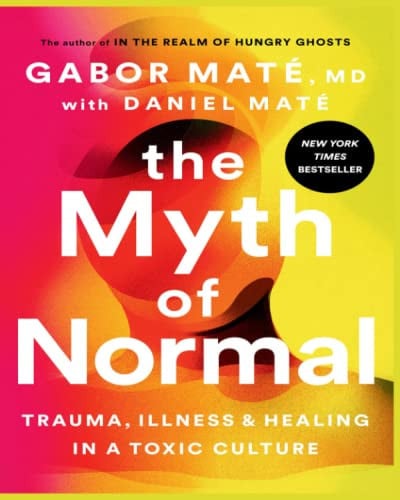
independently published 2022 515 pages

The Bell Curve

Herrnstein, Richard J.
The ability to manipulate information has become the single most important element of success. High intelligence is an increasingly precious raw material. But despite decades of fashionable denial, the overriding and insistent truth about intellectual ability is that it is endowed unequally.In this audio presentation of The Bell Curve , author Charles Murray explores the ways that low intelligence, independent of social, economic, or ethnic background, lies at the root of many of our social problems. He also discusses another taboo that intelligence levels differ among ethnic groups.According to the authors, only by facing up to these differences can we accurately assess the nation's problems and make realistic plans to address them. However, if we accept that there are intelligence differences among groups, we must learn to avoid prejudicial assumptions about any individual of a given group whose intelligence level may be anywhere under the bell curve.
Free Press 1996

What makes love last? how to build trust and avoid betrayal

Gottman, John Mordechai
"One of the foremost relationship experts at work today applies the insights of science toward understanding the real meaning of trust between a couple. He decodes the "why" behind betrayal and shows how partners can avoid or recover from unfaithfulness and maintain a loving relationship.Dr. John Gottman, the country's pre-eminent researcher on marriage, is famous for his Love Lab at the University of Washington in Seattle where he deciphers the mysteries of human relationships through scientific research. His thirty-five years of exploration have earned him numerous major awards, including from the National Institute of Mental Health, the American Psychological Association, and the American Association for Marriage and Family Therapy. Now, Dr. Gottman offers surprising findings and advice on the characteristic that is at the heart of all relationships: Trust. Dr. Gottman has developed a formula that precisely calculates any couple's loyalty level. The results determine a relationship's likely future, including the potential for one or both partners to stray. A Love You Can Trust shows couples how to bolster their trust level and avoid what Dr. Gottman calls the "Roach Motel for Lovers." He describes how the outcome of--"sliding door moments," small pivotal points between a couple, can lead either to more emotional connection or to discontent. He suggests a new approach to handling adultery and reveals the varied and unexpected non-sexual ways that couples often betray each other. A Love You Can Trust guides couples through an empirically tested, trust-building program that will let them repair and maintain a long-term, intimate, and romantic relationship"--
Simon & Schuster 2012 304 pages

Why is Sex Fun? The Evolution of Human Sexuality

Jared M. Diamond
Human sexuality seems normal to us, but it is bizarre by the standards of other animals. Diamond arues that our strange sex lives were as crucial to our rise to human status as our large brains. Among the aspects of human sexuality discussed are female menopause, our having sex in private, our often having sex for fum rather than procreation and the expansion of women's breasts even before use in lactation, and the battle of the sexes over parental care. These features might seem too natural to require explaination, but on reflection they prove surprisingly difficult to account for.
Weidenfeld & Nicolson 1997 168 pages

Family therapy techniques

Minuchin, Salvador
A master of family therapy, Salvador Minuchin, traces for the first time the minute operations of day-to-day practice. Dr. Minuchin has achieved renown for his theoretical breakthroughs and his success at treatment. Now he explains in close detail those precise and difficult maneuvers that constitute his art. The book thus codifies the method of one of the country’s most successful practitioners.
Harvard University Press 1981-01-01 303 pages

The Assault on Truth

Jeffrey Masson
A fearless investigation into Freud’s greatest reversal—and the century of silence that followed— The Assault on Truth exposes how the father of psychoanalysis buried his own discovery about childhood trauma, reshaping the course of psychology forever. In 1896, Sigmund Freud presented his revolutionary “seduction theory,” arguing that childhood sexual abuse directly caused adult mental illness. Just nine years later, he completely reversed this stance, insisting these traumatic memories were mere fantasies. Why did Freud retract his original theory? And why has the psychoanalytic community gone to such lengths to conceal this critical reversal? In the landmark book, The Assault on Truth , Jeffrey Moussaieff Masson draws on unique access to formerly sealed and hidden papers to uncover the truth behind this pivotal moment in psychoanalytic history. Masson dares to explore the reality that neither Freud nor his followers could bear to face. This investigation reveals the enduring impact of Freud's decision on the theory and practice of psychoanalysis. Bracing in its honesty and gripping in its revelations, The Assault on Truth is the book that prompted Masson’s dramatic break with the psychoanalytic establishment and launched his brilliant career as an independent thinker and writer.
Histria Books 2026-06-16 380 pages

Peace of mind

Liebman, Joshua Loth
In "Peace of Mind," Rabbi Liebman tries to present some answers that have proved helpful to him about the universal human dilemmas of conscience, love, fear, grief, and God - crucial problems that present themselves in every kind of society, and, he believes, will present themselves as long as man is man. Whether under capitalism, socialism, or communism, men and women will still face the purely personal and profoundly individual issues of life and death as well as the tangled interpersonal relations of parent and child, brother and sister, husband and wife. Personal experience plus rich and varied contacts in the author's ministry led him to believe that a book written by a religionist explaining just what modern psychology has discovered about human beings, why we sometimes hate ourselves and hate others, why we grow afraid, why we lose faith in life and in God, might be of real help to perplexed moderns. This science also tells us what we can do to change ourselves and our mental attitudes in relation to our own personalities and in interrelations with other human beings. "Peace of Mind" attempts to distill the helpful insights about human nature that psychology has discovered and the encouraging news from the scientific clinic about man's infinite capacity to change and improve himself, as well as to correlate these latest scientific discoveries with the truest religious insights and goals of the ages.
Simon and Schuster 1946 203 pages

The psychological birth of the human infant: symbiosis and individuation

Mahler, Margaret S.
Margaret S. Mahler and her collaborators break new ground in developmental psychology and present the first complete theoretical statement of Dr. Mahler's observations on the normal separation-individuation process.Separation and individuation are presented in this major work as two complementary developments. Separation is described as the child's emergence from a symbiotic fusion with the mother, while individuation consists of those achievements marking the child's assumption of his own individual characteristics. Each of the subphases of separation-individuation is described in detail, supported by a wealth of clinical observations which trace the tasks confronting the infant and his mother as he progresses toward achieving his own individuality.A number of chapters are devoted to following five children epigenetically through their subphase development. A separate section describes the authors' methodology, the importance of the research setting, and the effects of changes in the setting. The extensive appendices by Fred Pine discuss the uniqueness of the data-gathering techniques used by the authors. In addition, a useful glossary of concepts defines the new terms that Dr. Mahler has introduced.This book represents an important breakthrough in understanding the human infant and makes a unique contribution to the science of human behavior.
Basic Books 1975-07-06 308 pages

Capture

Kessler, David A.
Why do we think, feel and act in ways we wished we did not? For decades, New York Times bestselling author Dr. David A. Kessler has studied this question with regard to tobacco, food and drugs. Over the course of these investigations, he identified one underlying mechanism common to a broad range of human suffering. This phenomenon—capture—is the process by which our attention is hijacked and our brains commandeered by forces outside of our control. In Capture , Dr. Kessler considers some of the most profound questions we face as human beings: What are the origins of mental afflictions—from everyday unhappiness to addiction and depression—and how are they connected? Where does healing and transcendence fit into this realm of emotional experience? Analyzing an array of insights from psychology, medicine, neuroscience, literature, philosophy and theology, Dr. Kessler deconstructs centuries of thinking, examining the central role of capture in mental illness and questioning traditional labels that have obscured our understanding of it. He explores the concept of capture through the emotionally resonant stories of both well-known and unknown people caught in its throes. Dr. Kessler argues that the closer we come to fully comprehending the nature of capture, the better the chance to alleviate its effects and successfully change our thoughts and behaviour. Capture offers insight into how we form thoughts and emotions, manage trauma and heal. For the first time, we can begin to understand the underpinnings of not only mental illness, but also our everyday worries and anxieties.
Harper Perennial 2017-03-07 336 pages

The Evolution of Fatherhood

Jeffrey Moussaieff Masson
Inspired by the wonder of his own parental experiences, former psychoanalyst and New York Times best-selling author Jeffrey Masson offers a remarkable look at one of the most fulfilling roles in the animal world: fatherhood. In The Evolution of Fatherhood , he explores the extraordinary dedication and behavior of nature's most outstanding dads. Discover the male emperor penguin incubating his egg through Antarctic blizzards, prairie dog dads teaching their pups vital life skills through play, and the South American tamarin monkey who actively "coaches" his mate through labor. Learn why wolves make devoted fathers, while their close relatives, dogs, often don't display the same level of paternal care. With captivating writing and impeccable research, Masson celebrates the unique and often surprising role males play in the lives of their young. He contrasts these heroes with nature's less involved fathers--like lions, langurs, and bears--and challenges the notion that paternal care is purely biological. Masson passionately demonstrates that for many animals, fatherhood is a profound, all-encompassing emotional experience. Compelling and inspirational, The Evolution of Fatherhood is a book that will forever change how you perceive parenthood, family bonds, and the rich emotional lives of the animals who share our world.
Histria Books 2024-02-06 242 pages

The Future of an Illusion

Sigmund Freud
First published in German in 1927 and in English in 1928, "The Future of an Illusion" is Sigmund Freud's seminal work on the psychology of religion in which Freud discusses the history of and psychological basis for religion. Chief amongst the arguments of the work is that religion is ultimately the result of the psychological struggle against the ultimate fate of life, death. So strong is the desire to give meaning to life that our ancestors created their various myths long ago. Freud further explains the psychological desire to bring about order in a chaotic world and the consequential demand for an organizing force that gives power to religion. Once empowered organized religion perpetuates itself through the strength of tradition and a culture which penalizes doubt, Freud argues. A clearly atheistic polemic against religion, "The Future of an Illusion" presents some compelling arguments for the phenomenon of religion and what future place there might be for it in a modern society. This edition is printed on premium acid-free paper.
Neeland Media 2024-03-31 44 pages

Mapping the moral domain

Gilligan, Carol, ed
In the fourteen articles collected in this volume, Carol Gilligan and her colleagues expand the theoretical base of In a Different Voice and apply their research methods to a variety of life situations. The contrasting voices of justice and care clarify different ways in which women and men speak about relationships and lend different meanings to connection, dependence, autonomy, responsibility loyalty, peer pressure, and violence. By examining the moral dilemmas and self-descriptions of children, high school students, urban youth, medical students, mothers, lawyers, and others, the authors chart a new terrain: a mapping of the moral domain that includes the voices of women. In this new terrain the authors trace far-reaching implications of the inclusion of women’s voices for developmental psychology, for education, for women, and for men.
Center for the Study of Gender, Education and Human Development, Harvard University Graduate School of Education 1988 324 pages

My Father's Guru

Jeffrey Moussaieff Masson
Growing up in the Hollywood Hills during the 1950s, Jeffrey Moussaieff Masson thought it was perfectly normal that a guru named Paul Brunton lived with his family, dictating everything from their diet and daily rituals to their travel plans and even his parents' sex life. In this extraordinary memoir, My Father's Guru , Masson reflects on the sheer bizarreness of his childhood - particularly the intense relationship between his father and the elusive, eminent mystic he revered (and financially supported) for years. With candor and charm, Masson describes his father's conviction that Paul Brunton - P.B. to his followers - was a living God destined to fill their lives with enlightenment and wonder. As the Masson family's personal guru, Brunton freely discussed his life on other planets, laid down strict rules on fasting and meditation, and constantly warned of the imminence of World War III. For years, young Jeffrey was as ardent a disciple as his father. But with the onset of adolescence came a dramatic revolt against this domestic deity and everything he represented. Filled with absurdist humor and intimate confessions, My Father's Guru is the spellbinding coming-of-age story of one of our most brilliant writers, navigating an unbelievable upbringing and ultimately finding his own path.
Histria Books 2024-02-06 200 pages