5 results for "Psychology"

Ways of seeing: based on the television series

Berger, John
“The relation between what we see and what we know is never settled” -- so opens John Berger’s revolutionary million-copy bestseller on how to look at art John Berger's Ways of Seeing is one of the most stimulating and the most influential books on art in any language. First published in 1972, it was based on the BBC television series about which the Sunday Times critic commented: "This is an eye-opener in more ways than one: by concentrating on how we look at paintings . . . he will almost certainly change the way you look at pictures." By now he has.
British Broadcasting Corporation and Penguin 2008 166 pages

About looking

Berger, John
As a novelist, art critic, and cultural historian, John Berger is a writer of dazzling eloquence and arresting insight whose work amounts to a subtle, powerful critique of the canons of our civilization. In About Looking he explores our role as observers to reveal new layers of meaning in what we see. How do the animals we look at in zoos remind us of a relationship between man and beast all but lost in the twentieth century? What is it about looking at war photographs that doubles their already potent violence? How do the nudes of Rodin betray the threats to his authority and potency posed by clay and flesh? And how does solitude inform the art of Giacometti? In asking these and other questions, Berger quietly -- but fundamentally -- alters the vision of anyone who reads his work.
Vintage International 1991-09 205 pages

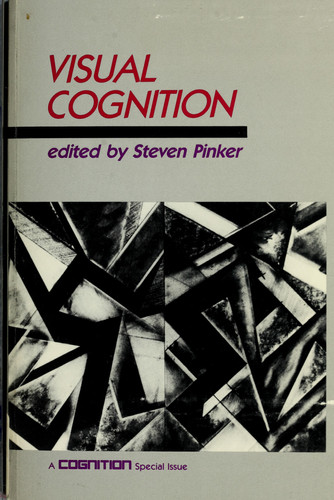
Visual cognition

Steven Pinker
These essays tackle some of the central issues in visual cognition, presentingexperimental techniques from cognitive psychology, new ways of modeling cognitive processes oncomputers from artificial intelligence, and new ways of studying brain organization fromneuropsychology, to address such questions as: How do we recognize objects in front of us? How do wereason about objects when they are absent and only in memory? How do we conceptualize the threedimensions of space? Do different people do these things in different ways? And where are theseabilities located in the brain?While this research, which appeared as a special issue of the journalCognition, is at the cutting edge of cognitive science, it does not assume a highly technicalbackground on the part of readers. The book begins with a tutorial introduction by the editor,making it suitable for specialists and nonspecialists alike.Steven Pinker is Associate Professor,Department of Psychology and Center for Cognitive Science at MIT.
MIT Press 1985 280 pages