24 results for "Relationships"

On the run: fugitive life in an American city

Goffman, Alice
"Forty years in, the War on Drugs has done almost nothing to prevent drugs from being sold or used, but it has nonetheless created a little-known surveillance state in America's most disadvantaged neighborhoods. Arrest quotas and high-tech surveillance techniques criminalize entire blocks, and transform the very associations that should stabilize young lives--family, relationships, jobs--into liabilities, as the police use such relationships to track down suspects, demand information, and threaten consequences. Alice Goffman spent six years living in one such neighborhood in Philadelphia, and her close observations and often harrowing stories reveal the pernicious effects of this pervasive policing. Goffman introduces us to an unforgettable cast of young African American men who are caught up in this web of warrants and surveillance--some of them small-time drug dealers, others just ordinary guys dealing with limited choices. All find the web of presumed criminality, built as it is on the very associations and friendships that make up a life, nearly impossible to escape."--Provided by publisher.
Picador 2014 279 pages

An offer from a gentleman

Quinn, Julia
"Sophie Beckett never dreamed she'd be able to sneak into Lady Bridgerton's famed masquerade ball-or that "Prince Charming" would be waiting there for her! Though the daughter of an earl, Sophie has been relegated to the role of servant by her disdainful stepmother. But now, spinning in the strong arms of the debonair and devastatingly handsome Benedict Bridgerton, she feels like royalty. Alas, she knows all enchantments must end when the clock strikes midnight. Ever since that magical night, a radiant vision in silver has blinded Benedict to the attractions of any other-except, perhaps, this alluring and oddly familiar beauty dressed in housemaid's garb whom he feels compelled to rescue from a most disagreeable situation. He has sworn to find and wed his mystery miss, but this breathtaking maid makes him weak with wanting her. Yet, if he offers her his heart, will Benedict sacrifice his only chance for a fairy-tale love" -- Front jacket flap.
Avon, an imprint of HarperCollins Publishers 2021 453 pages

Better together: restoring the American community

Putnam, Robert D.
In his acclaimed bestselling book, Bowling Alone: The Collapse and Revival of American Community , Robert Putnam described a thirty-year decline in America's social institutions. The book ended with the hope that new forms of social connection might be invented in order to revive our communities. In Better Together , Putnam and longtime civic activist Lewis Feldstein describe some of the diverse locations and most compelling ways in which civic renewal is taking place today. In response to civic crises and local problems, they say, hardworking, committed people are reweaving the social fabric all across America, often in innovative ways that may turn out to be appropriate for the twenty-first century. Better Together is a book of stories about people who are building communities to solve specific problems. The examples Putnam and Feldstein describe span the country from big cities such as Philadelphia, San Francisco, and Chicago to the Los Angeles suburbs, small Mississippi and Wisconsin towns, and quiet rural areas. The projects range from the strictly local to that of the men and women of UPS, who cover the nation. Bowling Alone looked at America from a broad and general perspective. Better Together takes us into Catherine Flannery's Roxbury, Massachusetts, living room, a UPS loading dock in Greensboro, North Carolina, a Philadelphia classroom, the Portsmouth, New Hampshire, naval shipyard, and a Bay Area Web site. We meet activists driven by their visions, each of whom has chosen to succeed by building community: Mexican Americans in the Rio Grande Valley who want paved roads, running water, and decent schools; Harvard University clerical workers searching for respect and improved working conditions; Waupun, Wisconsin, schoolchildren organizing to improve safety at a local railroad crossing; and merchants in Tupelo, Mississippi, joining with farmers to improve their economic status. As the stories in Better Together demonstrate, bringing people together by building on personal relationships remains one of the most effective strategies to enhance America's social health.
Simon & Schuster 2003 318 pages

Sex matters: how modern feminism lost touch with science, love, and common sense

Charen, Mona
Author of the New York Times bestseller Useful Idiots and popular columnist Mona Charen takes a close, reasoned look at the aggressive feminist agenda undermining the success and happiness of men and women across the country In this smart, deeply necessary critique, Mona Charen unpacks the ways feminism fails us at home, in the workplace, and in our personal relationships--by promising that we can have it all, do it all, and be it all. Here, she upends the feminist agenda and the liberal conversation surrounding women's issues by asking tough and crucial questions, such as: Did women's full equality require the total destruction of the nuclear family? Did it require a sexual revolution that would dismantle traditions of modesty, courtship, and fidelity that had characterized relations between the sexes for centuries? Did it cause the broken dating culture and the rape crisis on our college campuses? Did it require war between the sexes that would deem men the "enemy" of women? Have the strides of feminism made women happier in their home and work life. (The answer is No.) Sex Matters tracks the price we have paid for denying sex differences and stoking the war of the sexes--family breakdown, declining female happiness, aimlessness among men, and increasing inequality. Marshaling copious social science research as well as her own experience as a professional as well as a wife and mother, Mona Charen calls for a sexual ceasefire for the sake of women, men, and children.
Crown Forum 2018-06-26 295 pages

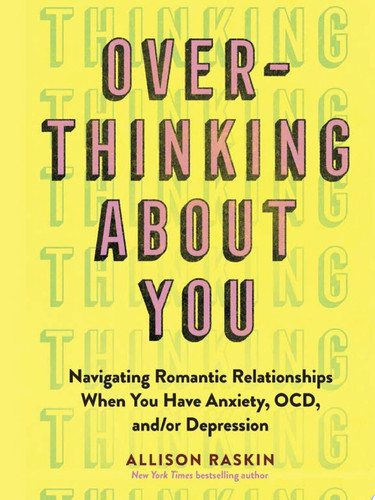
Overthinking about you: navigating romantic relationships when you have anxiety, OCD, and/or depression

Raskin, Allison
"Dating is hard-but when you live with anxiety, OCD, and/or depression, dating can feel like a minefield. At last, a book that focuses solely on mental health and dating-an intersection that demands attention, given that one in five Americans will experience a mental illness in a given year. Overthinking About You is a memoir-driven self-help book that explores the complex connection between brain and heart, for an engaging, useful, and relatable read for anyone whose mental health has gotten in the way of successful romantic relationships"--
Workman Publishing 2022-05-03 197 pages

Class and its others

J. K. Gibson-Graham,Stephen A. Resnick,Richard D. Wolff
A surprising and innovative look at class that proposes new approaches to this important topic. While references to gender, race, and class are everywhere in social theory, class has not received the kind of theoretical and empirical attention accorded to gender and race. A welcome and much-needed corrective, this book offers a novel theoretical approach to class and an active practice of class analysis. The authors offer new and compelling ways to look at class through examinations of such topics as sex work, the experiences of African American women as domestic laborers, and blue- and white-collar workers. Their work acknowledges that individuals may participate in various class relations at one moment or over time and that class identities are multiple and changing, interacting with other aspects of identity in contingent and unpredictable ways. The essays in the book focus on class difference, class transformation and change, and on the intersection of class, race, gender, sexuality, and other dimensions of identity. They find class in seemingly unlikely places-in households, parent-child relationships, and self-employment-and locate class politics on the interpersonal level as well as at the level of enterprises, communities, and nations. Taken together, they will prompt a rethinking of class and class subjectivity that will expand social theory.
University of Minnesota Press 2000 258 pages

The misunderstanding

Némirovsky, Irène
The Misunderstanding is Irène Némirovsky's first novel, written when she was just twenty-one and published in a literary journal two years later. An intense story of self-destructive and blighted love, it is also a tragic satire of French society after the Great War. Yves Harteloup, scarred by the war, is a disappointed young man, old money fallen on hard times, who returns for the summer to the rich, comfortable Atlantic resort of Hendaye, where he spent blissful childhood holidays. He becomes infatuated with a beautiful, bored young woman, Denise, whose rich husband is often away on business. Intoxicated by summer nights and Yves' intensity, Denise falls passionately in love, before the idyll has to end and Yves must return to his mundane office job. In the mournful Paris autumn their love flounders on mutual misunderstanding, in the apparently unbridgeable gap between a life of idle wealth and the demands of making a living, between a woman's needs and a man's way of loving. As Denise is driven mad with desire and jealous suspicion, Yves, too sure of her, tortures himself and her with his emotional ambivalence. Taking her sophisticated mother's advice, Denise takes action...which she may regret forever. With a sharp satirical eye and a characteristic perception for the fault lines in human relationships, Irène Némirovsky's first novel shows sure signs of the brilliant novelist she was to become.
Chatto & Windus 2012 164 pages

Russia 2010 and what it means for the world

Yergin, Daniel
The collapse of the Soviet Union and communism is the most important event of the late twentieth century. But what comes next? In this compelling and illuminating book, which includes the tumultuous upheavals of 1994, Daniel Yergin and Thane Gustafson present four 'histories' of the future for Russia and offer a unique vision of 'capitalism Russian style'. They provide essential insight into emerging power relationships, local wars that could turn into wider conflicts, the time bombs of ethnic strife that sit on Russia's borders - and the economic and political opportunities facing us for the future.
Nicholas Brealey 1994 327 pages

Gender vertigo: American families in transition

Risman, Barbara J.
Just as every society has an economic and political structure, so too every society has a gender structure. Barbara Risman's original research on single fathers, married baby boom mothers, and heterosexual egalitarian couples and their children, reported in this intriguing book, weaves together qualitative and quantitative data from surveys, interviews, and observation. Risman shows how gender as a social structure affects individuals, organizes expectations attached to social positions, and becomes an integral part of social institutions. She provides empirical evidence that human beings are capable of enduring and affective intimate relationships without gender as the central organizing mechanism. The data also strongly indicate that men and women are capable of changing gendered ways of being throughout their lives. In her analysis of nontraditional families, Risman finds that gender expectations can be overcome if couples are willing to flout society and risk "gender vertigo." Most children of such families adopt their parents' beliefs about gender, but they do struggle with the contradictions between parental ideology and folk knowledge and expectations in peer relationships. The author argues that we can create a just society only by creating a society in which gender is an irrelevant category for social life--a post-gender society.
Yale University Press 1999 189 pages

The post-office girl

Zweig, Stefan
The post-office girl is Christine, who looks after her ailing mother and toils in a provincial Austrian post office in the years just after the Great War. One afternoon, as she is dozing among the official forms and stamps, a telegraph arrives addressed to her. It is from her rich aunt, who lives in America and writes requesting that Christine join her and her husband in a Swiss Alpine resort. After a dizzying train ride, Christine finds herself at the top of the world, enjoying a life of privilege that she had never imagined. But Christine's aunt drops her as abruptly as she picked her up, and soon the young woman is back at the provincial post office, consumed with disappointment and bitterness. Then she meets Ferdinand, a wounded but eloquent war veteran who is able to give voice to the disaffection of his generation. Christine's and Ferdinand's lives spiral downward, before Ferdinand comes up with a plan which will be either their salvation or their doom. Never before published in English, this extraordinary book is an unexpected and haunting foray into noir fiction by one of the masters of the psychological novel.
New York Review Books 2008 257 pages

Opening doors: the unlikely alliance between the Irish and the Jews in America

Diner, Hasia R.
"The extraordinary untold story of how Irish and Jewish immigrants worked together to secure legitimacy in America. Popular belief holds that the various ethnic groups that emigrated to the United States at the turn of the twentieth century regarded one another with open hostility, fiercely competing for limited resources and even coming to blows in the crowded neighborhoods of major cities. One of the most enduring stereotypes is that of rabidly anti-Semitic Irish Catholics, like Father Charles Coughlin of Boston and the sensationalized Gangs of New York trope of Irish street thugs attacking defenseless Jewish immigrants. In Opening Doors, Hasia Diner, one of the world's preeminent historians of immigration, tells a very different story; far from confrontational, the prevailing relationships between Jewish and Irish Americans were overwhelmingly cooperative, and the two groups were dependent upon one another to secure stable and upwardly mobile lives in their new home. The Irish had emigrated to American cities en masse a generation before the first major wave of Jewish immigrants arrived, and had already entrenched themselves in positions of influence in urban governments, public education, and the labor movement. Jewish newcomers recognized the value of aligning themselves with another group of religious outsiders who were able to stand up and demand rights and respect despite widespread discrimination from the Protestant establishment, and the Irish realized that they could protect their political influence by mentoring their new neighbors in the intricacies of American life. Opening Doors draws from a deep well of historical sources to show how Irish and Jewish Americans became steadfast allies in classrooms, picket lines, and political machines, and ultimately helped one another become key power players in shaping America's future. In the wake of rising anti-Semitism and xenophobia today, this informative and accessible work offers an inspiring look at a time when two very different groups were able to find common ground and work together to overcome bigotry, gain representation, and move the country in a more inclusive direction"--
St. Martin's Press 2024 277 pages

The American intellectual elite

Kadushin, Charles
There are almost as many works about intellectuals as there are intellectuals. Perhaps this is because intellectuals are masters of the word and their mastery is often used to write about themselves. Indeed, with the possible exceptions of sports figures and film actors, intellectuals may be the most overpublicized people in America. In this classic study, originally published in 1974, Charles Kadushin examines the attitudes of that class of people known as the American intellectual elite. While most works on intellectuals first establish who should be included under the title "intellectual," and debate their characteristics, Kadushin instead sets forth a sociological history of leading American intellectuals of the late 1960s. The book's concern, however, is primarily with time and place. While The American Intellectual Elite is very much about social circles and the networked "small world" of intellectuals defined by the institutions such as the journals and magazines around which they gathered, the uniqueness of this volume is the recognition that fact must come before theory. Thus, the collective attitude of leading intellectuals of the sixties are presented in a straightforward and dispassionate manner on topics as diverse as the Vietnam War, race relations, foreign and domestic policy, and the place of intellectuals in the resolution of such issues. Now in paperback with a new introduction by the author, The American Intellectual Elite is an influential work that will be valued by students of sociology, members of the intellectual elite, and professionals and students of contemporary American history. "What a boon to sociologists of knowledge, and, in fact, to anyone who cares about the role and future of intellectuals to have THE AMERICAN INTELLECTUAL ELITE back and print and with a thoughtful new essay by the author that places the work in the context of thirty years of social and cultural change that have transpired since its publication. Professor Kadushin not only recognized that intellectuals populate an intellectual field that is, to a far greater extent than others, constituted and sustained by the networks of relationships among them but he pioneered in the application of social network analysis to identify both players and links using concrete social data. In a conversation too frequently dominated by the empirically undisciplined claims of those with the greatest stakes in the debate, THE AMERICAN INTELLECTUAL ELITE stands out as a beacon of careful research and clear thinking. One hopes that social scientists and other interested in modern intellectual life will read it carefully, and even that republication may inspire replication." -Professor Paul DiMaggio, Princeton University Charles Kadushin is professor emeritus of sociology at the Graduate Center of CUNY and Distinguished Scholar at Brandeis University, and has also taught at Columbia University and Yale University's School of Management. He is the author of Why People Go to Psychiatrists.
Transaction Publishers 2006 395 pages

Surviving salvation: the Ethiopian Jewish family in transition

Westheimer, Ruth K.
On May 25, 1991, a Boeing 747 packed with eleven hundred Ethiopians left the besieged capital of Addis Ababa for Ben Gurion Airport near Tel Aviv. In the next thirty-six hours, thirteen thousand more Ethiopians were to depart for Israel in what became known as "Operation Solomon." After generations of praying and years of diplomatic wrangling, Ethiopia's Jews were at last going to the Promised Land. In the last twelve years, forty thousand "Falasha," or, as they prefer to call themselves, Ethiopian Jews, have left their native land and emigrated to Israel. Rarely in human history has an entire community been transplanted in such a short period from one civilization to another. Dr. Ruth Westheimer, the world's most famous psychosexual therapist, and sponsor of a companion documentary to this volume, and Dr. Steven Kaplan, a renowned authority on Ethiopian Jewry, were among the millions of people around the world watching this human drama play itself out on their television screens. Their mutual interest in the Ethiopian Jews, as well as a series of unique circumstances, led them to join forces to produce this engrossing and handsomely illustrated volume. But this is not a book about the journey of the Ethiopian Jews; rather it is a chronicle of their experiences once they reached their destination. In Ethiopia, they were united by a shared faith and a broad network of kinship ties that served as the foundation of their rural communal society. They observed a form of religion based on the Bible that included customs such as the isolation of women during menstruation, long abandoned by Jewish communities elsewhere in the world. Suddenly transplanted, they are becoming rapidly and aggressively assimilated. Thrust from isolated villages without electricity or running water into the urban bustle of modern, postindustrial society, Ethiopian Jews have seen their family relationships radically transformed. Gender roles are being continually redefined, often resulting in marital crises; parents watch with a growing sense of alienation as their children become "westernized"; women, traditionally confined to the domestic realm, are now moving into the labor force - these are but a few of the whirlwind of wholesale changes confronting the Ethiopian Jews in Israel. Combining Dr. Ruth's insights and experiences with Dr. Kaplan's expertise, this book, illustrated with over forty striking photographs, is the tale of their struggle and the emotional saga of their experiences in the Promised Land.
New York University Press 1992 148 pages

Austerity baby

Wolff, Janet
"Austerity Baby might best be described as an "oblique memoir". Janet Wolff's fascinating volume is a family history - but one that is digressive and consistently surprising. The central underlying and repeated themes of the book are exile and displacement; lives (and deaths) during the Third Reich; mother-daughter and sibling relationships; the generational transmission of trauma and experience; transatlantic reflections; and the struggle for creative expression. Stories mobilised, and people encountered, in the course of the narrative include: the internment of aliens in Britain during the Second World War; cultural life in Rochester, New York, in the 1920s; the social and personal meanings of colour(s); the industrialist and philanthropist, Henry Simon of Manchester, including his relationship with the Norwegian explorer, Fridtjof Nansen; the liberal British campaigner and MP of the 1940s, Eleanor Rathbone; reflections on the lives and images of spinsters. The text is supplemented and interrupted throughout by images (photographs, paintings, facsimile documents), some of which serve to illustrate the story, others engaging indirectly with the written word."--Publisher's description.
Manchester University Press 2017 262 pages

South Africa: the structure of things then

Goldblatt, David
South Africa: The Structure of Things Then is the culmination of fifteen years of photography, research, and writing by acclaimed South African photographer David Goldblatt. In more than 130 evocative black-and-white photographs, Goldblatt probes the relationships between South African structures and the forces that shaped the society from 1652 to 1990, a period he calls the Era of Baasskap, or white domination. His seminal exploration compels a reexamination of South Africa's cultural heritage as manifested in its structures. The hopes and fears of the builders are captured alongside their buildings. In his introduction and in the extended captions to the photographs, Goldblatt gives fascinating insight into the meaning of the structures, and the context from which each photograph emerged. Goldblatt's more than thirty years of experience imbue his carefully composed images with meaningful cultural overtones. The work is complemented by Neville Dubow's illuminating critical appraisal, "Constructs: Reflections on a Thinking Eye."
Monacelli Press 1998 260 pages

Greed

Jelinek, Elfriede
Kurt Janisch is an ambitious, but frustrated country policeman. Things are not going right in his life - at least not fast enough. But a country policeman gets talking to a lot of people in the line of duty - particularly women. Lonely, middle-aged women, women with a bit of property perhaps...Matters go from bad to worse: for Kurt Janisch, for the women who fall for him. Someone sees too much, knows too much. Soon there's a body in a lake and a murderer to be caught. A thriller set amid the mountains and small towns of southern Austria, "Greed" is Elfriede Jelinek's most accessible novel since "The Piano Teacher". But, as always, Jelinek gives the reader a lot more to think about: the ecological costs of affluence, the inescapable burden and inadequacy of our everyday words, the exploitative nature of relations between men and women, the impossibility of life without relationships. A meditative reflection on ageing, "Greed" is another chapter in Jelinek's chronicling of her love/hate relationship with Austria.
Serpent's Tail 2006 340 pages

The American dream in the information age

Newman, Otto
This book explores the changing nature of the American Dream in the context of current and impending developments. Effective as they have been, traditional values need to be reassessed. Trends such as the informatics revolution, globalization, and changing patterns of work and free time ought to be taken into account. While the main focus is on the United States, the content is equally relevant to other major industrial societies experiencing similar forms of change. These changes have profound implications within the political, economic, and social realms. Particular attention is given to the rising incidence and significance of advance technology, which is capable of transforming not only the workplace but equally social relationships, family life, and individual development in a positive way.
St. Martin's Press 1999-07-30 229 pages