
2 results for "Resilience"

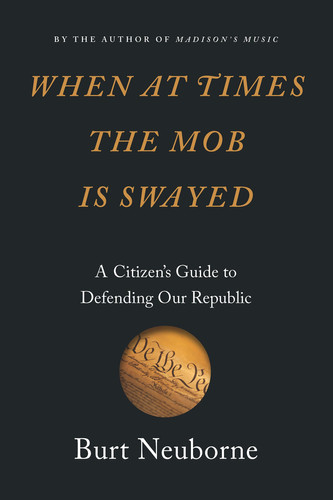
When at times the mob is swayed: a citizen's guide to defending our republic

Neuborne, Burt
From a leading constitutional lawyer who has sued every president since LBJ, a masterful explication of the true "pillars of our democracy" On November 9, 2016--and again on January 6, 2021--many Americans feared that our democracy was on the verge of collapse. But is it? In an erudite and brilliant evaluation of the current state of our government, noted constitutional scholar Burt Neuborne administers a stress test to democracy and concludes that our unprecedented sets of constitutional protections, all endorsed by both major parties, stand between us and an authoritarian federal regime: namely the division of powers between the three branches, the rights reserved to the states, and the Bill of Rights. Neuborne parses the genius of our constitutional system and the ways its built-in resilience will ultimately survive current attempts to dismantle it. While many important issue areas--women's right to choose, LGBTQ rights, separation of church and state--risk erosion, Neuborne argues that the Constitution's inherent defense mechanisms can buy us time. But only an active citizenry will enable us to defend our cherished rights and protections, fulfilling Ben Franklin's charge to keep our republic.
New Press 2019 246 pages

51st state?

Altman, Dennis
Australian prime ministers since Harold Holt have all fostered close relationships with the United States, but John Howard has initiated economic and military policies that have bound the two countries even tighter. As a result, many Australians now believe that not only our sovereignty but also our very identity as a nation is under threat, and that we are fast becoming America's 51st state. If this view is correct, it should be reflected not only in our foreign policy but also in our domestic policies. Indeed, the weakening of social safety nets, the privatisation of areas long seen as government responsibilities, and the signing of the Free Trade Agreement all point to the triumph of US-style neo-liberalism. Yet, as Dennis Altman shows, the story is not so simple. Even as official rhetoric immerses us ever deeper into the US worldview, the resilience of the Australian social contract is imposing real limits on the application of neo-liberal principles. And, despite his enthusiastic membership of the coalition of the willing, Howard has assiduously cultivated economic and political ties within our region which, as the global balance of power shifts, will become increasingly relevant. In this elegant and sophisticated meditation on Australian identity, Altman suggests that the tendency to attribute malign American influence to everything we dislike about the contemporary world is the flipside of seeing the US as the only model worthy of emulation, and serves to conceal the deeper questions we face namely, how does Australia imagine its future?
Scribe Short Books 2006 136 pages