167 results for "Science"

Night

Wiesel, Elie,Wiesel, Marion
Born in the town of Sighet, Transylvania, Elie Wiesel was a teenager when he and his family were taken from their home in 1944 to Auschwitz concentration camp, and then to Buchenwald. Night is the terrifying record of Elie Wiesel's memories of the death of his family, the death of his own innocence, and his despair as a deeply observant Jew confronting the absolute evil of man. This new translation by his wife and most frequent translator, Marion Wiesel, corrects important details and presents the most accurate rendering in English of Elie Wiesel's testimony to what happened in the camps and of his unforgettable message that this horror must simply never be allowed to happen again.
Penguin 2016-05-16 144 pages

The Happiest Man on Earth

Eddie Jaku
Eddie Jaku always considered himself a German first, a Jew second. He was proud of his country. But all of that changed on 9 November 1938, when he was beaten, arrested and taken to a concentration camp. Over the next seven years, Eddie faced unimaginable horrors every day, first in Buchenwald, then in Auschwitz, then on the Nazi death march. He lost family, friends, his country. Because he survived, Eddie made the vow to smile every day. He pays tribute to those who were lost by telling his story, sharing his wisdom and living his best possible life. He now believes he is the 'happiest man on earth'.
Macmillan 2020 195 pages

Iron Curtain The Crushing of Eastern Europe, 1944-1956

Anne Applebaum
At the end of WWII, the Soviet Union, to its surprise and delight, found itself in control of a huge swath of territory in Central Europe. It set out to convert a dozen radically different countries to a completely new political and moral system, Communism. Iron Curtain describes how the communist regimes of Eastern Europe were created, and what daily life was like once they were complete. Applebaum draws on newly opened European archives and personal accounts translated for the first time to portray in devestating detail millions of individuals trying to adjust to a way of life that challenged their every belief, rendered worthless their every qualification, and took everything away they had accumulated. Today the Soviet Block is a lost civilization, once whose cruelty, paranoia, bizarre morality and strange aethestics Applebaum captures in the electrifying pages of this book.
McClelland & Stewart 2012-10-30 608 pages

How To Be Parisian Wherever You Are

Anne Berest,Audrey Diwan,Caroline De Maigret,Sophie Mas
How to Be a Parisian brilliantly deconstructs the French woman's views on culture, fashion and attitude. Unlike other books on French style, this illustrated handbook is full of wit and self deprecating humour. Authors Anne Berest, Audrey Diwan, Caroline De Maigret and Sophie Mas are bohemian free thinkers and iconoclasts, and they are not afraid to cut through some of the myths. They say what you don't expect to hear, just the way you want to hear it. They are not against smoking in bed, and all for art, politics and culture, making everything look easy, and going against the grain.
Random House Australia 2014 253 pages

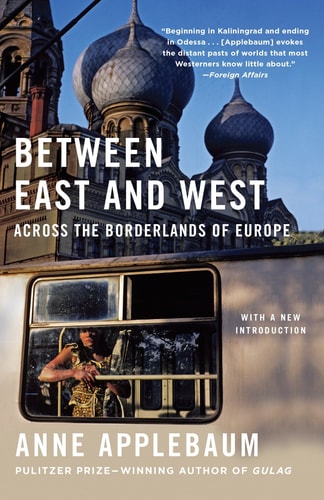
Between East and West Across the Borderlands of Europe

Anne Applebaum
In the summer and fall of 1991, Anne Applebaum, Pulitzer Prize-winning author of Gulag and Iron Curtain , took a three month road trip through the freshly independent borderlands of Eastern Europe. She deftly weaves the harrowing history of the region and captures the effects of political upheaval on a personal level. An extraordinary journey into the past and present of the lands east of Poland and west of Russia—an area defined throughout its history by colliding empires. Traveling from the former Soviet naval center of Kaliningrad on the Baltic to the Black Sea port of Odessa, Anne Applebaum encounters a rich range of competing cultures, religions, and national aspirations. In reasserting their heritage, the inhabitants of the borderlands attempt to build a future grounded in their fractured ancestral legacies. In the process, neighbors unearth old conflicts, devote themselves to recovering lost culture, and piece together competing legends to create a new tradition. Rich in surprising encounters and vivid characters, Between East and West brilliantly illuminates the soul of the borderlands and the shaping power of the past.
National Geographic Books 2017-06-13 336 pages

Christ Stopped at Eboli

Carlo Levi
It was to Lucania, a desolate land in southern Italy, that Carlo Levi--a doctor, painter, philosopher, and man of letters--was confined as a political prisoner because of his opposition to Italy's Fascist government at the start of the Ethiopian war in 1935. While there, Levi reflected on the harsh landscape and its inhabitants, peasants who lived the same lives their ancestors had, constantly fearing black magic and the near presence of death. In so doing, Levi offered a starkly beautiful and moving account of a place and a people living outside the boundaries of progress and time.
Penguin Books 1947 253 pages

The traitors circle: the true story of a secret resistance network in Nazi Germany--and the spy who betrayed them

Freedland, Jonathan
"When the whole world is lying, someone must tell the truth. Berlin, 1943: A group of high society anti-Nazi dissenters meet for a tea party one late summer's afternoon. They do not know that, sitting around the table, is someone poised to betray them all to the Gestapo. They form a circle of unlikely rebels, drawn from the German elite: two countesses, a diplomat, an intelligence officer, an ambassador's widow and a pioneering headmistress. What unites every one of them is a shared loathing of the Nazis, a refusal to bow to Hitler, and the courage to perform perilous acts of resistance: meeting in the shadows, rescuing Jews or plotting for a future Germany freed from the Führer's rule. Or so they believe. How did a group of brave, principled rebels, who had successfully defied Adolf Hitler for more than a decade, come to fall into such a lethal trap? Undone from within and pursued to near-destruction by one of the Reich's cruelest men, they showed a heroism in the face of the most vengeful regime in history that raises the question: what kind of person does it take to risk everything and stand up to tyranny?"-- Provided by publisher.
Harper, an imprint of HarperCollinsPublishers 2025-10-28 456 pages

Age of ambition: chasing fortune, truth, and faith in the new China

Osnos, Evan
"A vibrant, colorful, and revelatory inner history of China during a moment of profound transformation From abroad, we often see China as a caricature: a nation of pragmatic plutocrats and ruthlessly dedicated students destined to rule the global economy--or an addled Goliath, riddled with corruption and on the edge of stagnation. What we don't see is how both powerful and ordinary people are remaking their lives as their country dramatically changes. As the Beijing correspondent for The New Yorker, Evan Osnos was on the ground in China for years, witness to profound political, economic, and cultural upheaval. In Age of Ambition, he describes the greatest collision taking place in that country: the clash between the rise of the individual and the Communist Party's struggle to retain control. He asks probing questions: Why does a government with more success lifting people from poverty than any civilization in history choose to put strict restraints on freedom of expression? Why do millions of young Chinese professionals--fluent in English and devoted to Western pop culture--consider themselves "angry youth," dedicated to resisting the West's influence? How are Chinese from all strata finding meaning after two decades of the relentless pursuit of wealth? Writing with great narrative verve and a keen sense of irony, Osnos follows the moving stories of everyday people and reveals life in the new China to be a battleground between aspiration and authoritarianism, in which only one can prevail"--
Farrar, Straus and Giroux 2015-05-05 403 pages

Return from Siberia

John Shallman
** Wall Street Journal , Publishers Weekly , and USA Today Bestseller!** In the lead-up to the Bolshevik Revolution, one young revolutionary is condemned to exile in Siberia; a hundred years later, his ancestors discover his story and learn just how much history has repeated itself. In the midst of running a long-shot political campaign, Democratic political consultant John Simon discovers a 100-year-old manuscript written by his grandfather Joseph—a brilliant young revolutionary whose exile to Siberia by the last czar of Russia is just the beginning of an extraordinary tale of survival, romance, and revolution. Return From Siberia chronicles not only the Simon family's relationship to each other and the past, but also the remarkable story of a young man who sacrificed everything for his political ideals. As Joseph's manuscript is translated, chapter-by-chapter, the Simon family is pulled deep into their ancestor’s story— in particular, the bitter rivalry between two brothers, whose competing visions of the American Dream are played out on the campaign trail and in their lives. Return from Siberia is a timely appraisal of modern politics and society juxtaposed with an inside look into the machinations of a young political mind 100 years ago. The true story documents an extraordinary time of political upheaval in Russia and Europe just prior to World War I while also drawing parallels to current day American politics and the current philosophical and ideological debates about immigration, Democratic Socialism, and Capitalism. Beyond the deep social, political, and philosophical themes, there is romance, adventure, betrayal, suspense, and the struggles of families today and in yesteryear. Return from Siberia illustrates how one modern family's connection to the past helps them resolve their future.
Skyhorse 2020-08-18 256 pages

Man Is Wolf to Man Surviving the Gulag

Janusz Bardach,Kathleen Gleeson
FROM THE BOOK :"The pit I was ordered to dig had the precise dimensions of a casket. The NKVD officer carefully designed it. He measured my size with a stick, made lines on the forest floor, and told me to dig. He wanted to make sure I'd fit well inside." In 1941 Janusz Bardach's death sentence was commuted to ten years' hard labor and he was sent to Kolyma—the harshest, coldest, and most deadly prison in Joseph Stalin's labor camp system—the Siberia of Siberias. The only English-language memoir since the fall of communism to chronicle the atrocities committed during the Stalinist regime, Bardach's gripping testimony explores the darkest corners of the human condition at the same time that it documents the tyranny of Stalin's reign, equal only to that of Hitler. With breathtaking immediacy, a riveting eye for detail, and a humanity that permeates the events and landscapes he describes, Bardach recounts the extraordinary story of this nearly inconceivable world. The story begins with the Nazi occupation when Bardach, a young Polish Jew inspired by Soviet Communism, crosses the border of Poland to join the ranks of the Red Army. His ideals are quickly shattered when he is arrested, court-martialed, and sentenced to death. How Bardach survives an endless barrage of brutality—from a near-fatal beating to the harsh conditions and slow starvation of the gulag existence—is a testament to human endurance under the most oppressive circumstances. Besides being of great historical significance, Bardach's narrative is a celebration of life and a vital affirmation of what it means to be human.
University of California Press 1999-09-21 392 pages

The printing press as an agent of change: communications and cultural transformations in early-modern Europe

Eisenstein, Elizabeth L.
Originally published in two volumes in 1980, The Printing Press as an Agent of Change is now issued in a paperback edition containing both volumes. The work is a full-scale historical treatment of the advent of printing and its importance as an agent of change. Professor Eisenstein begins by examining the general implications of the shift from script to print, and goes on to examine its part in three of the major movements of early modern times - the Renaissance, the Reformation, and the rise of modern science.
Cambridge University Press 1979 794 pages

A revolution of the mind: radical Enlightenment and the intellectual origins of modern democracy

Israel, Jonathan
A leading historian reveals the radical origins of humanity's most cherished secular values Democracy, free thought and expression, religious tolerance, individual liberty, political self-determination of peoples, sexual and racial equality—these values have firmly entered the mainstream in the decades since they were enshrined in the 1948 U.N. Declaration of Human Rights. But if these ideals no longer seem radical today, their origin was very radical indeed—far more so than most historians have been willing to recognize. In A Revolution of the Mind , Jonathan Israel, one of the world's leading historians of the Enlightenment, traces the philosophical roots of these ideas to what were the least respectable strata of Enlightenment thought—what he calls the Radical Enlightenment. Originating as a clandestine movement of ideas that was almost entirely hidden from public view during its earliest phase, the Radical Enlightenment matured in opposition to the moderate mainstream Enlightenment dominant in Europe and America in the eighteenth century. During the revolutionary decades of the 1770s, 1780s, and 1790s, the Radical Enlightenment burst into the open, only to provoke a long and bitter backlash. A Revolution of the Mind shows that this vigorous opposition was mainly due to the powerful impulses in society to defend the principles of monarchy, aristocracy, empire, and racial hierarchy—principles linked to the upholding of censorship, church authority, social inequality, racial segregation, religious discrimination, and far-reaching privilege for ruling groups. In telling this fascinating history, A Revolution of the Mind reveals the surprising origin of our most cherished values—and helps explain why in certain circles they are frequently disapproved of and attacked even today.
Princeton University Press 2011 276 pages

Mesmerized How Ben Franklin Solved a Mystery that Baffled All of France

Mara Rockliff
“Together, Rockliff and Bruno make the scientific method seem exciting, and kids interested in science and history will likely be, well, mesmerized.” — Booklist (starred review) When American inventor Benjamin Franklin arrives in Paris, he is upstaged by a compelling and enigmatic figure: Dr. Mesmer. In elaborately staged shows, Mesmer has Parisians believing he can control a magic force that changes the taste of water, cures illness, and controls thoughts! Can Ben Franklin’s approach of observing, hypothesizing, and testing get to the bottom of Mesmer’s tricks? A rip-roaring, lavishly illustrated peek into a fascinating moment in history shows the development of the scientific method — and reveals the amazing power of the human mind.
National Geographic Books 2017-09-12 48 pages

Flashpoints the emerging crisis in Europe

George Friedman
Europe is ready to explode. Where will the explosion take place and what will the damage be? This major new book from the bestselling author and geopolitical forecaster George Friedman presents a bold and provocative thesis about the likeliest locations for the coming eruptions. George Friedman forecasted coming global trends in The Next 100 Years and The Next Decade . Now, in Flashpoints , he zooms in on Europe and examines the dry tinder of the region: culture. Walking the faultlines that have existed here for centuries, Friedman inspects all the dormant social and political fissures still smouldering just beneath the continent's surface, and identifies those likely to erupt first. The book begins with a fascinating history of the events leading up to the horrific wars that nearly tore apart Western civilisation, and shows how modern efforts to overcome Europe's geopolitical tensions – including the formation of the European Union – have largely failed. Homing in on half a dozen pivotal locations, George Friedman gauges what the future holds, both in terms of conflict and also opportunity. Flashpoints details how events in Europe will affect the rest of the world – from USA to Russia, from China to Latin America – and reveals a new yet familiar political landscape in what is at once a gripping history lesson and a terrifying forecast of the potential devastation ahead.
Scribe Publications 2015-03-02 288 pages

Motherland: a feminist history of modern Russia, from revolution to autocracy

Ioffe, Julia
"Award-winning journalist Julia Ioffe tells the story of modern Russia through the history of its women, from revolution to utopia to autocracy. In 1990, seven-year-old Julia Ioffe and her family fled the Soviet Union. Nearly twenty years later, Ioffe returned to Moscow-only to discover just how much Russian society had changed while she had been living in America. The Soviet women she had known growing up-doctors, engineers, scientists-had seemingly been replaced with women desperate to marry rich and become stay-at-home moms. How had Russia gone from portraying itself as the vanguard of world feminism to the last bastion of conservative Christian values? In Motherland, Ioffe turns modern Russian history on its head, telling it exclusively through the stories of its women. From her own physician great-grandmothers to Lenin's lover, a feminist revolutionary; from the hundreds of thousands of Soviet girls who fought in World War II to the millions of single mothers who rebuilt and repopulated a devastated country; from the members of Pussy Riot to Yulia Navalnaya, wife of opposition leader Alexei Navalny, she chronicles one of the most audacious social experiments in history and how it failed the very women it was meant to liberate-and documents how that failure paved the way to the revanche of Vladimir Putin. Part memoir, part journalistic exploration, part history, Motherland paints a portrait of modern Russia through the women who shaped it. With deep emotion, Ioffe shows what it means to live through the cataclysms of revolution, war, idealism, and heartbreak-and reveals how the story of Russia today is inextricably tied to the history of its women"-- Provided by publisher.
Ecco, an imprint of Harper Collins Publishers 2025-10 489 pages

Two Lives Gertrude and Alice

Janet Malcolm
Two Lives is Janet Malcolm's stunning portrait of a legendary couple: Gertrude Stein, the modernist master, and Alice B Toklas, the 'worker bee' who ministered to Stein's needs throughout their forty-year expatriate 'marriage'. As Malcolm pursues the truth of the couple's charmed life in a village in Vichy France her subject becomes the larger question of biographical truth. 'The instability of human knowledge is one of our few certainties,' she writes. The portrait of their relationship that emerges is unexpectedly charged. The two world wars Stein and Toklas lived through together are paralleled by the private war that went on between them. This war, as Malcolm learned, sometimes flared into bitter combat. Janet Malcolm is at her finest in this extraordinary work of literary biography and investigative journalism.
Melbourne University Publish 2007 229 pages