
8 results for "Science"

Carl Sagan's cosmic connection: an extraterrestrial perspective

Sagan, Carl
In 1973, Carl Sagan published The Cosmic Connection, a daring view of the universe, which rapidly became a classic work of popular science and inspired a generation of scientists and enthusiasts. This seminal work is reproduced here for a whole new generation to enjoy. In Sagan's typically lucid and lyrical style, he discusses many topics from astrophysics and solar system science, to colonization, terraforming and the search for extraterrestrials. Sagan conveys his own excitement and wonder, and relates the revelations of astronomy to the most profound human problems and concerns: issues that are just as valid today as they were thirty years ago. New to this edition are Freeman Dyson's comments on Sagan's vision and the importance of the work, Ann Druyan's assessment of Sagan's cultural significance as a champion of science, and David Morrison's discussion of the advances made since 1973 and what became of Sagan's predictions. Who knows what wonders this third millennium will reveal, but one thing is certain: Carl Sagan played a unique role in preparing us for them.
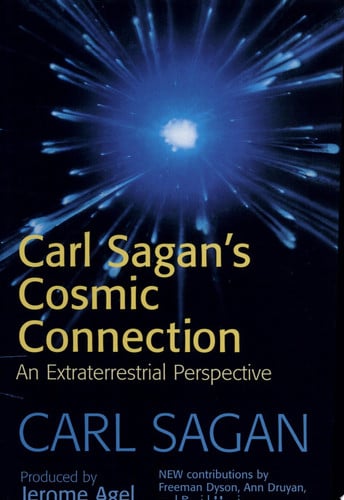
Cambridge University Press 2000-08-31 302 pages

Astrobiology: a multidisciplinary approach

Lunine, Jonathan Irving
Astrobiology: A Multi-Disciplinary Approach is the most comprehensive textbook designed for emerging upper level courses in astrobiology. Internationally renowned authority Jonathan Lunine provides a solid foundation in the essential concepts of physics, chemistry, biology, and other relevant sciences to help readers achieve a more well-rounded understanding of the fascinating study of the origin of life, planetary evolution, and life in the cosmos. The basics of astrobiology focusing on essential concepts in physics, chemistry, biology, and other sciences.
Pearson Addison Wesley 2005 586 pages

Smithsonian intimate guide to human origins

Zimmer, Carl
New discoveries in the field of human evolution are changing our understanding of human origins almost daily. What does all this new knowledge about our species mean? Science journalist Zimmer offers an illuminating journey through our ancestry, beginning 65 million years ago with the first primates and ending today, as we enter a new phase of evolution. Along the way he re-examines the major steps in human evolution, as hominids began to stand upright, fashion tools and develop consciousness. What's most intriguing, he concludes, is that fossils are no longer the sole source of information about our origins--part of the story of where we came from turns out to be inscribed in our own DNA!--From publisher description.
Smithsonian Books 2005 176 pages

The Anunnaki Chronicles: a Zecharia Sitchin Reader

Sitchin, Zecharia
"An insider's look into the decades of research behind Zecharia Sitchin's books as well as an in-depth overview of his theories and discoveries. Includes carefully selected chapters from the Earth Chronicles series as well as never-before-published letters, articles, and lectures. Each piece includes an introduction, offering context and insight into Sitchin's passionate work and revealing the man behind the theories. Explains the genesis of The 12th Planet, the Anunnaki influences on the Sumerian civilization, the orbit of Nibiru, the prehistory of the Americas, the extraterrestrial origins of modern man, and much more [...] -- provided by publisher
Bear & Company 2015-09-28 375 pages

Is Earth exceptional? the quest for cosmic life

Livio, Mario
"For a long time, scientists have wondered how life has emerged from inanimate chemistry, and whether Earth is the only place where it exists. Charles Darwin speculated about life on Earth beginning in a warm little pond. Some of his contemporaries believed that life existed on Mars. It once seemed inevitable that the truth would be known by now. It is not. For more than a century, the origins and extent of life have remained shrouded in mystery. But, as Mario Livio and Jack Szostak reveal in Is Earth Exceptional?, the veil is finally lifting. The authors describe how life's building blocks-from RNA to amino acids and cells-could have emerged from the chaos of Earth's early existence. They then apply the knowledge gathered from cutting-edge research across the sciences to the search for life in the cosmos: both life as we know it and life as we don't. Why and where life exists are two of the biggest unsolved problems in science. Is Earth Exceptional? is the ultimate exploration of the question of whether life is a freak accident or a chemical imperative"-- Provided by publisher.
Basic Books 2024-09 329 pages

Lynn Margulis: the life and legacy of a scientific rebel

Dorion Sagan
Tireless, controversial, and hugely inspirational to those who knew her or encountered her work, Lynn Margulis was a scientist whose intellectual energy and interests knew no bounds. Best known for her work on the origins of eukaryotic cells, the Gaia hypothesis, and symbiogenesis as a driving force in evolution, her work has forever changed the way we understand life on Earth. When Margulis passed away in 2011, she left behind a groundbreaking scientific legacy that spanned decades. In this collection, Dorion Sagan, Margulis's son and longtime collaborator, gathers together the voices of friends and colleagues to remark on her life and legacy, in essays that cover her early collaboration with James Lovelock, her fearless face-off with Richard Dawkins during the so-called "Battle of Balliol" at Oxford, the intrepid application of her scientific mind to the insistence that 9/11 was a false-flag operation, her affinity for Emily Dickinson, and more. Margulis was elected to the National Academy of Sciences in 1983, received the prestigious National Medal of Science in 1999, and her papers are permanently archived at the Library of Congress. Less than a month before her untimely death, Margulis was named one of the twenty most influential scientists alive - one of only two women on this list, which include such scientists as Stephen Hawking, James Watson, and Jane Goodall.
Chelsea Green Publishing 2012 205 pages

The inheritance and innateness of grammars

Myrna Gopnik
Is language somehow innate in the structure of the human brain, or is it completely learned? This debate is still at the heart of linguistics, especially as it intersects with psychology and cognitive science. In collecting papers which discuss the evidence and arguments regarding this difficult question, The Inheritance and Innateness of Grammars considers cases ranging from infants who are just beginning to learn the properties of a native language to language-impaired adults who will never learn one. These studies show that, while precursors of language exist in other creatures, the abilities necessary for constructing full-fledged grammars are part of the biological endowment of human beings. The essays that comprise this volume test the range and specificity of that endowment, while also contributing to our understanding of the intricate and complex relationship between language and biology.
Oxford University Press 1997 232 pages