31 results for "Science"

Boys & Sex Young Men on Hookups, Love, Porn, Consent, and Navigating the New Masculinity

Peggy Orenstein
NEW YORK TIMES BESTSELLER Now in paperback--Peggy Orenstein, author of the groundbreaking New York Times bestseller Girls & Sex, turns her focus to the sexual lives of young men. "Eye-opening.... Every few pages, the boy world cracks open a little bit.... Even in the most anxiety-provoking moments of Boys & Sex, it's clear that Orenstein believes in the goodness of boys and the men they can become, and she believes in us, as parents, to raise them" (New York Times Book Review). Peggy Orenstein's Girls & Sex broke ground, shattered taboos, and launched conversations about young women's right to pleasure and agency in sexual encounters. It also had an unexpected effect on its author: Orenstein realized that talking about girls is only half the conversation. Boys are subject to the same cultural forces as girls--steeped in the same distorted media images and binary stereotypes of female sexiness and toxic masculinity--which equally affect how they navigate sexual and emotional relationships. In Boys & Sex, Peggy Orenstein dives back into the lives of young people to once again give voice to the unspoken, revealing how young men understand and negotiate the new rules of physical and emotional intimacy. Drawing on comprehensive interviews with young men, psychologists, academics, and experts in the field, Boys & Sex dissects so-called locker room talk; how the word "hilarious" robs boys of empathy; pornography as the new sex education; boys' understanding of hookup culture and consent; and their experience as both victims and perpetrators of sexual violence. By surfacing young men's experience in all its complexity, Orenstein is able to unravel the hidden truths, hard lessons, and important realities of young male sexuality in today's world. The result is a provocative and paradigm-shifting work that offers a much-needed vision of how boys can truly move forward as better men.
HarperCollins Publishers 2021-02-09 304 pages

The Second Mountain The Quest for a Moral Life

David Brooks
#1 NEW YORK TIMES BESTSELLER - Everybody tells you to live for a cause larger than yourself, but how exactly do you do it? The author of The Road to Character explores what it takes to lead a meaningful life in a self-centered world. "Deeply moving, frequently eloquent and extraordinarily incisive."-- The Washington Post Every so often, you meet people who radiate joy--who seem to know why they were put on this earth, who glow with a kind of inner light. Life, for these people, has often followed what we might think of as a two-mountain shape. They get out of school, they start a career, and they begin climbing the mountain they thought they were meant to climb. Their goals on this first mountain are the ones our culture endorses: to be a success, to make your mark, to experience personal happiness. But when they get to the top of that mountain, something happens. They look around and find the view . . . unsatisfying. They realize: This wasn't my mountain after all. There's another, bigger mountain out there that is actually my mountain. And so they embark on a new journey. On the second mountain, life moves from self-centered to other-centered. They want the things that are truly worth wanting, not the things other people tell them to want. They embrace a life of interdependence, not independence. They surrender to a life of commitment. In The Second Mountain, David Brooks explores the four commitments that define a life of meaning and purpose: to a spouse and family, to a vocation, to a philosophy or faith, and to a community. Our personal fulfillment depends on how well we choose and execute these commitments. Brooks looks at a range of people who have lived joyous, committed lives, and who have embraced the necessity and beauty of dependence. He gathers their wisdom on how to choose a partner, how to pick a vocation, how to live out a philosophy, and how we can begin to integrate our commitments into one overriding purpose. In short, this book is meant to help us all lead more meaningful lives. But it's also a provocative social commentary. We live in a society, Brooks argues, that celebrates freedom, that tells us to be true to ourselves, at the expense of surrendering to a cause, rooting ourselves in a neighborhood, binding ourselves to others by social solidarity and love. We have taken individualism to the extreme--and in the process we have torn the social fabric in a thousand different ways. The path to repair is through making deeper commitments. In The Second Mountain, Brooks shows what can happen when we put commitment-making at the center of our lives.
Random House Large Print 2019 346 pages

Making Sense Conversations on Consciousness, Morality, and the Future of Humanity

Sam Harris
A New York Times New and Noteworthy Book From the bestselling author of Waking Up and The End of Faith, an adaptation of his wildly popular, often controversial podcast "Civilization rests on a series of successful conversations." --Sam Harris Sam Harris--neuroscientist, philosopher, and bestselling author--has been exploring some of the most important questions about the human mind, society, and current events on his podcast, Making Sense. With over one million downloads per episode, these discussions have clearly hit a nerve, frequently walking a tightrope where either host or guest--and sometimes both--lose their footing, but always in search of a greater understanding of the world in which we live. For Harris, honest conversation, no matter how difficult or controversial, represents the only path to moral and intellectual progress. This book includes a dozen of the best conversations from Making Sense, including talks with Daniel Kahneman, Timothy Snyder, Nick Bostrom, and Glenn Loury, on topics that range from the nature of consciousness and free will, to politics and extremism, to living ethically. Together they shine a light on what it means to "make sense" in the modern world.
HarperCollins Publishers 2021-08-17 464 pages

Finding Chika A Little Girl, an Earthquake, and the Making of a Family

Mitch Albom
"Mitch Albom has done it again with this moving memoir of love and loss. You can't help but fall for Chika. A page-turner that will no doubt become a classic." --Mary Karr, author of The Liars' Club and The Art of Memoir From the #1 New York Times bestselling author of Tuesdays With Morrie comes Mitch Albom's most personal story to date: an intimate and heartwarming memoir about what it means to be a family and the young Haitian orphan whose short life would forever change his heart. Chika Jeune was born three days before the devastating earthquake that decimated Haiti in 2010. She spent her infancy in a landscape of extreme poverty, and when her mother died giving birth to a baby brother, Chika was brought to The Have Faith Haiti Orphanage that Albom operates in Port Au Prince. With no children of their own, the forty-plus children who live, play, and go to school at the orphanage have become family to Mitch and his wife, Janine. Chika's arrival makes a quick impression. Brave and self-assured, even as a three-year-old, she delights the other kids and teachers. But at age five, Chika is suddenly diagnosed with something a doctor there says, "No one in Haiti can help you with." Mitch and Janine bring Chika to Detroit, hopeful that American medical care can soon return her to her homeland. Instead, Chika becomes a permanent part of their household, and their lives, as they embark on a two-year, around-the-world journey to find a cure. As Chika's boundless optimism and humor teach Mitch the joys of caring for a child, he learns that a relationship built on love, no matter what blows it takes, can never be lost. Told in hindsight, and through illuminating conversations with Chika herself, this is Albom at his most poignant and vulnerable. Finding Chika is a celebration of a girl, her adoptive guardians, and the incredible bond they formed--a devastatingly beautiful portrait of what it means to be a family, regardless of how it is made.
HarperCollins Publishers 2021-05-18 256 pages

Getting Past the Pain Between Us Healing and Reconciliation Without Compromise

Marshall B. Rosenberg
In this important and insightful work, Marshall B. Rosenberg, PhD, demonstrates the powerful healing potential of the Nonviolent Communication (NVC) process. You can transform emotional pain, depression, shame, and conflict into empowering connections. Rosenberg shares that behind all emotional pain are unmet needs. He provides simple steps to create the heartfelt presence necessary for healing to occur. Learn how to transform your relationships, find satisfying reconciliation, and move beyond pain to a place of clear, honest communication. Through role-play dialogues and every-day examples, Rosenberg demonstrates the keys to healing pain and conflict without compromise. The healing power of NVC provides practical and effective tools for individuals, mental health practitioners, mediators, families and couples.
PuddleDancer Press 2004-09 48 pages

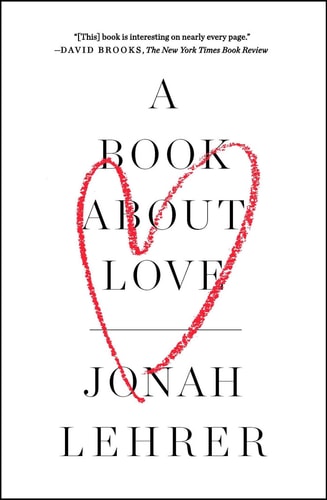
A Book About Love

Jonah Lehrer
Number one bestselling science writer Jonah Lehrer explores the “only happiness that lasts”—love—in a book that “is interesting on nearly every page” (David Brooks, The New York Times Book Review ). Weaving together scientific studies from clinical psychologists, longitudinal studies of health and happiness, historical accounts and literary depictions, child-rearing manuals, and the language of online dating sites, Jonah Lehrer’s A Book About Love plumbs the most mysterious, most formative, most important impulse governing our lives. Love confuses and compels us—and it can destroy and define us. It has inspired our greatest poetry, defined our societies and our beliefs, and governs our biology. From the way infants attach to their parents, to the way we fall in love with another person, to the way some find a love for God or their pets, to the way we remember and mourn love after it expires, this book focuses on research that attempts, even in glancing ways, to deal with the long-term and the everyday. The most dangerous myth of love is that it’s easy, that we fall into the feeling and then the feeling takes care of itself. While we can easily measure the dopamine that causes the initial feelings of “falling” in love, the partnerships and devotions that last decades or longer remain a mystery. “Lehrer uses scores of detailed vignettes to traverse a complicated intellectual landscape, eventually arriving at modern theories of love…He is a talent” ( USA TODAY ), and A Book About Love decodes the set of skills necessary to cultivate a lifetime of love. Love, Lehrer argues, is not built solely on overwhelming passion, but, fascinatingly, on a set of skills to be cultivated over a lifetime.
Simon and Schuster 2017-07-25 304 pages

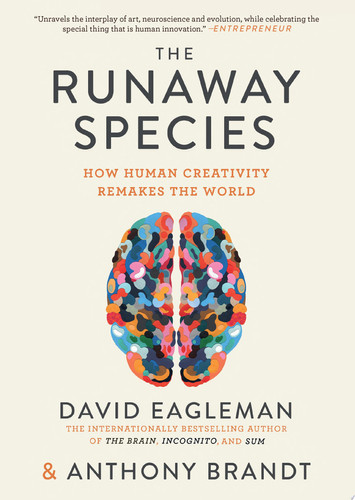
The Runaway Species How Human Creativity Remakes the World

David Eagleman,Anthony Brandt
This enlightening examination of creativity looks “at art and science together to examine how innovations . . . build on what already exists and rely on three brain operations: bending, breaking and blending” ( The Wall Street Journal ) The Runaway Species is a deep dive into the creative mind, a celebration of the human spirit, and a vision of how we can improve our future by understanding and embracing our ability to innovate. David Eagleman and Anthony Brandt seek to answer the question: what lies at the heart of humanity’s ability—and drive—to create? Our ability to remake our world is unique among all living things. But where does our creativity come from, how does it work, and how can we harness it to improve our lives, schools, businesses, and institutions? Eagleman and Brandt examine hundreds of examples of human creativity through dramatic storytelling and stunning images in this beautiful, full–color volume. By drawing out what creative acts have in common and viewing them through the lens of cutting–edge neuroscience, they uncover the essential elements of this critical human ability, and encourage a more creative future for all of us. “ The Runaway Species approach[es] creativity scientifically but sensitively, feeling its roots without pulling them out.” — The Economist
Catapult 2018-06-19 304 pages

The Sweet Spot The Pleasures of Suffering and the Search for Meaning

Paul Bloom
"This book will challenge you to rethink your vision of a good life. With sharp insights and lucid prose, Paul Bloom makes a captivating case that pain and suffering are essential to happiness. It's an exhilarating antidote to toxic positivity." --Adam Grant, #1 New York Times bestselling author of Think Again and host of the TED podcast WorkLife One of Behavioral Scientist's "Notable Books of 2021" From the author of Against Empathy, a different kind of happiness book, one that shows us how suffering is an essential source of both pleasure and meaning in our lives Why do we so often seek out physical pain and emotional turmoil? We go to movies that make us cry, or scream, or gag. We poke at sores, eat spicy foods, immerse ourselves in hot baths, run marathons. Some of us even seek out pain and humiliation in sexual role-play. Where do these seemingly perverse appetites come from? Drawing on groundbreaking findings from psychology and brain science, The Sweet Spot shows how the right kind of suffering sets the stage for enhanced pleasure. Pain can distract us from our anxieties and help us transcend the self. Choosing to suffer can serve social goals; it can display how tough we are or, conversely, can function as a cry for help. Feelings of fear and sadness are part of the pleasure of immersing ourselves in play and fantasy and can provide certain moral satisfactions. And effort, struggle, and difficulty can, in the right contexts, lead to the joys of mastery and flow. But suffering plays a deeper role as well. We are not natural hedonists--a good life involves more than pleasure. People seek lives of meaning and significance; we aspire to rich relationships and satisfying pursuits, and this requires some amount of struggle, anxiety, and loss. Brilliantly argued, witty, and humane, Paul Bloom shows how a life without chosen suffering would be empty--and worse than that, boring.
HarperCollins Publishers 2021-11-02 304 pages

Social psychology

Aronson, Elliot
Research made relevant through a storytelling approach. This renowned text maintains its acclaimed storytelling approach, teaching the science of psychology through an engaging narrative that makes research relevant to students. Drawing upon their extensive experience as researchers and teachers, Elliot Aronson, Tim Wilson, and Robin Akert present the classic research that has driven the field and introduce cutting-edge research that is the future of social psychology. Significantly updated to reflect advances in the discipline, the 8th edition provides a firm foundation for students to build their understanding of this rigorous science in a way that engages and fascinates. A better teaching and learning experience This program will provide a better teaching and learning experience-- for you and your students. Here's how: Personalize Learning -- The new MyPsychLab delivers proven results in helping students succeed, provides engaging experiences that personalize learning, and comes from a trusted partner with educational expertise and a deep commitment to helping students and instructors achieve their goals. Improve Critical Thinking -- The authors emphasize this rigorous science through research examples that encourage students to think twice about their preconceived notions of what social psychology is - and isn't. Engage Students -- Through real-life vignettes, which open each story chapter, and "mini-stories" throughout each chapter, the eighth edition provokes student interest by focusing on real-life examples. Explore Research -- The authors present a balance between the latest findings in the field with classic research in social psychology. Noting that some older studies deserve their status as classics and are important cornerstones to the discipline, this text encourages students to experience the continuity and depth of the field versus regarding it as a collection of studies published in the past few years. Support Instructors -- This program provides instructors with unbeatable resources, including state-of-the-art PowerPoints embedded with videos, the NEW MyPsychLab with ABC's What Would You Do videos, an easy to use Instructor's Manual, a robust test bank, and an online test generator (MyTest). All of these materials may be packaged with the text upon request. Note: MyPsychLab does not come automatically packaged with this text. To purchase MyPsychLab, please visit www.mypsychlab.com or you can purchase a ValuePack of the text + MyPsychLab (at no additional cost). ValuePack ISBN-10: 020591201X / ValuePack ISBN-13: 9780205912018.
Pearson 2013 538 pages

Psychobabble and biobunk: using psychological science to think critically about popular psychology

Tavris, Carol
This revised and updated handbook features a selection of essay-style book reviews by Carol Tavris , written for the Times Literary Supplement, The Chronicle of Higher Education, American Scientist, and The New York Times Book Review. These reviews apply psychological research and principles of scientific thinking to ideas presented in the books. They aim to show how critical thinking can help people assess arguments promoted in the popular culture, and how to separate those that are scientifically sound from those based on "psychobabble"-pop-psych notions dressed up in fancy, sciency-sounding language. These essays may be used to encourage debate in the classroom or as a basis for student papers. Students can be asked to write or present their own points of view on a topic, drawing on other research and the guidelines of critical thinking (defined and described in a prefatory "Note to the Reader") to support their conclusions. Although these reviews can be used in many social science and composition courses, the topics covered and the critical-thinking guidelines that apply to them correspond to specific material in Carole Wade and Carol Tavris's Psychology and Invitation to Psychology .
Prentice Hall 2011 101 pages

Delusion and Mass Delusion

Joost A. M. Meerloo
2021 Hardcover Reprint of the 1949 Edition. Full facsimile of the original edition and not reproduced with Optical Recognition Software. Meerloo's best-known book is Rape of the Mind, published in 1956. The book received wide attention in part because it dealt with totalitarian applications of brainwashing techniques during the Korean War. Rape of the Mind explains how scientific brainwashing is done and argues that "hardly anyone can resist such." "Fear, and continual pressure are known to create a menticidal hypnosis. The conscious part of the personality no longer takes part in the automatic confessions. The brainwashee lives in a trance, repeating the record grooved into him by somebody else." In Delusion and Mass Delusion, Meerloo attempts to explain the mechanisms within the mind that allow for such manipulation. He attempts an explanation of the several mechanisms undergirding thought, many of which are not obviously available to individuals. An interesting early study on brainwashing by an early student of the practice.
Martino Fine Books 2021-10-14 140 pages

Gossip The Untrivial Pursuit

Joseph Epstein
Gossip is no trivial matter; despite its reputation, Epstein argues, it is an eternal and necessary human enterprise. Proving that he himself is a master of the art, Epstein serves up delightful mini-biographies of the Great Gossips of the Western World, along with many choice bits from his own experience. He also makes a powerful case that gossip has morphed from its old-fashioned best--clever, mocking, a great private pleasure--to a corrosive new-school version, thanks to the reach of the mass media and the Internet. Written in his trademark erudite and witty style, Gossip captures the complexity of this immensely entertaining subject.
HarperCollins Publishers 2012-11 256 pages

How to Educate a Citizen The Power of Shared Knowledge to Unify a Nation

Jr. E. D. Hirsch
"Profound, vital and correct. Hirsch highlights the essence of our American being and the radical changes in education necessary to sustain that essence. Concerned citizens, teachers, and parents take note! We ignore this book at our peril."-- Joel Klein, former Chancellor of New York City Public Schools Now in paperback, the bestselling author of Cultural Literacy delivers a powerful manifesto on the failures of America's early education system and its impact on our current national malaise, advocating for a shared knowledge curriculum students everywhere can be taught--an educational foundation that can help improve and strengthen America's unity, identity, and democracy. In How to Educate a Citizen, E.D. Hirsch continues the conversation he began thirty years ago with his classic bestseller Cultural Literacy, urging America's public schools, particularly at the elementary level, to educate our children more effectively to help heal and preserve the nation. Since the 1960s, our schools have been relying on "child-centered learning." History, geography, science, civics, and other essential knowledge have been dumbed down by vacuous learning "techniques" and "values-based" curricula; indoctrinated by graduate schools of education, administrators and educators have believed they are teaching reading and critical thinking skills. Yet these cannot be taught in the absence of strong content, Hirsch argues. The consequence is a loss of shared knowledge that would enable us to work together, understand one another, and make coherent, informed decisions. A broken approach to school not only leaves our children under-prepared and erodes the American dream but also loosens the spiritual bonds and unity that hold the nation together. Drawing on early schoolmasters and educational reformers such as Noah Webster and Horace Mann, Hirsch charts the rise and fall of the American early education system and provides a blueprint for closing the national gap in knowledge, communications, and allegiance. Critical and compelling, How to Educate a Citizen galvanizes our schools to equip children with the power of shared knowledge.
HarperCollins Publishers 2021-09-07 224 pages

Humanity on a Tightrope Thoughts on Empathy, Family, and Big Changes for a Viable Future

Paul R. Ehrlich,Robert E. Ornstein
When we think of family, we most often think of our sisters and brothers, our cousins and grandparents, rather than our world family or even our community connections. We still identify with our differences more than our similarities, unless it's convenient to do otherwise. Here, two seasoned authors tackle the question of family and what it means to us now and how it might change to help us address the problems that affect us all. Using specific examples throughout the work, they present a unique approach to what it means to belong to one human family. Beginning with a consideration of how the family unit has begun to be defined by allegiances, by common ties and empathy, the authors then discuss the evolution of the family unit and how the "us" vs. "them" mentality gave way to a way of life that separated peoples rather than brought them together. They consider family values, how they arose, developed, were perverted or perfected to suit the family unit's needs, and the confusion that followed. Humanity on a Tightrope focuses on what families and family values are, and how they often create an "us versus them" mentality that is at the root of many of today's most crucial problems from terrorism, racism, and war to the failure of humanity to come to grips with potentially lethal global environmental problems. The book underlines a basic element for solving the human predicament - quickly spreading the domain of empathy. It takes a close look at how we can do that, building on the findings of both social and natural science and using tools ranging from brain imaging to the internet. It explains how civilization is unlikely to persist unless many more people learn to put themselves in the shoes of others to keep society balancing on the tightrope to sustainability - a tightrope suspended over the collapse of civilization.
Bloomsbury Academic 2012-03-16 210 pages

The Things They Say behind Your Back: Stereotypes and the Myths Behind Them

Helmreich, William B.
Cover -- Half Title -- Title Page -- Copyright Page -- Contents -- Acknowledgments -- One: All About Stereotypes -- Two: Jews -- The Jewish Mother -- Internationalists Plotting to Take Over the World -- Shrewd Businessmen -- Have Horns -- The Chosen People -- Killed Jesus Christ -- Smarter -- Cheap -- Control Wall Street and the Banks -- Rich and Ostentatious -- Pushy and Aggressive -- Control the Media -- Have Big Noses -- Three: Italians -- "Mangia! Mangia!"--Stupid, Ignorant, Suspicious of Education -- Family-Oriented, Clannish, Distrustful of Outsiders -- Great Singers -- Talk with Their Hands -- Belong to the Mafia -- Cowards in Battle -- Violent and Quick-Tempered -- Great Shoemakers -- Four: Blacks -- Hypersensitive -- Sexual Prowess -- Physically Powerful, Great Athletes -- Dirty and Slovenly -- Stupid -- Musically Gifted, Great Rhythm, Terrific Entertainers -- Lazy and Shiftless -- Big Cadillacs and Flashy Clothes -- Violent Criminals -- Five: Japanese -- Chauvinistic -- Hardworking, Ambitious, and Competitive -- Highly Educated and Intelligent -- Japanese Women are Servile and Obedient -- The Sneaky Jap -- Strong Family Ties -- Great Imitators -- Law-Abiding -- Six: Chinese -- Sly, Sinister, and Deceitful -- No Tickee, No Washee -- Inscrutable -- The Best Food in the World -- Learned and Wise -- Love to Gamble -- Cruel -- Strong Family Ties -- Quiet, Polite, and Deferential -- Seven: Irish -- Heavy Drinkers -- Good at Politics -- Sexually Repressed -- Very Religious -- Highly Nationalistic -- Literary, Witty, and Gregarious -- The "Fighting Irish"--Eight: Poles -- Dumb -- Dirty -- Racists and Bigots -- Uneducated -- Boorish and Uncultured, Low Class -- Nine: WASPs -- Honorable -- Hardworking, Industrious, and Thrifty -- Cold and Insensitive -- Well-Mannered, Polite, Genteel -- Snobbish
[distributor] Taylor & Francis, c/o Bookpoint 2017-10-27 276 pages

I Know Best How Moral Narcissism Is Destroying Our Republic, If It Hasn't Already

Roger L. Simon
In 1979, Christopher Lasch published the epochal The Culture of Narcissism warning of the normalizing of narcissism in our society. Lasch may have understated it. 35 years later, in the Obama era with its parade of endless, often inexplicable, scandals we have a full blown epidemic of what has recently been called Moral Narcissism. Forget Narcissus and his reflection, Moral Narcissism the almost schizophrenic divide between intentions and results now pervading our culture is the new method for feeling good about yourself. It no longer matters how anything turns out as long as your intentions were good, that you were moral. And, just as importantly, the only determinant of those intentions, the only one who defines that morality, is you. I Know Best goes beyond Lasch to lay bare how this moral narcissism is behind all those scandals from Obamacare to the Veteran's Administration to the IRS, Benghazi, Bergdahl, Syria and beyond. Everything the Obama administration did and does was about making them feel good about themselves, the results be damned. And they have as their allies those supreme moral narcissists in the academy, media and Hollywood, ever willing to ratify those good intentions and ignore those same results. But I Know Best is not just about the Left. Moral Narcissism affects the right as well, even when they don't realize it. It is a true epidemic that must be cured in order to save our democratic republic and our futures.
Encounter Books 2020-11-10 224 pages

Louis Guttman on theory and methodology: selected writings

Guttman, Louis
Louis Guttman’s pioneering work on scaling theory is cited in Science (1971) as one of 62 major advances in the social sciences in this century, together with those of Freud, Pavlov, Weber, Keynes and others. Scaling theory led Guttman to develop his non-metric methods for data analysis and facet theory, his crowning contribution. Drawing on a large number of periodicals, books and unpublished papers, this volume offers a representative overview of Guttman’s work and demonstrates its utility for cumulative theory-development in sociology, psychology, education, statistics and other disciplines. The basis of facet-theory, and its applications in fields such as social attitudes and intelligence testing, are presented first-hand. Surprising as it may sound, Guttman’s main interest was in theory rather than method. In fact, he saw the two as inseparable, arguing that 'the form of data analysis is part of the hypothesis'.
Dartmouth 1994-02-28 413 pages