23 results for "Science"

The Elementary Forms of Religious Life

Emile Durkheim
The French Sociologist Émile Durkheim is commonly cited as the father of sociology. Principle to the work of Durkheim was his concern with regard to how modernity was effecting traditional social and religious institutions, more specifically with how societies could maintain their integrity and coherence in an era in which new social institutions were coming into being. One of his principles works, "The Elementary Forms of Religious Life" is a comparative theory of the religious lives of ancient and modern societies and the sociological influence of their respective religious institutions. Durkheim argues that the essence of religion is the concept of the sacred and it is this single phenomenon that is common to all religions. The work extensively discusses the concept of the sacred by examining the worship of totems in ancient religions and by arguing that modern societies have displaced this totemism by ascribing a new form of sacredness to the individual and individual rights. "The Elementary Forms of Religious Life" is a compelling exposition on the impact of religious institutions in ancient and modern life and a worthy read for anyone interested in religious or sociological studies. This edition is printed on premium acid-free paper.
Neeland Media 2019-08-23 414 pages

God's Harvard A Christian College on a Mission to Save America

Hanna Rosin
Since 2000, America s most ambitious young evangelicals have been making their way to Patrick Henry College, a small Christian school just outside the nation s capital. Most of them are homeschoolers whose idealism and discipline put the average American teenager to shame. At "God s Harvard" they are groomed to become tomorrow s elite. Diplomas in hand, they are dispatched to the front lines of politics, entertainment, and science, where they will lead the battle to take back a godless nation. Hanna Rosin spent a year and a half embedded at the college, following students from the campus to the White House, Congress, conservative think tanks, Hollywood, and other centers of influence. Her account captures this nerve center of the evangelical movement at a moment of maximum influence and also of crisis, as it struggles to avoid the temptations of modern life and still remake the world in its own image. "
HarperCollins Publishers 2008-09-08 312 pages

Religion for Atheists A Non-believer's Guide to the Uses of Religion

Alain De Botton
From the author of The Architecture of Happiness , a deeply moving meditation on how we can still benefit, without believing, from the wisdom, the beauty, and the consolatory power that religion has to offer. Alain de Botton was brought up in a committedly atheistic household, and though he was powerfully swayed by his parents' views, he underwent, in his mid-twenties, a crisis of faithlessness. His feelings of doubt about atheism had their origins in listening to Bach's cantatas, were further developed in the presence of certain Bellini Madonnas, and became overwhelming with an introduction to Zen architecture. However, it was not until his father's death -- buried under a Hebrew headstone in a Jewish cemetery because he had intriguingly omitted to make more secular arrangements -- that Alain began to face the full degree of his ambivalence regarding the views of religion that he had dutifully accepted. Why are we presented with the curious choice between either committing to peculiar concepts about immaterial deities or letting go entirely of a host of consoling, subtle and effective rituals and practices for which there is no equivalent in secular society? Why do we bristle at the mention of the word "morality"? Flee from the idea that art should be uplifting, or have an ethical purpose? Why don't we build temples? What mechanisms do we have for expressing gratitude? The challenge that de Botton addresses in his book: how to separate ideas and practices from the religious institutions that have laid claim to them. In Religion for Atheists is an argument to free our soul-related needs from the particular influence of religions, even if it is, paradoxically, the study of religion that will allow us to rediscover and rearticulate those needs.
Signal 2012 320 pages

America's Real War

Rabbi Daniel Lapin
There is a tug of war going on for the future of America. At one end of the rope are those who think America is a secular nation; at the other end are those who believe religion is at the root of our country's foundation. In this paperback release of the thought-provoking America's Real War, renowned leader and speaker Rabbi Daniel Lapin encourages America to re-embrace the Judeo-Christian values on which our nation was founded, and logically demonstrates why those values are crucial to America's strength in the new millennium.
Doubleday Religious Publishing Group 1999-06 384 pages

Practical Spirituality The Spiritual Basis of Nonviolent Communication

Marshall B. Rosenberg
According to Marshall B. Rosenberg, Ph.D., our most basic spiritual need is to contribute to the well being of others and ourselves. His brief, unscripted reflections on the spiritual basis of Nonviolent Communication (NVC) will inspire you not only to connect with the Divine in yourself and others, but to begin to create a world of empathy and compassion, where the language we use is the key to enriching life. Discover an intensely satisfying and joyful spiritual experience that begins with you. In these rich pages, learn how NVC can help you achieve a more practical, applied spirituality. Discover how to: - Strengthen the connection between your actions and your spiritual values - Let go of enemy images and moralistic judgments, and experience our common humanity - Connect with others from a place of compassionate energy
PuddleDancer Press 2005-04 42 pages

An Atheist's History of Belief Understanding Our Most Extraordinary Invention

Matthew Kneale
The atheist’s poetic synopsis of the history of spirituality and religion from the Man Booker shortlisted author of English Passengers What first prompted prehistoric man, sheltering in the shadows of deep caves, to call upon the realm of the spirits? And why has belief thrived since, shaping thousands of generations of shamans, pharaohs, Aztec priests and Mayan rulers, Jews, Buddhists, Christians, Nazis, and Scientologists? As our dreams and nightmares have changed over the millennia, so have our beliefs. The gods we created have evolved and mutated with us through a narrative fraught with human sacrifice, political upheaval and bloody wars. Belief was man's most epic labor of invention. It has been our closest companion, and has followed mankind across the continents and through history.
Catapult 2015-02-10 272 pages

A Hallucinogenic Tea, Laced with Controversy Ayahuasca in the Amazon and the United States

Marlene Dobkin de Rios,Peg Thoms,James Fairbank,Roger Rumrrill
One country's sacrament is another's illicit drug, as officials in South America and the United States are well aware. For centuries, a hallucinogenic tea made from a giant vine native to the Amazonian rainforest has been taken as a religious sacrament across several cultures in South America. Many spiritual leaders, shamans, and their followers consider the tea and its main component - ayahuasca - to be both enlightening and healing. In fact, ayahuasca (pronounced a-ja-was-ka) loosely translated means spirit vine. In this book, de Rios and Rumrrill take us inside the history and realm of, as well as the raging arguments about, the substance that seems a sacrament to some and a scourge to others. Their book includes text from the United Nations Convention on Psychotropic Substances and interviews with shamans in the Amazon. One country's sacrament is another's illicit drug, as officials in South America and the United States are well aware. For centuries, a hallucinogenic tea made from a giant vine native to the Amazonian rainforest has been taken as a religious sacrament across several cultures in South America. Many spiritual leaders, shamans, and their followers consider the tea and its main component - ayahuasca - to be both enlightening and healing. In fact, ayahuasca (pronounced a-ja-was-ka) loosely translated means spirit vine. Ayahuasca has moved into the United States, causing legal battles in the Supreme Court and rulings from the United Nations. Some U.S. church groups are using the hallucinogen in their ceremonies and have fought for government approval to do so. The sacrament has also drawn American drug tourists to South America to partake, say authors de Rios and Rumrrill. But they warn that these tourists are being put at risk by charlatans who are not true shamans or religious figures, just profiteers. In this book, de Rios and Rumrrill take us inside the history and realm of, as well as the raging arguments about, the substance that seems a sacrament to some and a scourge to others. Opponents fight its use even as U.S. scientists and psychologists continue investigations of whether ayahuasca has healing properties that might be put to conventional use for physical and mental health. This book includes text from the United Nations Convention on Psychotropic Substances and interviews with shamans in the Amazon.
Bloomsbury Academic 2008-08-30 168 pages

Why the Jews Rejected Jesus The Turning Point in Western History

David Klinghoffer
Why did the Jews reject Jesus? Was he really the son of God? Were the Jews culpable in his death? These ancient questions have been debated for almost two thousand years, most recently with the release of Mel Gibson’s explosive The Passion of the Christ . The controversy was never merely academic. The legal status and security of Jews—often their very lives—depended on the answer. In WHY THE JEWS REJECTED JESUS, David Klinghoffer reveals that the Jews since ancient times accepted not only the historical existence of Jesus but the role of certain Jews in bringing about his crucifixion and death. But he also argues that they had every reason to be skeptical of claims for his divinity. For one thing, Palestine under Roman occupation had numerous charismatic would-be messiahs, so Jesus would not have been unique, nor was his following the largest of its kind. For another, the biblical prophecies about the coming of the Messiah were never fulfilled by Jesus, including an ingathering of exiles, the rise of a Davidic king who would defeat Israel’s enemies, the building of a new Temple, and recognition of God by the gentiles. Above all, the Jews understood their biblically commanded way of life, from which Jesus’s followers sought to “free” them, as precious, immutable, and eternal. Jews have long been blamed for Jesus’s death and stigmatized for rejecting him. But Jesus lived and died a relatively obscure figure at the margins of Jewish society. Indeed, it is difficult to argue that “the Jews” of his day rejected Jesus at all, since most Jews had never heard of him. The figure they really rejected, often violently, was Paul, who convinced the Jerusalem church led by Jesus’s brother to jettison the observance of Jewish law. Paul thus founded a new religion. If not for him, Christianity would likely have remained a Jewish movement, and the course of history itself would have been changed. Had the Jews accepted Jesus, Klinghoffer speculates, Christianity would not have conquered Europe, and there would be no Western civilization as we know it. WHY THE JEWS REJECTED JESUS tells the story of this long, acrimonious, and occasionally deadly debate between Christians and Jews. It is thoroughly engaging, lucidly written, and in many ways highly original. Though written from a Jewish point of view, it is also profoundly respectful of Christian sensibilities. Coming at a time when Christians and Jews are in some ways moving closer than ever before, this thoughtful and provocative book represents a genuine effort to heal the ancient rift between these two great faith traditions.
Harmony/Rodale/Convergent 2006-03-07 256 pages

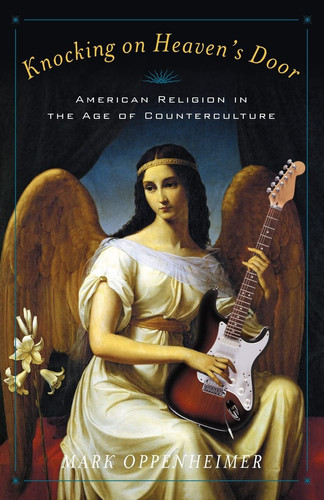
Knocking on Heaven's Door American Religion in the Age of Counterculture

Mark Oppenheimer
A witty and provocative reappraisal of the impact of the cultural upheavals of the sixties on American religious life What happened to American religion during the cultural revolution of the 1960s and early 1970s? The era has long been associated with the ascendancy of Eastern religions and fringe cults. But in this provocative book, Mark Oppenheimer demonstrates that contrary to conventional wisdom, most Americans did not turn on, tune in, and drop out of mainstream religious groups during the Age of Aquarius. Instead, many Americans brought the counterculture with them to their churches and temples, changing the face of American religion. Introducing us to America's first gay ministers and first female priests, to hippie Jews and folk-singing Catholics, Oppenheimer demonstrates that this was an era of extraordinary religious vitality. Drawing on a rich range of archival material as well as interviews with many of the protagonists, Knocking on Heaven's Door offersa wry and iconoclastic reappraisal of the ways in which the upheavals of the sixties changed America's relationship with God.
Yale University Press 2003 284 pages

From Suburb to Shtetl The Jews of Boro Park

Egon Mayer,William B. Helmreich
"From Suburb to Shtetl" is an outstanding ethnography that moves beyond simple demographics. Mayer weaves an intricate tapestry of how family, school, and community leaders influence each other. Whether discussing the role of the rebbe or the matchmaker, those who know these communities will find what he says as relevant today as it was when first penned. This is hardly surprising, for the ultra-Orthodox community takes great pride in not changing, in maintaining itself as it was in Europe despite the allure of modern American society. His discussion of synagogue life is particularly informative and evocative. Those in charge of helping immigrants adopted the path of least resistance, allowing and even encouraging them to retain their identities except for those few aspects that might threaten the country's national interests. The American Orthodox community was tremendously augmented by the arrival from Europe, after World War Two, of thousands of Orthodox Jews who remained devoted to that way of life. Egon Mayer was himself part of a smaller, but significant group of Jews who came to the U.S. and settled mostly in Boro Park in the wake of the 1956 Hungarian Revolution. The interaction between the Hasidim and their less fervent Orthodox counterparts described and analyzed in this volume tells us a great deal about how people negotiate their beliefs, values, and norms when forced into close contact with each other in an urban setting within the larger American culture. By exploring these and many other related issues Mayer has given us the chance to assess and forecast the future of American Jewish life as a whole.
Taylor & Francis Group 2017-10-12 214 pages

Explorers in Eden Pueblo Indians and the Promised Land

Jerold S. Auerbach
Beginning in the late nineteenth century, the pueblos of the Southwest frequently inspired Anglo-American visitors to express their sense of wonder and enchantment in biblical references. Frank Hamilton Cushing's first account of Zuni pueblo described a setting that looked like "The Pools of Palestine." Drawn to the Southwest, Mabel Dodge imagined "a garden of Eden, inhabited by an unfallen tribe of men and women." There she was attracted to Tony Luhan, a Taos Indian who looked "like a Biblical figure." When historian Jerold Auerbach first saw Edward S. Curtis's early twentieth-century photograph Taos Water Girls , he realized that "here, indeed, was the biblical Rebecca, relocated to New Mexico from ancient Haran, where Abraham's faithful servant had journeyed to find a suitable wife for Isaac. Rebecca with her water pitcher is as familiar a biblical icon as Noah and his ark or Moses with the stone tablets. Curtis had recast her as the archetypal Pueblo maiden." Explorers in Eden uncovers an intriguing array of diaries, letters, memoirs, photographs, paintings, postcards, advertisements, anthropological field studies, and scholarly monographs. They reveal how Anglo-Americans disenchanted with modern urban industrial society developed a deep and rich fascination with pueblo culture through their biblical associations.
UNM Press 2008-03-16 213 pages

The Crisis of the Holy Challenges and Transformations in World Religions

Alon Goshen-Gottstein
All the world’s religions are experiencing rapid change due to a confluence of social and economic global forces. Factors such as the pervasive intrusion of globalizing political and economic developments, polarized and morally equivalent presentations seen in the media, and the sense of surety demanded in and promised by a culture dominated by science are some of the factors that have placed extreme pressure on all religious traditions. This has stimulated unprecedented responses by religious groups, ranging from fundamentalism to the syncretistic search for meaning. As religion takes on new forms, the balance between individual and community is disrupted and reconfigured. Religions often lose the capacity to recall their ultimate purpose or lead their adherents toward it. This is the situation we call “the crisis of the holy.” It is a confluence of threats, challenges, and opportunities for all religions. This volume explores the contours of pressures, changes, and transformations and reflects on how all our religions are changing. By identifying commonalities across religions as they respond to these pressures, The Crisis of the Holy recommends ways religious traditions might cope with these changes and how they might join forces in doing so. Contributors: Vincent J. Cornell, Alon Goshen-Gottstein, Sidney H. Griffith, Maria Reis Habito, B. Barry Levy, Deepak Sarma, Michael von Brück
Wipf and Stock Publishers 2018-08-08 190 pages

Religious Genius Appreciating Inspiring Individuals Across Traditions

Alon Goshen-Gottstein
This book sets forth a new area in the study of extraordinary individuals in religious traditions. It develops the category of “Religious Genius” as an alternative to existing categories, primarily “saint.” It constructs a model by which to appreciate these individuals, suggesting key characteristics such as love, humility, and self-surrender. Religious geniuses transform their traditions and their legacies endure through these very transformations. They also inspire changes across religious boundaries and traditions. The study of religious geniuses in various faith traditions therefore advances interfaith engagement today. The book complements existing, primarily historical, studies of saints by offering a phenomenological approach that seeks to touch the subjectivity of these individuals, and how they have affected the unfolding of their religious traditions.
Springer International Publishing 2018-05-13 196 pages

The Ten Commandments An Investigation Into the Origin and Meaning of the Decalogue and an Analysis of Its Ethical and Moral Value As A Code of Conduc

Joseph Lewis
""The Ten Commandments"" by Joseph Lewis is an in-depth exploration of the origins and significance of the Decalogue, also known as the Ten Commandments. The book delves into the historical and cultural context in which the commandments were first given, and examines their relevance to modern society as a code of conduct. Lewis analyzes each of the commandments individually, exploring their ethical and moral value and providing insights into how they can be applied in contemporary life. The book also addresses questions of interpretation and translation, and offers a critical examination of the role of religion in shaping moral values. Overall, ""The Ten Commandments"" is a thought-provoking and informative study of one of the most enduring and influential texts in Western civilization.This scarce antiquarian book is a facsimile reprint of the old original and may contain some imperfections such as library marks and notations. Because we believe this work is culturally important, we have made it available as part of our commitment for protecting, preserving, and promoting the world's literature in affordable, high quality, modern editions, that are true to their original work.
Kessinger Publishing 2008-06 676 pages

The Religious Other Hostility, Hospitality, and the Hope of Human Flourishing

Alon Goshen-Gottstein
One of the biggest challenges for relations between religions is the view of the religious Other. The question touches the roots of our theological views. The Religious Other: Hostility, Hospitality, and the Hope of Human Flourishing explores the views of multiple religious traditions on how to regard otherness. How does one move from hostility to hospitality? How can hospitality be understood not simply as social hospitality but as theological hospitality, making room for the religious Other on theological grounds? What is our vision for the flourishing of the Other, while respecting his otherness? This volume is an exercise in constructive interreligious theology. By including Abrahamic and non-Abrahamic traditions, it approaches these challenges from multiple perspectives, highlighting commonalities in approach and ways in which one tradition might inspire another. Contributors: Vincent J. Cornell, Alon Goshen-Gottstein, Richard P. Hayes, Lord Rabbi Jonathan Sacks, Deepak Sarma, Stephen W. Sykes, Dharma Master Hsin Tao, Ashok Vohra
Wipf and Stock Publishers 2018-08-08 196 pages

Same God, Other god Judaism, Hinduism, and the Problem of Idolatry

Alon Goshen-Gottstein
Jews often consider Hinduism to be Avoda Zara, idolatry, due to its worship of images and multiple gods. Closer study of Hinduism and of recent Jewish attitudes to it suggests the problem is far more complex. In the process of considering Hinduism's status as Avoda Zara, this book revisits the fundamental definitions of Avoda Zara and asks how we use the category. By appealing to the history of Judaism's view of Christianity, author Alon Goshen-Gottstein seeks to define what Avoda Zara is and how one might recognize the same God in different religions, despite legal definitions. Through a series of leading questions, the discussion moves from a blanket view of Hinduism as idolatry to a recognition that all religions have aspects that are idolatrous and non-idolatrous. Goshen-Gottstein explains how the category of idolatry itself must be viewed with more nuance. Introducing this nuance, he asserts, leads one away from a globalized view of an entire tradition in these terms.
Palgrave Macmillan US 2017-01-29 265 pages

Religion and Humane Global Governance

R. Falk
Falk argues that the failure to achieve what he terms "humane global governance" is partially due to the exclusion of religious and spiritual dimensions of human experience from the study and practice of government. The book begins with a section on dominant world order trends and tendencies with respect to global governance. This is followed by consideration of the extent to which these recent world order trends that are shaping the historical situation at the end of the second millennium are also creating a new, unexpected opening for religious and spiritual energies, a development that has problematic as well as encouraging aspects. This religious resurgence is also discussed as part of the double-edged relevance of religion to global governance. The final section argues in support of the inclusion of emancipatory religious and spiritual perspectives in world order thinking and practice, along with an enumeration of potential contributions.
Palgrave Macmillan US 2014-01-14 191 pages