236 results for "Technology"

Steve Jobs

Walter Isaacson
Walter Isaacson’s “enthralling” ( The New Yorker ) worldwide bestselling biography of Apple cofounder Steve Jobs. Based on more than forty interviews with Steve Jobs conducted over two years—as well as interviews with more than 100 family members, friends, adversaries, competitors, and colleagues—Walter Isaacson has written a riveting story of the roller-coaster life and searingly intense personality of a creative entrepreneur whose passion for perfection and ferocious drive revolutionized six industries: personal computers, animated movies, music, phones, tablet computing, and digital publishing. At a time when America is seeking ways to sustain its innovative edge, Jobs stands as the ultimate icon of inventiveness and applied imagination. He knew that the best way to create value in 21st century was to connect creativity with technology. He built a company where leaps of the imagination were combined with remarkable feats of engineering. Although Jobs cooperated with the author, he asked for no control over what was written. He put nothing off-limits. He encouraged the people he knew to speak honestly. And Jobs speaks candidly, sometimes brutally so, about the people he worked with and competed against. His friends, foes, and colleagues provide an unvarnished view of the passions, perfectionism, obsessions, artistry, devilry, and compulsion for control that shaped his approach to business and the innovative products that resulted. Driven by demons, Jobs could drive those around him to fury and despair. But his personality and products were interrelated, just as Apple’s hardware and software tended to be, as if part of an integrated system. His tale is instructive and cautionary, filled with lessons about innovation, character, leadership, and values. Steve Jobs is the inspiration for the movie of the same name starring Michael Fassbender, Kate Winslet, Seth Rogen, and Jeff Daniels, directed by Danny Boyle with a screenplay by Aaron Sorkin.
Simon and Schuster 2021-10-05 672 pages

Nexus: a brief history of information networks from the Stone Age to AI

Harari, Yuval N.
"For the last 100,000 years, we Sapiens have accumulated enormous power. But despite all our discoveries, inventions, and conquests, we now find ourselves in an existential crisis. The world is on the verge of ecological collapse. Misinformation abounds. And we are rushing headlong into the age of AI-a new information network that threatens to annihilate us. For all that we have accomplished, why are we so self-destructive? Nexus looks through the long lens of human history to consider how the flow of information has shaped us, and our world. Taking us from the Stone Age, through the canonization of the Bible, early modern witch-hunts, Stalinism, Nazism, and the resurgence of populism today, Yuval Noah Harari asks us to consider the complex relationship between information and truth, bureaucracy and mythology, wisdom and power. He explores how different societies and political systems throughout history have wielded information to achieve their goals, for good and ill. And he addresses the urgent choices we face as non-human intelligence threatens our very existence"--
Random House 2024 492 pages

The ride of a lifetime: lessons learned from 15 years as CEO of the Walt Disney Company

Iger, Robert
Robert Iger became CEO of The Walt Disney Company in 2005, during a difficult time. Competition was more intense than ever and technology was changing faster than at any time in the company's history. His vision came down to three clear ideas: Recommit to the concept that quality matters, embrace technology instead of fighting it, and think bigger -- think global -- and turn Disney into a stronger brand in international markets. Twelve years later, Disney is the largest, most respected media company in the world, counting Pixar, Marvel, Lucasfilm, and 21st Century Fox among its properties. Its value is nearly five times what it was when Iger took over. Now Iger shares the lessons he's learned while running Disney and leading its 200,000 employees, and he explores the principles that are necessary for true leadership.
Random House, an imprint and division of Penguin Random House LLC 2019-09-23 246 pages

Interstellar The Search for Extraterrestrial Life and Our Future in the Stars

Avi Loeb
"The world's leading alien hunter" -- New York Times Magazine From acclaimed Harvard astrophysicist and bestselling author of Extraterrestrial comes a mind-expanding new book explaining why becoming an interstellar species is imperative for humanity's survival and detailing a game plan for how we can settle among the stars. In the New York Times bestseller Extraterrestrial, Avi Loeb, the longest serving Chair of Harvard's Astronomy Department, presented a theory that shook the scientific community: our solar system, Loeb claimed, had likely been visited by a piece of advanced alien technology from a distant star. This provocative and persuasive argument opened millions of minds internationally to the vast possibilities of our universe and the existence of intelligent life beyond Earth. But a crucial question remained: now that we are aware of the existence of extraterrestrial life, what do we do next? How do we prepare ourselves for interaction with interstellar extraterrestrial civilization? How can our species become interstellar? Now Loeb tackles these questions in a revelatory, powerful call to arms that reimagines the idea of contact with extraterrestrial civilizations. Dismantling our science-fiction fueled visions of a human and alien life encounter, Interstellar provides a realistic and practical blueprint for how such an interaction might actually occur, resetting our cultural understanding and expectation of what it means to identify an extraterrestrial object. From awe-inspiring searches for extraterrestrial technology, to the heated debate of the existence of Unidentified Aerial Phenomena, Loeb provides a thrilling, front-row view of the monumental progress in science and technology currently preparing us for contact. He also lays out the profound implications of becoming--or not becoming--interstellar; in an urgent, eloquent appeal for more proactive engagement with the world beyond ours, he powerfully contends why we must seek out other life forms, and in the process, choose who and what we are within the universe. Combining cutting edge science, physics, and philosophy, Interstellar revolutionizes the approach to our search for extraterrestrial life and our preparation for its discovery. In this eye-opening, necessary look at our future, Avi Loeb artfully and expertly raises some of the most important questions facing us as humans, and proves, once again, that scientific curiosity is the key to our survival.
HarperCollins Publishers 2024-08-20 256 pages

The innovators: how a group of hackers, geniuses, and geeks created the digital revolution

Isaacson, Walter
"Following his blockbuster biography of Steve Jobs, The Innovators is Walter Isaacson's revealing story of the people who created the computer and the Internet. It is destined to be the standard history of the digital revolution and an indispensable guide to how innovation really happens. What were the talents that allowed certain inventors and entrepreneurs to turn their visionary ideas into disruptive realities? What led to their creative leaps? Why did some succeed and others fail? In his masterly saga, Isaacson begins with Ada Lovelace, Lord Byron's daughter, who pioneered computer programming in the 1840s. He explores the fascinating personalities that cr eated our current digital revolution, such as Vannevar Bush, Alan Turing, John von Neumann, J.C.R. Licklider, Doug Engelbart, Robert Noyce, Bill Gates, Steve Wozniak, Steve Jobs, Tim Berners-Lee, and Larry Page. This is the story of how their minds worked and what made them so inventive. It's also a narrative of how their ability to collaborate and master the art of teamwork made them even more creative. For an era that seeks to foster innovation, creativity, and teamwork, The Innovators shows how they happen"--
Simon & Schuster 2014 542 pages

Paper: paging through history

Kurlansky, Mark
From the New York Times best-selling author of Cod and Salt , a definitive history of paper and the astonishing ways it has shaped today’s world. Paper is one of the simplest and most essential pieces of human technology. For the past two millennia, the ability to produce it in ever more efficient ways has supported the proliferation of literacy, media, religion, education, commerce, and art; it has formed the foundation of civilizations, promoting revolutions and restoring stability. By tracing paper’s evolution from antiquity to the present, with an emphasis on the contributions made in Asia and the Middle East, Mark Kurlansky challenges common assumptions about technology’s influence, affirming that paper is here to stay. Paper will be the commodity history that guides us forward in the twenty-first century and illuminates our times.
W.W. Norton and Company 2017-05-23 389 pages

1177 B.C.: the year civilization collapsed

Cline, Eric H.
"In 1177 B.C., marauding groups known only as the "Sea Peoples" invaded Egypt. The pharaoh's army and navy managed to defeat them, but the victory so weakened Egypt that it soon slid into decline, as did most of the surrounding civilizations. After centuries of brilliance, the civilized world of the Bronze Age came to an abrupt and cataclysmic end. Kingdoms fell like dominoes over the course of just a few decades. No more Minoans or Mycenaeans. No more Trojans, Hittites, or Babylonians. The thriving economy and cultures of the late second millennium B.C., which had stretched from Greece to Egypt and Mesopotamia, suddenly ceased to exist, along with writing systems, technology, and monumental architecture. But the Sea Peoples alone could not have caused such widespread breakdown. How did it happen? In this major new account of the causes of this "First Dark Ages," Eric Cline tells the gripping story of how the end was brought about by multiple interconnected failures, ranging from invasion and revolt to earthquakes, drought, and the cutting of international trade routes. Bringing to life the vibrant multicultural world of these great civilizations, he draws a sweeping panorama of the empires and globalized peoples of the Late Bronze Age and shows that it was their very interdependence that hastened their dramatic collapse and ushered in a dark age that lasted centuries. A compelling combination of narrative and the latest scholarship, 1177 B.C. sheds new light on the complex ties that gave rise to, and ultimately destroyed, the flourishing civilizations of the Late Bronze Age--and that set the stage for the emergence of classical Greece"--
Princeton University Press 2015-09-22 241 pages

Bellevue Three Centuries of Medicine and Mayhem at America's Most Storied Hospital

David Oshinsky
From a Pulitzer Prize-winning historian comes a riveting history of New York's iconic public hospital that charts the turbulent rise of American medicine. Bellevue Hospital, on New York City's East Side, occupies a colorful and horrifying place in the public imagination: a den of mangled crime victims, vicious psychopaths, assorted derelicts, lunatics, and exotic-disease sufferers. In its two and a half centuries of service, there was hardly an epidemic or social catastrophe—or groundbreaking scientific advance—that did not touch Bellevue. David Oshinsky, whose last book, Polio: An American Story , was awarded a Pulitzer Prize, chronicles the history of America's oldest hospital and in so doing also charts the rise of New York to the nation's preeminent city, the path of American medicine from butchery and quackery to a professional and scientific endeavor, and the growth of a civic institution. From its origins in 1738 as an almshouse and pesthouse, Bellevue today is a revered public hospital bringing first-class care to anyone in need. With its diverse, ailing, and unprotesting patient population, the hospital was a natural laboratory for the nation's first clinical research. It treated tens of thousands of Civil War soldiers, launched the first civilian ambulance corps and the first nursing school for women, pioneered medical photography and psychiatric treatment, and spurred New York City to establish the country's first official Board of Health. As medical technology advanced, "voluntary" hospitals began to seek out patients willing to pay for their care. For charity cases, it was left to Bellevue to fill the void. The latter decades of the twentieth century brought rampant crime, drug addiction, and homelessness to the nation's struggling cities—problems that called a public hospital's very survival into question. It took the AIDS crisis to cement Bellevue's enduring place as New York's ultimate safety net, the iconic hospital of last resort. Lively, page-turning, fascinating, Bellevue is essential American history.
Knopf Doubleday Publishing Group 2017-10-24 416 pages

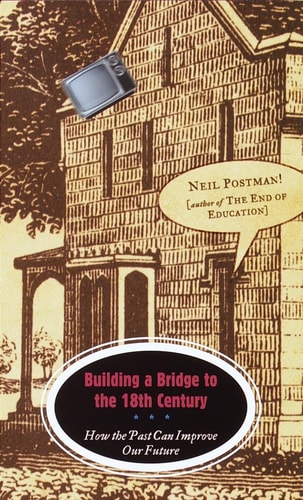
Building a bridge to the 18th century: how the past can improve our future

Postman, Neil
In Building a Bridge to the 18th Century , acclaimed cultural critic Neil Postman offers a cure for the hysteria and hazy values of the postmodern world. Postman shows us how to reclaim that balance between mind and machine in a dazzling celebration of the accomplishments of the Enlightenment-from Jefferson's representative democracy to Locke's deductive reasoning to Rousseau's demand that the care and edification of children be considered an investment in our collective future. Here, too, is the bold assertion that Truth is invulnerable to fashion or the passing of time. Provocative and brilliantly argued, Building a Bridge to the 18th Century illuminates a navigable path through the Information Age-a byway whose signposts, it turns out, were there all along.
Knopf 2000-10-10 213 pages

Counterinsurgency Warfare Theory and Practice

David Galula
This volume in the Praeger Security International (PSI) series "Classics of the Counterinsurgency Era" defines the laws of insurgency and outlines the strategy and tactics to combat such threats. Drawn from the observations of a French officer, David Galula, who witnessed guerrilla warfare on three continents, the book remains relevant today as American policymakers, military analysts, and members of the public look to the counterinsurgency era of the 1960s for lessons to apply to the current situation in Iraq and Afghanistan. With a new foreword by John A. Nagl, author of Counterinsurgency Lessons from Malaya and Vietnam (Praeger, 2002).
Greenwood Publishing Group 1964-05 143 pages

The March of Folly From Troy to Vietnam

Barbara Wertheim Tuchman
Pulitzer Prize–winning historian Barbara W. Tuchman, author of the World War I masterpiece The Guns of August, grapples with her boldest subject: the pervasive presence, through the ages, of failure, mismanagement, and delusion in government. Drawing on a comprehensive array of examples, from Montezuma’s senseless surrender of his empire in 1520 to Japan’s attack on Pearl Harbor, Barbara W. Tuchman defines folly as the pursuit by government of policies contrary to their own interests, despite the availability of feasible alternatives. In brilliant detail, Tuchman illuminates four decisive turning points in history that illustrate the very heights of folly: the Trojan War, the breakup of the Holy See provoked by the Renaissance popes, the loss of the American colonies by Britain’s George III, and the United States’ own persistent mistakes in Vietnam. Throughout The March of Folly, Tuchman’s incomparable talent for animating the people, places, and events of history is on spectacular display.
Cardinal 1990 559 pages

Palo Alto: a history of California, capitalism, and the world

Harris, Malcolm
"Palo Alto's weather is temperate, its people are educated and enterprising, its corporations are spiritually and materially ambitious and demonstrably world-changing. Palo Alto is also a haunted toxic waste dump built on stolen Indian burial grounds, and an integral part of the capitalist world system. In Palo Alto, the first comprehensive, global history of Silicon Valley, Malcolm Harris examines how and why Northern California evolved in the particular, consequential way it did, tracing the ideologies, technologies, and policies that have been engineered there over the course of 150 years of Anglo settler colonialism, from IQ tests to the "tragedy of the commons," racial genetics, and "broken windows" theory. The Internet and computers, too. It's a story about how a small American suburb became a powerful engine for economic growth and war, and how it came to lead the world into a surprisingly disastrous 21st century. Palo Alto is an urgent and visionary history of the way we live now, one that ends with a clear-eyed, radical proposition for how we might begin to change course"--Provided by publisher.
Little, Brown and Company 2024-03-19 712 pages

The Upright Thinkers

Mlodinow, Leonard
How did a near-extinct species, eking out a meager existence with stone axes, become the dominant power on earth, able to harness a knowledge of nature ranging from tiny atoms to the vast structures of the universe? Leonard Mlodinow takes us on an enthralling tour of the history of human progress, from our time on the African savannah through the invention of written language, all the way to modern quantum physics. Along the way, he explores the colorful personalities of the great philosophers, scientists, and thinkers, and traces the cultural conditions—and the elements of chance—that influenced scientific discovery. Deeply informed, accessible, and infused with the author’s trademark humor and insight, The Upright Thinkers is a stunning tribute to humanity’s intellectual curiosity and an important book for any reader with an interest in the scientific issues of our day.
Random House US 2016-04-19 352 pages

Apollo 8 The Thrilling Story of the First Mission to the Moon

Jeffrey Kluger
The untold story of the historic voyage to the moon that closed out one of our darkest years with a nearly unimaginable triumph In August 1968, NASA made a bold decision: in just sixteen weeks, the United States would launch humankind's first flight to the moon. Only the year before, three astronauts had burned to death in their spacecraft, and since then the Apollo program had suffered one setback after another. Meanwhile, the Russians were winning the space race, the Cold War was getting hotter by the month, and President Kennedy's promise to put a man on the moon by the end of the decade seemed sure to be broken. But when Frank Borman, Jim Lovell and Bill Anders were summoned to a secret meeting and told of the dangerous mission, they instantly signed on. Written with all the color and verve of the best narrative non-fiction, Apollo 8 takes us from Mission Control to the astronaut's homes, from the test labs to the launch pad. The race to prepare an untested rocket for an unprecedented journey paves the way for the hair-raising trip to the moon. Then, on Christmas Eve, a nation that has suffered a horrendous year of assassinations and war is heartened by an inspiring message from the trio of astronauts in lunar orbit. And when the mission is over--after the first view of the far side of the moon, the first earth-rise, and the first re-entry through the earth's atmosphere following a flight to deep space--the impossible dream of walking on the moon suddenly seems within reach. The full story of Apollo 8 has never been told, and only Jeffrey Kluger--Jim Lovell's co-author on their bestselling book about Apollo 13--can do it justice. Here is the tale of a mission that was both a calculated risk and a wild crapshoot, a stirring account of how three American heroes forever changed our view of the home planet.
Thorndike Press, a part of Gale, a Cengage Company 2017 511 pages

First freedom: a ride through America's enduring history with the gun

Harsanyi, David
From “one of America’s smartest political writers” (Glenn Beck) comes a fascinating and accessible history of the United States’ unique and enduring relationship with guns, for fans of Chris Kyle’s American Gun . For America, the gun is a story of innovation, power, violence, character, and freedom. From the founding of the nation to the pioneering of the West, from the freeing of the slaves to the urbanization of the twentieth century, our country has had a complex and lasting relationship with firearms. Now, in First Freedom , nationally syndicated columnist and veteran writer David Harsanyi explores the ways in which firearms have helped preserve our religious, economic, and cultural institutions for over two centuries. From Samuel Colt’s early entrepreneurism to the successful firearms technology that helped make the United States a superpower, the gun is inextricably tied to our exceptional rise. In the vein of popular histories like Salt and Seabiscuit , Harsanyi takes you on a captivating and thrilling ride of Second Amendment history that demonstrates why guns are not only an integral part of America’s past, but also an essential part of its future.
Threshold Editions 2018-10-02 310 pages

Mr. Wilson's cabinet of wonder

Weschler, Lawrence
"Pronged ants, horned humans, a landscape carved on a fruit pit--some of the displays in David Wilson's Museum of Jurassic Technology are hoaxes. But which ones? As he guides readers through an intellectual hall of mirrors, Lawrence Weschler revisits the 16th-century "wonder cabinets" that were the first museums and compels readers to examine the imaginative origins of both art and science"
Vintage Books, a Division of Random House, Inc 1996-11-26 168 pages

How the End Begins The Road to a Nuclear World War III

Ron Rosenbaum
In this startling book, now in paperback, the bestselling author of Explaining Hitler warns that a nuclear World War III is not only the most massive and imminent threat to existence as we know it, but also one of the most ignored. While Russian aggression grows and North Korean nuclear ambitions increase unabated, tensions continue to escalate between India and Pakistan and in the Middle East. Meanwhile, Iran remains committed to developing its nuclear program despite international sanctions. No other writer has assembled the extraordinary array of sources and experiences that Ron Rosenbaum calls on to inform his examination of nuclear war. While working from both historical and contemporary perspectives to explore the people and events that could shape the form of a third world war, he suggests humans have never before been so close to annihilation. In this book, Rosenbaum examines both the paranoia and very real set of possibilities that informs our view of nuclear war and asks whether we can “undream” the nightmare.
Simon and Schuster 2012-02-21 320 pages

Jack Herer's the Emperor Wears No Clothes

Jack Herer
In this thoroughly researched, scrupulously annotated and shockingly provocative book you’ll learn: how and why Cannabis prohibition began and what that has meant to America ; all the uses of hemp as medicine, food, fuel, fiber, paper, and as a plastic replacement ; the straight dope on marijuana smoke and its effect on the human body ; who profits from the prohibition and criminalization of Cannabis ; what you can do to speed up legalization and profit from the coming changes.
Ah Ha Pub. 1998 291 pages