23 results for "Technology"

The Birth of the Pill How Four Crusaders Reinvented Sex and Launched a Revolution

Jonathan Eig
In the winter of 1950, Margaret Sanger, then seventy-one, and who had campaigned for women's right to control their own fertility for five decades, arrived at a Park Avenue apartment building. She had come to meet a visionary scientist with a dubious reputation more than twenty years her junior. His name was Gregory Pincus. In The Birth of the Pill, Jonathan Eig tells the extraordinary story of how, prompted by Sanger, and then funded by the wealthy widow and philanthropist Katharine McCormick, Pincus invented a drug that would stop women ovulating. With the support of John Rock, a charismatic and, crucially, Catholic doctor from Boston, who battled his own church in the effort to win public approval for the controversial new drug, he succeeded. Together, these four determined men and women changed the world. Spanning the years from Sanger's heady Greenwich Village days in the early twentieth century to trial tests in Puerto Rico in the 1950s to the cusp of the sexual revolution in the 1960s, this is a grand story of radical feminism, scientific ingenuity, establishment opposition, and, ultimately, a sea change in social attitudes.
Pan Macmillan 2014 388 pages

Gone Before Goodbye

Coben, Harlan
AN INSTANT #1 NEW YORK TIMES BESTSELLER In this unforgettable suspense novel that combines the storytelling talents of Academy Award-winning actor Reese Witherspoon and internationally bestselling author Harlan Coben, a woman is trapped in a deadly conspiracy—where uncovering the truth could cost her everything. "Reese Witherspoon and Harlan Coben have delivered a winner. Gone Before Goodbye is a dynamic, riveting and twisty thriller—complete with a heroine that you’ll absolutely love." —Laura Dave, New York Times bestselling author of The Last Thing He Told Me Maggie McCabe is teetering on the brink. A highly skilled and renowned Army combat surgeon, she has always lived life at the edge, where she could make the most impact. And it was all going to plan ... until it wasn’t. Upside down after a devastating series of tragedies leads to her medical license being revoked, Maggie has lost her purpose, but not her nerve or her passion. At her lowest point, she is thrown a lifeline by a former colleague, an elite plastic surgeon whose anonymous clientele demand the best care money can buy, as well as absolute discretion. Halfway across the globe, sequestered in the lap of luxury and cutting-edge technology, one of the world’s most mysterious men requires unconventional medical assistance. Desperate, and one of the few surgeons in the world skilled enough to take this job, Maggie enters his realm of unspeakable opulence and fulfills her end of the agreement. But when the patient suddenly disappears while still under her care, Maggie must become a fugitive herself—or she will be the next one who is ... Gone Before Goodbye. "A tour de force thriller that delivers a killer premise and thundering plot with serious emotional punch. Maggie is flawed, compelling and utterly real. Coben and Witherspoon are a dream team! " —Lucy Foley, New York Times bestselling author of The Guest List
Hachette Book Group USA 2026-06-09 400 pages

Bellevue Three Centuries of Medicine and Mayhem at America's Most Storied Hospital

David Oshinsky
From a Pulitzer Prize-winning historian comes a riveting history of New York's iconic public hospital that charts the turbulent rise of American medicine. Bellevue Hospital, on New York City's East Side, occupies a colorful and horrifying place in the public imagination: a den of mangled crime victims, vicious psychopaths, assorted derelicts, lunatics, and exotic-disease sufferers. In its two and a half centuries of service, there was hardly an epidemic or social catastrophe—or groundbreaking scientific advance—that did not touch Bellevue. David Oshinsky, whose last book, Polio: An American Story , was awarded a Pulitzer Prize, chronicles the history of America's oldest hospital and in so doing also charts the rise of New York to the nation's preeminent city, the path of American medicine from butchery and quackery to a professional and scientific endeavor, and the growth of a civic institution. From its origins in 1738 as an almshouse and pesthouse, Bellevue today is a revered public hospital bringing first-class care to anyone in need. With its diverse, ailing, and unprotesting patient population, the hospital was a natural laboratory for the nation's first clinical research. It treated tens of thousands of Civil War soldiers, launched the first civilian ambulance corps and the first nursing school for women, pioneered medical photography and psychiatric treatment, and spurred New York City to establish the country's first official Board of Health. As medical technology advanced, "voluntary" hospitals began to seek out patients willing to pay for their care. For charity cases, it was left to Bellevue to fill the void. The latter decades of the twentieth century brought rampant crime, drug addiction, and homelessness to the nation's struggling cities—problems that called a public hospital's very survival into question. It took the AIDS crisis to cement Bellevue's enduring place as New York's ultimate safety net, the iconic hospital of last resort. Lively, page-turning, fascinating, Bellevue is essential American history.
Knopf Doubleday Publishing Group 2017-10-24 416 pages

Heart An American Medical Odyssey

Dick Cheney,Richard B. Cheney,Jonathan Reiner,Liz Cheney
"For as long as he has served at the highest levels of business and government, Vice President Dick Cheney has also been one of the world's most prominent heart patients. Now, for the first time ever, Cheney, together with his longtime cardiologist Jonathan Reiner, MD, shares the very personal story of his courageous thirty-five-year battle with heart disease, from his first heart attack in 1978 to the heart transplant he received in 2012. In 1978, when Cheney suffered his first heart attack, he receivedessentially the same treatment as President Eisenhower had in 1955. Since then, cardiac medicine has evolved in extraordinary ways, and Cheney has benefited from nearly every medical and technological breakthrough along the way. At each juncture, when Cheney faced a new health challenge, the technology was one step ahead of his disease. In many ways, Cheney's story is the story of the evolution of modern cardiac care. Heart is the riveting, singular memoir of both doctor and patient, tracking their relationship as it unfolds over many years and crises. Like no US politician has before him, Cheney opens up about his health struggles, sharing harrowing, never-before-told stories about the challenges he faced during a perilous time in our nation's history. Dr. Reiner provides his perspective on Cheney's case and also gives readers a fascinating glimpse into his own education as a doctor. He masterfully chronicles the important discoveries, radical innovations, and cutting-edge science that have changed the face of medicine and saved countless lives. Powerfully braiding science with story and the personal with the political, Heart is a sweeping, inspiring, and ultimately optimistic book that will give hope to the millions of Americans affected by heart disease"--
Thorndike Press, A part of Gale, Cengage Learning 2014 583 pages

Disconnect A Scientist's Solutions for Safer Technology

Devra Davis
DISCONNECT A Scientist's Solutions for Safety Technology In this NEW, EXPANDED, and UPDATED edition of Disconnect, acclaimed and award-winning scientist Dr. Devra Davis shares a compelling cautionary tale, supported by a growing body of evidence, surrounding alarming new scientific understandings of cell phones, other commonly used microwave radiating devices, and the new 5G network currently being built-out nationwide - all with limited safety testing! Building upon the shocking revelations that Dr. Davis uncovered through research and interviews shared in the 2010 first edition, this new, expanded edition of Disconnect adds recent studies that substantiate and confirm the radiation risks of the "connected world" that endanger our health and the world around us. Understanding that personal electronic devices are here to stay, Dr. Davis shows us the simple safety measures we must take. Sharing these researched solutions, she reminds us that now is the time to implement them - before it's too late.
New Voices Press 2024-02-04 388 pages

My Breast

Joyce Wadler
After her breast cancer diagnosis in 1991, Joyce Wadler, a smart, savvy, forty-something New York writer, fought back with a grounded, roll-with-the-punches outlook. She took charge of her treatments, her options, her life -- and her disease. My Breast is her irreverently witty, fiercely personal story of facing cancer's obstacles and uncertainties with feisty courage. Read it for the first time, or read it again. In a new epilogue, meet Joyce Wadler as she is today. My Breast isn't the end of her journey, but a beginning....
Simon and Schuster 1997-11 176 pages

I Am Not Dead-- Yet!, Or, "The Corpse Moved" A Medical Memoir

Robby Benson
A riveting medical memoir actor/writer/director Robby Benson takes us on a candid journey from athletic soft-spoken heartthrob on Broadway and film, to husband, father, professor and courageous survivor of 4 open-heart surgeries. From One on One, Ice Castles, The Chosen, and Disney's Beauty and the Beast to directing Ellen and Friends, the funny and explicit narrative is a must for fans and essential reading for heart patients, patients of all kinds, their loved ones, and anyone searching for what should be the template for healthcare in America. New York Times #1 bestselling author, Michael F. Roizen, M.D. praised I'm Not Dead... Yet : "When you read this funny and courageously blunt book, you'll understand how to gain the vibrancy that Robby and his wife, Karla, have. ...What a great read and what an important story for all patients and their families dealing with a challenging illness."
ValorEditions.com 2012 384 pages

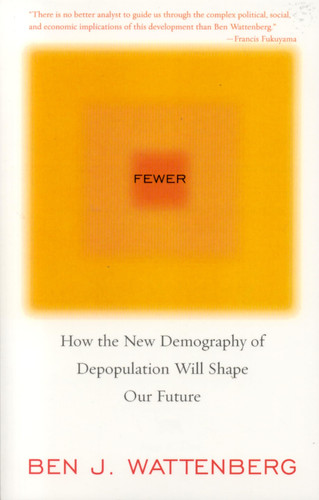
Fewer How the New Demography of Depopulation Will Shape Our Future

Ben J. Wattenberg
For at least 650 years, since the time of the Black Plague, the world's population has headed in only one direction: up. But within a few decades the number of people on earth will level off and then will likely decline over an extended period of time. In Fewer, the author explains how and why birthrates and fertility rates are now falling at an alarming rate in countries throughout the world--both modern and less developed. And he explores the major implications--for world politics, the environment, and the international economy--of this momentous shift. Illustrated with 23 clarifying charts.
Bloomsbury Academic 2004 241 pages

The Lucky Years How to Thrive in the Brave New World of Health

David Agus,David B. Agus,Kristin Loberg
Medicine is undergoing rapid change. In the old world, you followed general principles and doctors treated you based on broad, one-size-fits all solutions. In this new golden age, you'll be able to take full advantage of the latest scientific findings and leverage the power of technology to customize your care. Only those who know how to access and adapt to these breakthroughs -- without being distracted by hyped ideas and bad medicine -- will benefit. Imagine being able to get fit and lose weight without dieting, train your immune system to fight cancer, edit your DNA to avoid a certain fate, erase the risk of a heart attack, reverse aging, and know exactly which drugs to take to optimize health with zero side effects.
Thorndike Press 2016 455 pages

Sometimes Brilliant

Larry Brilliant
When a powerful mystic steps on the hand of a radical young hippie doctor from Detroit, it changes lives and the world. Sometimes Brilliant chronicles the adventures of a philosopher, seeker, unconventional doctor, groundbreaking tech innovator, and key player in the eradication of one of the worst pandemics in human history. His story--about what happens when love, compassion, and determination meet the right circumstances to effect positive change--is the kind that keeps hope and the sense of possibility alive. After sitting at the feet of Martin Luther King Jr. at the University of Michigan in 1963, Larry Brilliant was swept up into the civil rights movement, marching and protesting across America and Europe. As a radical young doctor, he followed the Hippie Trail from London over the Khyber Pass with his wife Girija, Wavy Gravy, and the Hog Farm commune to India. There, he found himself in a Himalayan ashram wondering whether he had stumbled into a cult. Instead, one of India's greatest spiritual teachers, Neem Karoli Baba, opened Larry's heart and told him his destiny was to work for the World Health Organization to help eradicate deadly smallpox. He never would have believed he'd become a key player in eliminating a ten-thousand-year-old disease that killed more than half a billion people in the twentieth century alone. Brilliant's unlikely trajectory, chronicled in Sometimes Brilliant, has brought him into close proximity with political leaders, spiritual masters, cultural heroes, and titans of technology around the world--from the Grateful Dead to Mikhail Gorbachev, from Ram Dass, the Dalai Lama, Lama Govinda, and Karmapa to Steve Jobs and the founders of Google, Salesforce, Facebook, Microsoft, and eBay, and Presidents Carter, Clinton, George W. Bush, and Obama. Anchored by the engrossing account of the heroic efforts of the extraordinary people involved in smallpox eradication in India, this is a riveting and fascinating epidemiological expedition, an honest reckoning of an entire generation, and a deeply moving spiritual memoir. It is a testament to faith, love, service, and what it means to engage with life's most important questions in pursuit of a better, more brilliant existence.
HarperCollins Publishers 2016-10 864 pages

Doctors on Horseback Pioneers of American Medicine

James T. Flexner
The man in the street would not, perhaps, recognize all the names of the brilliant scientists whose careers and personalities animate this book, but doctors know them. Morgan, who founded the first medical school in American and, fighting beside Washington, was ruined b the petty politics of the Revolution; McDowell, who, although on the fringe of the wilderness, dared the operation that prepared the way for all abdominal surgery; Rush, the equivocal personality who, for better or worse, dominated American medicine for more than fifty years; Beaumont, who, saving a life, won a living laboratory; Drake, who brought modern medicine to the New West; Long and Morton, who banished pain from surgery and earned it for themselves these men are honored in their profession today.
Fordham University Press 1992-11 370 pages

Blocked in the USA The Stem Cell Miracle

William C. Rader,William C Rader MD
If you thought the time of medical breakthroughs was over, brace yourself for the untold story of a doctor who singlehandedly, in the face of disdain from his colleagues and threats from government bureaucrats, made a breakthrough scientific discovery. Dr. Rader discovered how to apply fetal stem cell technology to humans and has saved the lives and eased the suffering of more than 1,500 patients with Autism, Epilepsy, Multiple Sclerosis, Stroke, Parkinson's disease, Muscular Dystrophy, and many other diseases. Blocked in the U.S.A. reveals the science behind Dr. Rader's breakthroughs, the struggles with the medical establishment, and, most important, the detailed successful results of his work. Now the truth can be told, and it reads like an adventure story, spanning three continents as one doctor dared to defy the FDA, the medical establishment and the drug companies.
Nanog Publishing, Incorporated 2010-03 378 pages

Baby X A Thriller

Kira Peikoff
When any biological matter can be used to create life, stolen celebrity DNA sells to the highest bidder–or the craziest stalker–in this propulsive thriller. With a vivid imagining of the future, Gattaca meets Black Mirror in Kira Peikoff’s Baby X . In the near-future United States, where advanced technology can create egg or sperm from any person’s cells, celebrities face the alarming potential of meeting biological children they never conceived. Famous singer Trace Thorne is tired of being targeted by the Vault, a black market site devoted to stealing DNA. Sick of paying ransom money for his own cell matter, he hires bio-security guard Ember Ryan to ensure his biological safety. Ember will do anything she can to protect her clients. She knows all the Vault’s tricks–discarded tissues, used straws, lipstick tubes—and has prevented countless DNA thefts. Working for Thorne, her focus becomes split when she begins to fall for him, but she knows she hasn’t let anything slip–love or not, his DNA is safe. But then she and Thorne are confronted by a pregnant woman, Quinn, who claims that Thorne is the father of her baby, and all bets are off. Brilliantly plotted and terrifyingly prescient, Baby X is an unpredictable and relentless speculative thriller perfect for fans of Blake Crouch and John Marrs.
Crooked Lane Books 2025-03-18 336 pages

Neurobiological Issues in Autism

Eric Schopler,Gary B. Mesibov
As a division of the School of Medicine at the University of North Carolina at ChapeI Hili, TEACCH has always been involved in the latest biological research on autism and related developmental disabilities. However, until now there has not been sufficient information to justify aseparate volume on this most important topic. Recent advances both in our under standing of the brain and in the technology to facilitate the measurement of neurological functioning have stimulated significant growth, which is reflected in this volume. As with the preceding books in this series, Current Issues in Autism, this volume is based on one of the annual TEACCH conferences held in ChapeI Hili each May. The books are not simply published proceedings of the conference papers, however. lnstead, conference participants are asked to develop chapters around their presentations, and other international experts whose work is beyond the scope of the conference, but related to the major theme, are asked to contribute as weil. These volumes are intended to provide the most current knowledge and professional practice available to us concerning major issues in autism.
Springer US 2013-12-14 418 pages

Our Synthetic Environment

Murray Bookchin,Lewis Herber
2018 Reprint of 1962 Edition. Full facsimile of the original edition, not reproduced with Optical Recognition software. Bookchin wrote Our Synthetic Environment under the pseudonym Lewis Herber. This was one of the first books of the modern period in which an author espoused an ecological and environmentalist worldview. It predates Silent Spring (1962) by Rachel Carson, a more widely known book on the same topic widely credited as starting the environmental movement. "At the time of its publication, Our Synthetic Environment was the most comprehensive and enlightened book on the environmental crisis. Many other books on this topic have been published since, but none, I believe, as comprehensive." --René Dubos
Martino Fine Books 2018-07-11 328 pages

George Pólya - Collected Papers Location of Zeros

George Pólya
Papers on the location and behavior of zeros, including some of Polya's most influential work.The papers in this volume cluster about the following topics: the location of the zeros of polynomials and other analytic functions; the approximation of analytic functions by polynomials in which the location of zero is restricted (these papers represent some of Polya's most influential work); the behavior of the zeros of successive derivatives; the zeros of functions defined by trigonometric integrals; and the signs of derivatives and their analytic character. The volume also includes a paper that is not about zeros but contains a representation theorem for positive polynomials in several variables.
MIT Press 1974 456 pages

Neonatal bioethics: the moral challenges of medical innovation

Lantos, John D.
Neonatal intensive care has been one of the most morally controversial areas of medicine during the past thirty years. This study examines the interconnected development of four key aspects of neonatal intensive care: medical advances, ethical analysis, legal scrutiny, and econometric evaluation. The authors assert that a dramatic shift in societal attitudes toward newborns and their medical care was a stimulus for and then a result of developments in the medical care of newborns. They divide their analysis into three eras of neonatal intensive care. The first, characterized by the rapid advance of medical technology from the late 1960s to the Baby Doe case of 1982, established neonatal care as a legitimate specialty of medical care, separate from the rest of pediatrics and medicine. During this era, legal scholars and moral philosophers debated the relative importance of parental autonomy, clinical prognosis, and children's rights. The second era, beginning with the Baby Doe case (a legal battle that spurred legislation mandating that infants with debilitating birth defects be treated unless the attending physician deems efforts to prolong life "futile"), stimulated efforts to establish a consistent federal standard on neonatal care decisions and raised important moral questions concerning the meaning of "futility" and of "inhumane" treatment. In the third era, a consistent set of decision-making criteria and policies was established. These policies were the result of the synergy and harmonization of newly agreed upon ethical principles and newly discovered epidemiological characteristics of neonatal care. Tracing the field's recent history, notable advances, and considerable challenges yet to be faced, the authors present neonatal bioethics as a paradigm of complex conversation among physicians, philosophers, policy makers, judges, and legislators which has led to responsible societal oversight of a controversial medical innovation.
Johns Hopkins University Press 2009 177 pages

The Relation of Peripheral Irritation to Disease Considered from a Therapeutic Standpoint (Classic Reprint)

Simon Baruch
Excerpt from The Relation of Peripheral Irritation to Disease: Considered From a Therapeutic Standpoint Who Shall decide these different problems which now more than ever press for solution? The method of arranging a symposium on the great medical questions of the day must be of advantage. It brings out prominently the elements of each question as viewed from different stand points, if the essayists are selecte'd for the diversity as well as the honesty of their respective views. It was a wise suggestion, too, of Dr. Jacobi to afford the general practitioner a hearing on the subject offered for discussion, for he stands, as it were, upon neutral ground, watching eagerly the friendly contests of his colleagues and co laborer the specialists, and appropriating the wheat as they Sift it from the abundant chaff bv the threshing of contending views. About the Publisher Forgotten Books publishes hundreds of thousands of rare and classic books. Find more at www.forgottenbooks.com This book is a reproduction of an important historical work. Forgotten Books uses state-of-the-art technology to digitally reconstruct the work, preserving the original format whilst repairing imperfections present in the aged copy. In rare cases, an imperfection in the original, such as a blemish or missing page, may be replicated in our edition. We do, however, repair the vast majority of imperfections successfully; any imperfections that remain are intentionally left to preserve the state of such historical works.
Fb&c Limited 2017-11-16 26 pages