47 results for "Technology"

Ten Arguments for Deleting Your Social Media Accounts Right Now

Jaron Lanier
AS SEEN IN THE NETFLIX DOCUMENTARY THE SOCIAL DILEMMA A WIRED " ALL-TIME FAVORITE BOOK" A FINANCIAL TIMES BEST BOOK "THE CONSCIENCE OF SILICON VALLEY"- GQ “Profound . . . Lanier shows the tactical value of appealing to the conscience of the individual. In the face of his earnest argument, I felt a piercing shame about my own presence on Facebook. I heeded his plea and deleted my account.” - Franklin Foer, The New York Times Book Review “Mixes prophetic wisdom with a simple practicality . . . Essential reading.” - The New York Times (Summer Reading Preview) You might have trouble imagining life without your social media accounts, but virtual reality pioneer Jaron Lanier insists that we’re better off without them. In Ten Arguments for Deleting Your Social Media Accounts Right Now , Lanier, who participates in no social media, offers powerful and personal reasons for all of us to leave these dangerous online platforms. Lanier’s reasons for freeing ourselves from social media’s poisonous grip include its tendency to bring out the worst in us, to make politics terrifying, to trick us with illusions of popularity and success, to twist our relationship with the truth, to disconnect us from other people even as we are more “connected” than ever, to rob us of our free will with relentless targeted ads. How can we remain autonomous in a world where we are under continual surveillance and are constantly being prodded by algorithms run by some of the richest corporations in history that have no way of making money other than being paid to manipulate our behavior? How could the benefits of social media possibly outweigh the catastrophic losses to our personal dignity, happiness, and freedom? Lanier remains a tech optimist, so while demonstrating the evil that rules social media business models today, he also envisions a humanistic setting for social networking that can direct us toward a richer and fuller way of living and connecting with our world.
Picador 2019-08-27 176 pages

The Singularity Is Nearer

Kurzweil, Ray
"This successor volume to The Singularity Is Near explores how technology will refashion the human race in the decades to come. In this entirely new book, Ray Kurzweil brings a fresh perspective to advances in the singularity-assessing the progress of many of his predictions and examining the novel advancements that, in the near future, will bring a revolution in knowledge and an expansion of human potential. Among the topics he discusses are rebuilding the world atom by atom with devices like nanobots; radical life extension beyond the current age limit of 120; reinventing intelligence by expanding biological capacity with nonbiological intelligence in the cloud; how life is improving with declines in poverty and violence; and the growth of technologies that can be applied to everything from clothes to building materials to growing human organs. He also considers the potential perils of biotechnology, nanotechnology, and artificial intelligence, including such topics as how AI will impact unemployment and the safety of autonomous cars, and "After Life" technology, which will reanimate people who have passed away through a combination of data and DNA"--
Penguin USA 2025-06-03 432 pages

The Dark Art Undercover in the Global War Against Narco-Terrorism

Edward Follis,Douglas Century
The electrifying, often harrowing memoir of a highly decorated DEA agent who targeted the world's most notorious narco-terrorists through the "dark art" of undercover operations. Edward Follis bought eightballs of coke in a red Corvette. He negotiated multimillion-dollar deals onboard private King Airs. He developed covert relationships with men who were not only international drug traffickers but--in some cases--operatives for Al Qaeda, Hezbollah, Hamas, the Shan United Army, or the Mexican Federation of cartels. He was a master at the dark art of going undercover. And this is his story... Spanning five continents and filled with harrowing stories about the world's most ruthless drug lords and terrorist networks, The Dark Art is an incredible first hand account of Edward Follis's twenty-seven-year undercover career in the DEA--from doing street-level busts evocative of Miami Vice to using high-resolution-optics surveillance and classified cutting-edge technology to bring down narco-terror kingpins. It also closely examines how, from the early 1990s to today, the DEA underwent its own radical transformation, shifting its focus from local dealers of coke and weed to the billionaire financiers of worldwide terrorism. Every word is true, and every story is documented. A globe-hopping nonfiction thriller, The Dark Art is a page-turning memoir that will electrify you from page one.
Penguin Publishing Group 2015-10-13 304 pages

How the End Begins The Road to a Nuclear World War III

Ron Rosenbaum
In this startling book, now in paperback, the bestselling author of Explaining Hitler warns that a nuclear World War III is not only the most massive and imminent threat to existence as we know it, but also one of the most ignored. While Russian aggression grows and North Korean nuclear ambitions increase unabated, tensions continue to escalate between India and Pakistan and in the Middle East. Meanwhile, Iran remains committed to developing its nuclear program despite international sanctions. No other writer has assembled the extraordinary array of sources and experiences that Ron Rosenbaum calls on to inform his examination of nuclear war. While working from both historical and contemporary perspectives to explore the people and events that could shape the form of a third world war, he suggests humans have never before been so close to annihilation. In this book, Rosenbaum examines both the paranoia and very real set of possibilities that informs our view of nuclear war and asks whether we can “undream” the nightmare.
Simon and Schuster 2012-02-21 320 pages

Jack Herer's the Emperor Wears No Clothes

Jack Herer
In this thoroughly researched, scrupulously annotated and shockingly provocative book you’ll learn: how and why Cannabis prohibition began and what that has meant to America ; all the uses of hemp as medicine, food, fuel, fiber, paper, and as a plastic replacement ; the straight dope on marijuana smoke and its effect on the human body ; who profits from the prohibition and criminalization of Cannabis ; what you can do to speed up legalization and profit from the coming changes.
Ah Ha Pub. 1998 291 pages

World Without Mind

Franklin Foer
Over the past few decades there has been a revolution in terms of who controls knowledge and information. This rapid change has imperilled the way we think. Without pausing to consider the cost, the world has rushed to embrace the products and services of four titanic corporations. We shop with Amazon; socialise on Facebook; turn to Apple for entertainment; and rely on Google for information. These firms sell their efficiency and purport to make the world a better place, but what they have done instead is to enable an intoxicating level of daily convenience. As these companies have expanded, marketing themselves as champions of individuality and pluralism, their algorithms have pressed us into conformity and laid waste to privacy. They have produced an unstable and narrow culture of misinformation, and put us on a path to a world without private contemplation, autonomous thought, or solitary introspection - a world without mind. In order to restore our inner lives, we must avoid being co-opted by these gigantic companies, and understand the ideas that underpin their success. Elegantly tracing the intellectual history of computer science - from the Descartes and the enlightenment to Alan Turing to Stuart Brand and the hippie origins of today's Silicon Valley - Foer exposes the dark underpinnings of our most idealistic dreams for technology. The corporate ambitions of Google, Facebook, Apple, and Amazon, he argues, are trampling longstanding liberal values, especially intellectual property and privacy. This is a nascent stage in the total automation and homogenization of social, political, and intellectual life. By reclaiming our private authority over how we intellectually engage with the world, we have the power to stem the tide. At stake is nothing less than who we are, and what we will become. There have been monopolists in the past but today's corporate giants have far more nefarious aims. They're monopolists who want access to every facet of our identities and influence over every corner of our decision-making. Until now few have grasped the sheer scale of the threat. Foer explains not just the looming existential crisis but the imperative of resistance.
Jonathan Cape Ltd 2017-09-28 272 pages

The Great American Broadcast A Celebration of Radio's Golden Age

Leonard Maltin
The popular authority on movies, television, and video now tunes in to the Golden Age of Radio. This fascinating and long-overdue celebration of the way things were includes... -- Behind the scenes stories about Orson Welles, Lucille Ball, Jack Benny, Bob Hope, Kirk Douglas, Joan Crawford, Bette Davis, and many, many others -- The history of radio soap operas, westerns, variety shows, comedies, and thrillers -- Hundreds of revealing personal interviews with radio legends -- More than 125 rare photographs and illustrations
Penguin Publishing Group 2000 324 pages

Content

Cory Doctorow
Readers will discover how America chose Happy Meal toys over copyright, why Facebook is taking a faceplant, how the Internet is basically just a giant Xerox machine, why Wikipedia is a poor cousin of The Hitchhikers Guide to the Galaxy, and how to enjoy free e-books. Notice: This Book is published by Historical Books Limited (www.publicdomain.org.uk) as a Public Domain Book, if you have any inquiries, requests or need any help you can just send an email to [email protected] This book is found as a public domain and free book based on various online catalogs, if you think there are any problems regard copyright issues please contact us immediately via [email protected]
CreateSpace Independent Publishing Platform 2016-04-18 180 pages

Microtrends The Small Forces Behind Tomorrow's Big Changes

Mark Penn
The adviser to Senator Hillary Clinton, Bill Gates, and President Bill Clinton proves that small is big by identifying 75 hidden-in-plain-sight trends that are moving America, revealing that the nation is no longer a melting pot but a collection of communities with many individual tastes and lifestyles. "The ideas in his book will help you see the world in a new way." --Bill Clinton "Mark Penn has a keen mind and a fascinating sense of what makes America tick, and you see it on every page of Microtrends ." --Bill Gates In 1982, readers discovered Megatrends . In 2000, The Tipping Point entered the lexicon. Now, in Microtrends , one of the most respected and sought-after analysts in the world articulates a new way of understanding how we live. Mark Penn, the man who identified "Soccer Moms" as a crucial constituency in President Clinton's 1996 reelection campaign, is known for his ability to detect relatively small patterns of behavior in our culture-microtrends that are wielding great influence on business, politics, and our personal lives. Only one percent of the public, or three million people, is enough to launch a business or social movement. Relying on some of the best data available, Penn identifies more than 70 microtrends in religion, leisure, politics, and family life that are changing the way we live. Among them: People are retiring but continuing to work. Teens are turning to knitting. Geeks are becoming the most sociable people around. Women are driving technology. Dads are older than ever and spending more time with their kids than in the past. You have to look at and interpret data to know what's going on, and that conventional wisdom is almost always wrong and outdated. The nation is no longer a melting pot. We are a collection of communities with many individual tastes and lifestyles. Those who recognize these emerging groups will prosper. Penn shows readers how to identify the microtrends that can transform a business enterprise, tip an election, spark a movement, or change your life. In today's world, small groups can have the biggest impact.
Grand Central Publishing 2007-09 448 pages

Inevitable surprises: thinking ahead in a time of turbulence

Peter Schwartz
The world we live in today is more volatile than ever. The security of free nations is threatened by rogue states, the global economy is in flux, and the rapid advance of technology forces constant reevaluation of our society. With so many powerful forces at work and seemingly unpredictable events occurring, to many the future seems dark, and its possibilities frightening. Peter Schwartz disagrees. A world-renowned visionary in the field of scenario planning, Schwartz’s startling—and accurate— predictions have been employed by government agencies and major corporations for more than twenty-five years. He argues that the future is foreseeable, and that by examining the dynamics at work today we can predict the “inevitable surprises” of tomorrow. Timely and thought-provoking, Inevitable Surprises is a book that no one with an interest in business—or the future of our society—can afford to miss.
Gotham Books 2004-05-24 247 pages

Tech-Savvy Parenting A Guide to Raising Safe Children in a Digital World

Nikki Bush,Arthur Goldstuck
*Are you a parent looking to make sense of a daunting digital world, with new technical challenges appearing daily? * Feel you're not keeping up with the demands of technology? * Feel you're not keeping up with your children's use of social media? * Worried it's getting harder to keep your children safe in the digital world? Tech-Savvy Parenting brings together the experience, research, observations and advice of respected parenting expert Nikki Bush, and leading technology commentator Arthur Goldstuck. This insightful duo will help you get a handle on what's happening in the digital space to ensure your children are safe and savvy in this fast-changing world. They'll guide you through the terminology, dangers and opportunities of technology, while placing children's use of all things digital firmly in the context of the relationship between parents and their children. For families to remain connected, both online and offline, and for young people to develop into responsible digital citizens, parents must bridge the digital divide to their children by understanding the attraction of social media and technology, how communication is changing, and how technology is changing the world. This book is filled with practical advice that will help you to navigate the digital space, together with your children, with greater confidence.
Bookstorm 2015-01-13 256 pages

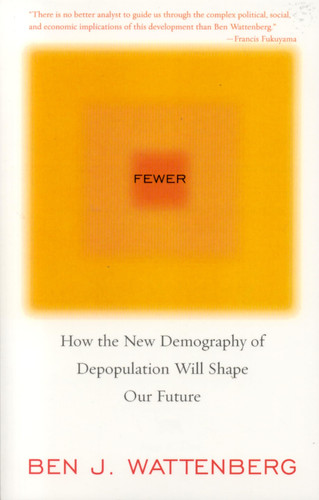
Fewer How the New Demography of Depopulation Will Shape Our Future

Ben J. Wattenberg
For at least 650 years, since the time of the Black Plague, the world's population has headed in only one direction: up. But within a few decades the number of people on earth will level off and then will likely decline over an extended period of time. In Fewer, the author explains how and why birthrates and fertility rates are now falling at an alarming rate in countries throughout the world--both modern and less developed. And he explores the major implications--for world politics, the environment, and the international economy--of this momentous shift. Illustrated with 23 clarifying charts.
Bloomsbury Academic 2004 241 pages

One Child at a Time The Global Fight to Rescue Children from Online Predators

Julian Sher
From a renowned investigative reporter, the true story behind a horrifying Internet abuse epidemic - and the heroes who are out to stop it. The Internet has helped make child abuse terrifyingly common - it is the new face of crime in the 21st century. There are tens, probably hundreds of thousands of children whose sexual abuse has been electronically recorded and distributed on the Internet. As Julian Sher reveals, the men perpetrating these crimes include lawyers, priests, doctors and politicians. They pick their victims from the streets of Bangkok to Boy Scout troops in England, while the police - from a crack image analyst with the Toronto police to an FBI agent who poses as a thirteen-year-old girl online - work desperately to nab the predators. One Child at a Time goes behind the headlines to show how law officers are fighting back against this tide of abuse, from daring rescues in homes to the seizures of millions of dollars in the offshore bank accounts of the porn merchants. In riveting detail, Julian Sher shows how clue by clue, and image by image, investigators are using cutting edge tools, turning the technology of the Internet against the perpetrators as they race to find and rescue the victims - children who otherwise have no voice. This important book explores the ramifications of a worldwide struggle, from the need for updated legal powers to the unexpected effects the Internet has had on our social fabric. It also includes a full list of resources for concerned parents. Though sometimes harrowing, One Child at a Time is alsoinspiring - and never less than absolutely relevant. In their efforts to rescue the child victims of one of today's most pervasive and insidious crimes, police must be creative, dogged and go well beyond the borders drawn on any map. . . Canadian cop Paul Gillespie changed the way that police around the world tackle Internet porn. He decided that if the system was broken, he was going to send an email to Bill Gates and ask for help. Gates not only answered, but Microsoft ended up kicking in millions of dollars, working with Gillespie's team to develop the Child Exploitation Tracking System, a searchable database to track and investigate Web predators and their victims. It soon spread across Canada, and then to the UK, Australia and the U.S. Older men pretend to be young and caring, luring lonely young girls in chat rooms. But when they show up to meet their victim, they discover the FBI is waiting to arrest them. Emily Vacher, one of the FBI's top Internet undercover operatives, specializes in trapping the predators at their own game of deception. The photos of the child's abuse were everywhere on the Net, but no one knew who or where she was. In a frantic 36-hour hunt, using CSI-type sleuthing to find clues in the pictures, Canadian, American and European police rescued a girl from North Carolina. Jim Gamble, one of the most senior police officers in the UK, has spearheaded the creation of a Virtual Global Taskforce to patrol the web 24/7. It was time for a sheriff to tame the wild, wild Web, Gamble decided. Now children have a redreport abuse button on chat room software and browsers they can click any time they feel threatened. It is time for the children's stories-too often hidden in the dark corners of the Web-to be told. Their torment has been etched in their memories-and the memories of the police officers dedicated to rescuing them. It is what scars them. But it is also what spurs them on. Because they know behind every picture or video lies a little, frightened child. Detective Sergeant Paul Gillespie of the Toronto Police's Exploited Child Unit can't shake the lingering echoes of some of the worst videos he has seen of shackled children: Sometimes, he says, you can hear the children cry. --from One Child at a Time
Random House Canada 2007 327 pages

On the Iliad

Rachel Bespaloff
Contents include: The Style of the Mythical Age: An Introduction by Hermann Broch ON THE ILIAD Hector Thetis and Achilles Helen The Comedy of the Gods Troy and Moscow Priam and Achilles Break Bread Poets and Prophets Originally published in 1947. The Princeton Legacy Library uses the latest print-on-demand technology to again make available previously out-of-print books from the distinguished backlist of Princeton University Press. These editions preserve the original texts of these important books while presenting them in durable paperback and hardcover editions. The goal of the Princeton Legacy Library is to vastly increase access to the rich scholarly heritage found in the thousands of books published by Princeton University Press since its founding in 1905.
Princeton University Press 2019-03-12 128 pages

The app generation: how today's youth navigate identity, intimacy, and imagination in a digital world

Gardner, Howard
"No one has failed to notice that the current generation of youth is deeply-some would say totally-involved with digital media. Professors Howard Gardner and Katie Davis name today's young people The App Generation, and in this spellbinding book they explore what it means to be "app-dependent" versus "app-enabled" and how life for this generation differs from life before the digital era. Gardner and Davis are concerned with three vital areas of adolescent life: identity, intimacy, and imagination. Through innovative research, including interviews of young people, focus groups of those who work with them, and a unique comparison of youthful artistic productions before and after the digital revolution, the authors uncover the drawbacks of apps: they may foreclose a sense of identity, encourage superficial relations with others, and stunt creative imagination. On the other hand, the benefits of apps are equally striking: they can promote a strong sense of identity, allow deep relationships, and stimulate creativity. The challenge is to venture beyond the ways that apps are designed to be used, Gardner and Davis conclude, and they suggest how the power of apps can be a springboard to greater creativity and higher aspirations"--
Yale University Press 2013-10-22 244 pages

False Alarm The Truth about the Epidemic of Fear

Marc Siegel
More relevant than ever as the Coronavirus, COVID-19 pandemic sweeps the globe, False Alarm (Originally released in 2008) reminds readers to look closely at the facts as the media covers the national pandemic news and spread of the virus, as well as reinforces the notion that we must arm ourselves against fear tactics that inhibit our abilities to properly make decisions in a world of uncertainty. Life today for citizens of the developed world is safer, easier, and healthier than for any other people in history thanks to modern medicine, science, technology, and intelligence. So why is an epidemic of fear sweeping America? The answer, according to nationally renowned health commentator Dr. Marc Siegel, is that we live in an artificially created culture of fear. In False Alarm , Siegel identifies three major catalysts of the culture of fear-government, the media, and big pharma. With fascinating, blow-by-blow analyses of the most sensational false alarms of the past few years, he shows how these fearmongers manipulate our most primitive instincts--often without our even realizing it. False Alarm shows us how to look behind the hype and hysteria, inoculate ourselves against fear tactics, and develop the emotional and intellectual skills needed to take back our lives.
John Wiley & Sons Canada, Limited 2006-09 258 pages

Crime, Its Causes and Remedies

Cesare Lombroso
Crime, Its Causes and Remedies is a work of criminology by author and Professor of Criminal Anthropology, Cesare Lombroso. Lombroso was a professor at the Italian University of Turin, and thus all of his works were written in Italian. This book, translated by Henry P. Horton, was not released in English until after Lombroso's death. It was selected by the American Institute of Criminal Law and Criminology for translation and deemed vitally important in the understanding of crime and criminals. Part one examines the factors that contribute to crime, paying more attention to the individual than to environmental factors. Part two looks at ways in which crime can be reduced and avoided, highlighting both effective and ineffective measures that have been used. Part three applies the lessons of the first two parts to propose a detailed system for dealing with crime and criminals, from the penalties that criminals should face to the appropriate institutions they should be held in. If nothing else, Crime, Its Causes and Remedies is a case study on how far a field of science can progress in 100 years. Much of the content of this book is hopelessly out of date and many of the theories forwarded in this book would be highly controversial if presented today, including equating epileptics and criminals, and the heavy reliance on racial profiling. This book is valuable mostly for the historical insights it provides into criminology and moral attitudes rather than as a source of textbook knowledge about the subject. About the Publisher Forgotten Books publishes hundreds of thousands of rare and classic books. Find more at www.forgottenbooks.com This book is a reproduction of an important historical work. Forgotten Books uses state-of-the-art technology to digitally reconstruct the work, preserving the original format whilst repairing imperfections present in the aged copy. In rare cases, an imperfection in the original, such as a blemish or missing page, may be replicated in our edition. We do, however, repair the vast majority of imperfections successfully; any imperfections that remain are intentionally left to preserve the state of such historical works.
Fb&c Limited 2015-06-02 524 pages

On Power Its Nature and the History of Its Growth (Classic Reprint)

Bertrand de Jouvenel
Excerpt from On Power: Its Nature and the History of Its Growth Copyright 1945 by Les Editions do Cheval Ail , Geneva Copyright 1948 by The Viking Press, Inc. About the Publisher Forgotten Books publishes hundreds of thousands of rare and classic books. Find more at www.forgottenbooks.com This book is a reproduction of an important historical work. Forgotten Books uses state-of-the-art technology to digitally reconstruct the work, preserving the original format whilst repairing imperfections present in the aged copy. In rare cases, an imperfection in the original, such as a blemish or missing page, may be replicated in our edition. We do, however, repair the vast majority of imperfections successfully; any imperfections that remain are intentionally left to preserve the state of such historical works.
FB&C Limited 2017-10-11 458 pages

Cheaper, faster, better: how we'll win the climate war

Steyer, Tom
The climate is changing more rapidly than scientists predicted even a few years ago, with extreme weather already touching our everyday lives. At the same time, the clean energy revolution is forging ahead faster than nearly anyone anticipated. As Tom Steyer sees it, these two trends together create a moment like the one America faced during World War II: on the one hand, an existential threat calling for collective action; on the other, an opportunity to lead the world, protect the planet, and set the stage for a new generation of shared economic prosperity. In 2012, Steyer walked away from the highly successful investment fund he founded to devote himself full time to climate issues, and he's been on the front lines of the fight ever since: funding cleantech research and businesses, spearheading clean-energy ballot measures and voter registration drives, and running for president on a climate platform. Today, he leads a climate investment firm focused on accelerating climate solutions. In this accessible book, Steyer shares his own story and showcases the inspiring and innovative work of other climate leaders in the clean-energy transition. He shows us how capitalism can be used to scale climate progress, debunks many of the arguments made by fossil fuel companies, and calls on all of us to make stabilizing our planet part of our life's work. As green technology is fast becoming cleaner and cheaper, reshaping our planet's future--and our own--has never been more crucial or within our reach.
Spiegel and Grau 2024 242 pages