37 results for "World History"

People love dead Jews: reports from a haunted present

Horn, Dara
"A startling exploration of how Jewish history is exploited to comfort the living. Reflecting on subjects as far-flung as the international veneration of Anne Frank, the blockbuster travelling exhibition called "Auschwitz," the Jewish history of the Chinese city of Harbin, and the little known "righteous-gentile" Varian Fry, Dara Horn challenges us to confront the reasons why there might be so much fascination with Jewish deaths, as emblematic of the worst of evils the world has to offer, and so little respect for Jewish lives, as they continue to unfold in the present. Horn draws upon her own family life -- trying to explain Shakespeare's Shylock to a curious 10-year-old, her anger when swastikas are drawn on desks in her children's school in New Jersey, the profound and essential perspective offered by traditional religious practice, prayer, and study -- to assert the vitality, complexity and depth of this life against an anti-Semitism that, far from being disarmed by the mantra of "Never forget," is on the rise"--Provided by publisher.
W. W. Norton & Company 2021 237 pages

Antisemitism: here and now

Lipstadt, Deborah E.
The award-winning author of The Eichmann Trial and Denial: Holocaust History on Trial gives us a penetrating and provocative analysis of the hate that will not die, focusing on its current, virulent incarnations on both the political right and left, and on what can be done about it. When newsreels depicting the depredations of the Holocaust were shown in movie theaters to a horrified American public immediately after World War II, it was believed that the antisemitism that was part of the fabric of American culture in the 1920s and 1930s was finally going to be laid to rest. In the ensuing decades, Gregory Peck received an Academy Award for playing a journalist who passed as a Jew to blow the lid off genteel Jew hatred, clauses restricting where Jews could live were declared illegal, the KKK was pretty much litigated out of existence, and Joe Lieberman came within five electoral votes of becoming America's first Jewish vice president. And then the unthinkable began to happen. Over the last decade, there has been a noticeable uptick in antisemitic rhetoric and incidents by left-wing groups targeting Jewish students and Jewish organizations on American college campuses. Jews in countries throughout Europe have been attacked by terrorists. And the re-emergence of the white nationalist movement in America, complete with Nazi slogans and imagery, has brought to mind the fascist displays of the 1930s. Where is all this hatred coming from? Is there any significant difference between left-wing and right-wing antisemitism? What role has the anti-Zionist movement played? And what can be done to combat this latest manifestation of an ancient hatred? In a series of letters to an imagined college student and imagined colleague, both of whom are perplexed by this resurgence, Deborah Lipstadt gives us her own superbly reasoned, brilliantly argued, and sure-to-be-controversial responses to these troubling questions.
Scribe Publications 2019 288 pages

The cruelty is the point: why Trump's America endures / Adam Serwer

Serwer, Adam
"To many, our most shocking political crises appear unprecedented--un-American, even. But they are not, writes The Atlantic's Adam Serwer in this prescient essay collection, which dissects the most devastating moments in recent memory to reveal deeply entrenched dynamics, patterns as old as the country itself. The January 6 insurrection, anti-immigrant sentiment, and American authoritarianism all have historic roots that explain their continued power with or without President Donald Trump--a fact borne out by what has happened since his departure from the White House. Serwer argues that Trump is not the cause, he is a symptom. Serwer's phrase "the cruelty is the point" became among the most-used descriptions of Trump's era, but as this book demonstrates, it resonates across centuries. The essays here combine revelatory reporting, searing analysis, and a clarity that's bracing. In this new, expanded version of his bestselling debut, Serwer elegantly dissects white supremacy's profound influence on our political system, looking at the persistence of the Lost Cause, the past and present of police unions, the mythology of migration, and the many faces of anti-Semitism. In so doing, he offers abundant proof that our past is present and demonstrates the devastating costs of continuing to pretend it's not. The Cruelty Is the Point dares us, the reader, to not look away."--
One World 2022-09-20 404 pages

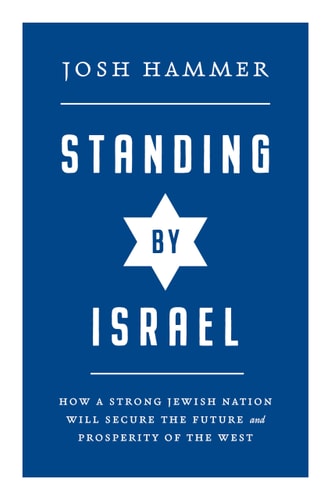
Israel and civilization: the fate of the Jewish nation and the destiny of the West

Hammer, Josh
"In Israel and Civilization, acclaimed journalist, legal expert, and pundit Josh Hammer makes a righteous case that the key to the prosperity of the West is the flourishing of the Jewish people and the Jewish State of Israel. Hammer's uplifting offense is our best defense against the enemies of the Jewish people's right to self-determination in their ancestral homeland. And as Hammer makes clear, manifesting the promise of Israel requires action by the United States and its allies. There can be no overstating the impact of the trauma of October 7, 2023, on the Jewish people. Yet the anti-Israel reactions the world over have been equally devastating. Rallies of hundreds of thousands explicitly or implicitly promoting Hamas violence; demonstrations of Ivy League professors celebrating the pogrom as awesome and exhilarating; so-called human rights organizations that refuse to unequivocally condemn the use of rape as a weapon of war; and a hydra of multiculturalism, postmodern relativism, and tolerance--it all threatens the physical and metaphysical survival of the West and our essential Jewish heritage. Preserving the best of what's been thought and said throughout history and ensuring that there will be centuries more requires a West that is proud of its Jewish heritage. In other words, the continued existence of the Jewish people is inextricably tied to the endurance of Western civilization. Israel is the center of the battle, and Israel and Civilization explains why and how the Jewish state must win."--
Radius Book Group 2025-03-18 293 pages

Fear: anti-semitism in Poland after Auschwitz ; an essay in historical interpretation

Gross, Jan Tomasz
Poland suffered an exceedingly brutal Nazi occupation during the Second World War. Close to five million Polish citizens lost their lives as a result. More than half the casualties were Polish Jews. Thus, the second largest Jewish community in the world - only American Jewry numbered more than the three and a half million Polish Jews at the time - was wiped out. Over 90 percent of its members were killed in the Holocaust. And yet, despite this unprecedented calamity that affected both Jews and non-Jews, Jewish Holocaust survivors returning to their hometowns in Poland after the war experienced widespread hostility, including murder, at the hands of their neighbors. The bloodiest peacetime pogrom in twentieth-century Europe took place in the Polish town of Kielce one year after the war ended, on July 4, 1946. Jan Gross's Fear attempts to answer a perplexing question: How was anti-Semitism possible in Poland after the war? At the center of his investigation is a detailed reconstruction of the Kielce pogrom and the reactions it evoked in various milieus of Polish society. How did the Polish Catholic Church, Communist party workers, and intellectuals respond to the spectacle of Jews being murdered by their fellow citizens in a country that had just been liberated from a five-year Nazi occupation? Gross argues that the anti-Semitism displayed in Poland in the war's aftermath cannot be understood simply as a continuation of prewar attitudes. Rather, it developed in the context of the Holocaust and the Communist takeover: Anti-Semitism eventually became a common currency between the Communist regime and a society in which many had joined in the Nazi campaign of plunder and murder - and for whom the Jewish survivors were a standing reproach. Jews did not bring communism to Poland as some believe; in fact, they were finally driven out of Poland under the Communist regime as a matter of political expediency. In the words of the Nobel Prize-winning poet Czeslaw Milosz, Poland's Communist rulers fulfilled the dream of Polish nationalists by bringing into existence an ethnically pure state. For more than half a century, what happened to the Jewish Holocaust survivors in Poland has been cloaked in guilt and shame. Writing with passion, brilliance, and fierce clarity, Jan T. Gross at last brings the truth to light.
Random House Trade Paperbacks 2007-08-14 303 pages

The Jewish enemy: Nazi propaganda during World War II and the Holocaust

Herf, Jeffrey
The sheer magnitude of the Holocaust has commanded our attention for the past sixty years. The extent of atrocities, however, has overshadowed the calculus Nazis used to justify their deeds. According to German wartime media, it was German citizens who were targeted for extinction by a vast international conspiracy. Leading the assault was an insidious, belligerent Jewish clique, so crafty and powerful that it managed to manipulate the actions of Roosevelt, Churchill, and Stalin. Hitler portrayed the Holocaust as a defensive act, a necessary move to destroy the Jews before they destroyed Germany. Joseph Goebbels, Minister of Propaganda, and Otto Dietrichâe(tm)s Press Office translated this fanatical vision into a coherent cautionary narrative, which the Nazi propaganda machine disseminated into the recesses of everyday life. Calling on impressive archival research, Jeffrey Herf recreates the wall posters that Germans saw while waiting for the streetcar, the radio speeches they heard at home or on the street, the headlines that blared from newsstands. The Jewish Enemy is the first extensive study of how anti-Semitism pervaded and shaped Nazi propaganda during World War II and the Holocaust, and how it pulled together the diverse elements of a delusionary Nazi worldview. Here we find an original and haunting exposition of the ways in which Hitler legitimized war and genocide to his own people, as necessary to destroy an allegedly omnipotent Jewish foe. In an era when both anti-Semitism and conspiracy theories continue to influence world politics, Herf offers a timely reminder of their dangers along with a fresh interpretation of the paranoia underlying the ideology of the Third Reich.
The Belknap Press of Harvard University Press 2006-01 390 pages

Nazi propaganda for the Arab world

Herf, Jeffrey
Jeffrey Herf, a leading scholar in the field, offers the most extensive examination to date of Nazi propaganda activities targeting Arabs and Muslims in the Middle East during World War II and the Holocaust. He draws extensively on previously unused and little-known archival resources, including the shocking transcriptions of the "Axis Broadcasts in Arabic" radio programs, which convey a strongly anti-Semitic message.
Yale University Press 2010 335 pages

Critical theories of Anti-Semitism

Judaken, Jonathan
"Despite its millennia-long history and frightening contemporary resurgence, unlike other forms of exclusion and discrimination, anti-Semitism (the author makes a case for the hyphenated spelling and the term's relation to Judeophobia, which explicitly references intersectional categories such as Islamophobia, xenophobia, homophobia, Negrophobia [Fanon], and others) remains undertheorized. This book is a corrective. The first systematic, comparative, and integrative analysis of the major theories and theorists, Anti-Semitism undertakes three urgently needed tasks. First, it explores key methodological and conceptual issues. Second, it identifies and considers seven major paradigms for understanding the underlying causes. Third, it applies the insights of these theories and theorists to contemporary debates about Judeophobia, offering rigor and clarity to existing disputes. Anti-Semitism as a theoretical construct dates back to the period of the Dreyfus affair (1894-1906) when historians sought to dismantle enduring myths about Jews and challenged the idea that Jews were a distinct race. Following World War I, studies focused on the links between nationalism and anti-Semitism and considered the dynamics of group formation against outsiders and minorities. The aftermath of World War II and the Holocaust saw important contributions from existentialists, critical theorists, and sociologists, leading to the formation of Holocaust studies as a discipline, but with the advent of the civil rights movement and anticolonialism in the 1950s social theorists interested in the problem of racism began to focus primarily on anti-Black prejudice, and theoretical debates on anti-Semitism receded to the background, where they remain unresolved. Jonathan Judaken evaluates anti-Semitism's internal theoretical concerns and engages in a comparative analysis with other critical race theories. In our moment of widespread racial reckoning, it is critical to reexamine the major approaches to anti-Semitism, their concepts, narratives, and assumptions, and how they are linked to other racisms in order to gain new insights in confronting its global upsurge"--
Columbia University Press 2024 348 pages

Three faces of antisemitism: right, left and Islamist

Herf, Jeffrey
"Three Faces of Antisemitism examines the three primary forms of antisemitism as they emerged in modern and contemporary Germany, and then in other countries. Essays draw on the author's historical scholarship over the years on the form antisemitism assumed on the far right in Weimar and Nazi Germany, in the Communist regime in East Germany, and in the West German radical left, and in Islamist organizations during World War II and the Holocaust, and afterwards in the Middle East. The resurgence of antisemitism since the attacks of September 11, 2001 has origins in the ideas, events and circumstances in Europe and the Middle East in the half century from the 1920s to the 1970s. This book covers the period since 1945 when neo-Nazism was on the fringes of Western and world politics, and the persistence of antisemitism took place primarily when its leftist and Islamist forms combined antisemitism with anti-Zionism in attacks on the state of Israel. The collection includes recent essays of commentary that draw attention to the simultaneous presence of antisemitism's three faces. While scholarship on the antisemitism of the Nazi regime and the Holocaust remains crucial, the scholarly, intellectual and political effort to fight antisemitism in our times requires examination of antisemitism's leftist and Islamist forms as well. This book will be of interest to scholars researching antisemitism, racism, conspiracy theories, the far right, the far left, and Islamism"--
Routledge Taylor & Francis Group 2024 269 pages

Why we watched: Europe, America, and the Holocaust

Hamerow, Theodore S.
While today the Nazi genocide of Jews is seen as a massacre unique in its savagery and a central feature of World War II, in 1933-45 it was accepted in the USA, and in the Western world in general, as one of the many wartime brutalities, almost understandable and predictable. Political leaders, public opinion, and later the Allied military greeted the first news concerning the Nazi persecution and murder of Jews with disbelief; later, when the facts of the Nazi mass murder of Jews became apparent, they tended to conflate the Nazi victimization of Jews with that of other ethnic groups. There was a tendency to diminish the scope of the genocide and even to see it as, at least partly, deserved by the victims. These views found expression in a commonly shared reluctance to receive Jewish refugees from Nazism. Opinion polls of the late 1930s-early 1940s show that the American public was consistently against any relaxation of immigration restrictions. In Western Europe and the rest of the Americas, sentiments were similar: some countries were ready to admit Poles, Czechs, and other refugees, but not Jews. These sentiments can only partly be ascribed to the economic hardships of the 1930s; their main cause was antisemitism, ethnic opposition to the Jewish alien. In the postwar years, the tendency to silence and trivialize the Holocaust persevered; it was only in the 1960s that public opinion recognized the Holocaust as unique. Argues against Peter Novick's view, according to which Holocaust memory initially fell victim to the Cold War. Contends that, in the 1960s, most people thought that the "Jewish question" was finally solved - by emancipation, assimilation and, last but not least, by the Nazi mass murder.
W.W. Norton & Co 2008 520 pages

The changing face of antisemitism: from ancient times to the present day

Laqueur, Walter
An overview of the history of antisemitism throughout the ages, with emphasis on the modern period. Ch. 3 (pp. 39-70) deals with ancient and medieval anti-Judaism, and the rest of the book describes antisemitism from the Enlightenment to the present day. The 19th century saw the development of racialism and theories of a Jewish conspiracy. The dramatic rise of antisemitism after World War I ended with the Holocaust. Afterwards antisemitism appeared in the guise of anti-Zionism, Holocaust denial, neo-fascism and other forms. Subsequently, antisemitism was adopted by the Left and by the Muslim world. Nowadays the radical Left, radical Right, and radical Muslim antisemitisms are undistinguishable and form all kinds of alliances with one another. It is difficult to differentiate between anti-Zionism and antisemitism. At present, antisemitism, by whatever name, is still much more than a mere historical memory.
Oxford University Press 2008-06-30 228 pages

The lie that wouldn't die: the Protocols of the elders of Zion

Ben-Itto, Hadassa
Of all the libels that have served as a means of incitement of hate against Jews, and as intellectual justification of anti-Semitism, the myth of the so-called 'Jewish Conspiracy' to gain domination of the whole world, as embodied in the forged Protocols of the Elders of Zion, is probably the most devious and the most dangerous. Previously only analyzed in academic, footnoted studies, the history of the Protocols is presented here by Judge Hadassa Ben-Itto in an eminently readable, fascinating account, telling the stories of the numerous people involved over the hundred years that the forgery has existed. Above all, this is the story of a judge who follows the Protocols into lawyers' chambers and into courtrooms in Switzerland, in South Africa, in Germany, in the United States and in Russia, and presents the reader with a detailed critical analysis of legal proceedings which culminated in fascinating courtroom drama. The truth is revealed again and again, but the lie wouldn't die.
Vallentine Mitchell 2005 390 pages

The Holocaust in the Soviet Union

Arad, Yitzhak
"The Holocaust in the Soviet Union is the most complete account to date of the Soviet Jews during World War II and the Holocaust (1941-45). Reports, records, documents, and research previously unavailable in English enable Yitzhak Arad to trace the Holocaust in the German-occupied territories of the Soviet Union through three separate periods in which German political and military goals in the occupied territories dictated the treatment of the Jews."--BOOK JACKET.
University of Nebraska Press 2009-07-01 700 pages

Zionism during the Holocaust: the weaponisation of memory in the service of state and nation

Greenstein, Tony,Machover, Moshe
"Tony Greenstein offers a comprehensive and incisive analysis of the indissoluble nexus between anti-Semitism and Zionism. This connection is exposed in its ugliest form during the Holocaust. You can trust a courageous and committed fighter against anti-Semitism, such as Tony, to guide us through this particular dark moment when Zionism and antiSemitism interacted in Europe's darkest hour to educate us about its historical manifestations and implications for our time." Ilan Pappe, Professor of Middle East History, Exeter University "This book is essential reading. Understanding the politics of the thirties and forties is essential if we are to ensure the horrors of World War Two never happen again. Tony Greenstein's detailed reference to original sources leads to conclusions that cannot be ignored." Ken Loach, socialist film maker "In this timely scholarly polemic Tony Greenstein authoritatively demystifies Zionism, convincingly depicting its long obscured and misunderstood connections with anti-Semitism, especially during its horrifying climax in the Holocaust. Essential reading for anyone that wants to understand Israel as a state built upon the premise of Jewish supremacy and sustained by a cruel apartheid regime to deny basic rights to the Palestinian people in their own country." Richard Falk, Professor of International Law Emeritus, Princeton University and Chair of Global Law, Queen Mary University London "The present book is about the entire history of this relationship between Zionism and anti-Semitism. Tony's encyclopaedic familiarity with the dispersed relevant publications and his achievement in arranging the vast material in a coherent account are second to none." Emeritus Professor Moshé Machover, King's College, London University "This is a work of remarkable historical scholarship and analysis, its subject matter is as telling and relevant today as it ever was." Dr Derek Summerfield, Honorary Senior Clinical Lecturer King's College, University of London "Greenstein's book, meticulously researched and liberally peppered with quotations from original sources, will make uncomfortable reading for anyone who feels a sneaking sympathy for Zionism". Dr. Susan Blackwell, Dept of Languages, Literature and Communication, University of Utrecht "The historical relationship of Zionism with antisemitic and racist regimes and movements has been an area long neglected by normative research, influenced as it is by Zionist assumptions; this is why Tony Greenstein's book is so crucial, further developing the pioneering work by Lenni Brenner. Greenstein work is epic in scope, shedding light on dark corners, covering an immense historical, geographic, political and discursive arena; It provides an updated, comprehensive account and evaluation of Zionism's complex interrelation with, as well as its uses and abuses of the Holocaust." Professor Haim Bresheeth, School of Oriental and African Studies, University of London "In this substantial, detailed and scrupulously referenced account, the history of Zionist policies and practices before, during and after the Nazi Holocaust is examined in all its awfulness. Greenstein will no doubt be vilified by predictable opponents, but he offers a powerful alternative to the way most people would think about Zionism, given its current status as beyond criticism, on pain of accusations of antiSemitism." Patrick Williams, Emeritus Professor, Nottingham Trent University
Tony Greenstein 2022-08-12 493 pages

My mother's wars

Faderman, Lillian
An acclaimed writer on her mother’s tumultuous life as a Jewish immigrant in 1930s New York and her life-long guilt when the Holocaust claims the family she left behind in Latvia A story of love, war, and life as a Jewish immigrant in the squalid factories and lively dance halls of New York’s Garment District in the 1930s, My Mother’s Wars is the memoir Lillian Faderman’s mother was never able to write. The daughter delves into her mother’s past to tell the story of a Latvian girl who left her village for America with dreams of a life on the stage and encountered the realities of her new world: the battles she was forced to fight as a woman, an immigrant worker, and a Jew with family left behind in Hitler’s deadly path. The story begins in 1914: Mary, the girl who will become Lillian Faderman’s mother, just seventeen and swept up with vague ambitions to be a dancer, travels alone to America, where her half-sister in Brooklyn takes her in. She finds a job in the garment industry and a shop friend who teaches her the thrills of dance halls and the cheap amusements open to working-class girls. This dazzling life leaves Mary distracted and her half-sister and brother-in-law scandalized that she has become a “good-time gal.” They kick her out of their home, an event with consequences Mary will regret for the rest of her life. Eighteen years later, still barely scraping by as a garment worker and unmarried at thirty-five, Mary falls madly in love and has a torrid romance with a man who will never marry her, but who will father Lillian Faderman before he disappears from their lives. America is in the midst of the Depression, Hitler is coming to power in Europe, and New York’s garment workers are just beginning to unionize. Mary makes tentative steps to join, despite her lover’s angry opposition. As National Socialism engulfs Europe, Mary realizes she must find a way to get her family out of Latvia, and she spends frenetic months chasing vague promises and false rumors of hope. Pregnant again, after having submitted to two wrenching back-room abortions, and still unmarried, Mary faces both single motherhood and the devastating possibility of losing her entire Eastern European family. Drawing on family stories and documents, as well as her own tireless research, Lillian Faderman has reconstructed an engrossing and essential chapter in the history of women, of workers, of Jews, and of the Holocaust as immigrants experienced it from American shores.
Beacon Press 2015-07-14 264 pages

Anti-semitism

Raphael, Frederic
The Jews are at once privileged and peculiar, possibly blessed, regularly cursed. So why have a few million human beings, of differing appearance, allegiance and ideology been lumped together as 'The Enemy' in so many programmes for salvation, in this world and the next? The rejection of Jesus turned 'the Chosen' into 'the Damned', and in this sense, the rise of Christianity and the damnation of the Jews went hand in hand. Yet both Christianity and Islam cannot entirely deny that their doctrines are based on Judaism. Religious pundits have claimed that the doctrine of anti-Semitism is a feature of the Enlightenment. Now, years later, what Hitler failed to do, others wish to complete. Anti-Judaism had a successor in anti-Semitism, and anti-Semitism has in turn mutated into anti-Israelism. Israel, like 'the Jew', is the target of choice for those who hope to be covered in glory by casting the first stone. In this extraordinary, powerful polemic, celebrated writer Frederic Raphael looks back through two millennia of persecution, explaining not only exactly why it is people have been killing Jews for so long, but how this religion continues to survive and flourish in spite of this history of violence --
Biteback Publishing 2015 155 pages

On the eve: the Jews of Europe before the Second World War

Wasserstein, Bernard
Bernard Wasserstein presents a disturbing interpretation of the collapse of European Jewish civilization even before the Nazi onslaught. Wasserstein shows how the harsh realities of the age devastated the lives of communities and individuals. By 1939, the Jews faced an existential crisis that was as much the result of internal decay as of external attack.
Simon & Schuster 2012-05 552 pages

Hitler, Stalin and I: an oral history

Kovály, Heda,Třeštíková, Helena
The oral history of a renowned Czech writer, whose optimism and faith in people survived grueling experiences under authoritarian regimes. Heda Margolius Kovály (1919-2010) was a renowned Czech writer and translator born to Jewish parents. Her bestselling memoir, Under a Cruel Star: A Life in Prague, 1941-1968 has been translated into more than a dozen languages. Her crime novel Innocence; or, Murder on Steep Street --based on her own experiences living under Stalinist oppression--was named an NPR Best Book in 2015. In the tradition of Studs Terkel, Hitler, Stalin and I is based on interviews between Kovály and award-winning filmmaker Helena Trestíková. In it, Kovály recounts her family history in Czechoslovakia, starving in the deprivations of Lodz Ghetto, how she miraculously left Auschwitz, fled from a death march, failed to find sanctuary amongst former friends in Prague as a concentration camp escapee, and participated in the liberation of Prague. Later under Communist rule, she suffered extreme social isolation as a pariah after her first husband Rudolf Margolius was unjustly accused in the infamous Slánsky Trial and executed for treason. Remarkably, Kovály, exiled in the United States after the Warsaw Pact invasion in 1968, only had love for her country and continued to believe in its people. She returned to Prague in 1996. Heda had an enormous talent for expressing herself. She spoke with precision and was descriptive and witty in places. I admired her attitude and composure, even after she had such extremely difficult experiences. Nazism and Communism afflicted Heda's life directly with maximum intensity. Nevertheless, she remained an optimist. Helena Trestíková has made over fifty documentary films. Hitler, Stalin and I has garnered several awards in the Czech Republic and Japan.
DoppelHouse Press 2018 160 pages