273 results for "World History"

Night

Wiesel, Elie,Wiesel, Marion
Born in the town of Sighet, Transylvania, Elie Wiesel was a teenager when he and his family were taken from their home in 1944 to Auschwitz concentration camp, and then to Buchenwald. Night is the terrifying record of Elie Wiesel's memories of the death of his family, the death of his own innocence, and his despair as a deeply observant Jew confronting the absolute evil of man. This new translation by his wife and most frequent translator, Marion Wiesel, corrects important details and presents the most accurate rendering in English of Elie Wiesel's testimony to what happened in the camps and of his unforgettable message that this horror must simply never be allowed to happen again.
Penguin 2016-05-16 144 pages

The Wager A Tale of Shipwreck, Mutiny and Murder

David Grann
From the #1 New York Times bestselling author of Killers of the Flower Moon and The Lost City of Z , a mesmerizing story of shipwreck, survival, and savagery, culminating in a court martial that reveals a shocking truth On January 28, 1742, a ramshackle vessel of patched-together wood and cloth washed up on the coast of Brazil. Inside were thirty emaciated men, barely alive, and they had an extraordinary tale to tell. They were survivors of His Majesty’s Ship the Wager, a British vessel that had left England in 1740 on a secret mission during an imperial war with Spain. While the Wager had been chasing a Spanish treasure-filled galleon known as “the prize of all the oceans,” it had wrecked on a desolate island off the coast of Patagonia. The men, after being marooned for months and facing starvation, built the flimsy craft and sailed for more than a hundred days, traversing 2500 miles of storm-wracked seas. They were greeted as heroes. But then ... six months later, another, even more decrepit craft landed on the coast of Chile. This boat contained just three castaways, and they had a very different story to tell. The thirty sailors who landed in Brazil were not heroes – they were mutineers. The first group responded with countercharges of their own, of a tyrannical and murderous captain and his henchmen. It became clear that while stranded on the island the crew had fallen into anarchy, with warring factions fighting for dominion over the barren wilderness. As accusations of treachery and murder flew, the Admiralty convened a court martial to determine who was telling the truth. The stakes were life-and-death—for whomever the court found guilty could hang. The Wager is a grand tale of human behavior at the extremes told by one of our greatest nonfiction writers. Grann’s recreation of the hidden world on a British warship rivals the work of Patrick O’Brian, his portrayal of the castaways’ desperate straits stands up to the classics of survival writing such as The Endurance , and his account of the court martial has the savvy of a Scott Turow thriller. As always with Grann’s work, the incredible twists of the narrative hold the reader spellbound. Most powerfully, he unearths the deeper meaning of the events, showing that it was not only the Wage r’s captain and crew who were on trial – it was the very idea of empire.
Diversified Publishing 2023-04-18 528 pages

The Happiest Man on Earth

Eddie Jaku
Eddie Jaku always considered himself a German first, a Jew second. He was proud of his country. But all of that changed on 9 November 1938, when he was beaten, arrested and taken to a concentration camp. Over the next seven years, Eddie faced unimaginable horrors every day, first in Buchenwald, then in Auschwitz, then on the Nazi death march. He lost family, friends, his country. Because he survived, Eddie made the vow to smile every day. He pays tribute to those who were lost by telling his story, sharing his wisdom and living his best possible life. He now believes he is the 'happiest man on earth'.
Macmillan 2020 195 pages

Iron Curtain The Crushing of Eastern Europe, 1944-1956

Anne Applebaum
At the end of WWII, the Soviet Union, to its surprise and delight, found itself in control of a huge swath of territory in Central Europe. It set out to convert a dozen radically different countries to a completely new political and moral system, Communism. Iron Curtain describes how the communist regimes of Eastern Europe were created, and what daily life was like once they were complete. Applebaum draws on newly opened European archives and personal accounts translated for the first time to portray in devestating detail millions of individuals trying to adjust to a way of life that challenged their every belief, rendered worthless their every qualification, and took everything away they had accumulated. Today the Soviet Block is a lost civilization, once whose cruelty, paranoia, bizarre morality and strange aethestics Applebaum captures in the electrifying pages of this book.
McClelland & Stewart 2012-10-30 608 pages

A Distant Mirror

Barbara W. Tuchman
"Wise, witty, and wonderful . . . A great book, in a great historical tradition." CommentaryThe 14th century gives us back two contradictory images: a glittering time of crusades and castles, cathedrals and chivalry, and a dark time of ferocity and spiritual agony, a world plunged into a chaos of war, fear and the Plague. Barbara Tuchman anatomizes the century, revealing both the great rhythms of history and the grain and texture of domestic life as it was lived.
Random House Publishing Group 1979-11 720 pages

A World on Fire Britain's Crucial Role in the American Civil War

Amanda Foreman
NEW YORK TIMES BESTSELLER 10 BEST BOOKS • THE NEW YORK TIMES BOOK REVIEW • 2011 NAMED ONE OF THE BEST BOOKS OF THE YEAR BY The Washington Post • The New Yorker • Chicago Tribune • The Economist • Nancy Pearl, NPR • Bloomberg.com • Library Journal • Publishers Weekly In this brilliant narrative, Amanda Foreman tells the fascinating story of the American Civil War—and the major role played by Britain and its citizens in that epic struggle. Between 1861 and 1865, thousands of British citizens volunteered for service on both sides of the Civil War. From the first cannon blasts on Fort Sumter to Lee’s surrender at Appomattox, they served as officers and infantrymen, sailors and nurses, blockade runners and spies. Through personal letters, diaries, and journals, Foreman introduces characters both humble and grand, while crafting a panoramic yet intimate view of the war on the front lines, in the prison camps, and in the great cities of both the Union and the Confederacy. In the drawing rooms of London and the offices of Washington, on muddy fields and aboard packed ships, Foreman reveals the decisions made, the beliefs held and contested, and the personal triumphs and sacrifices that ultimately led to the reunification of America. “Engrossing . . . a sprawling drama.” —The Washington Post “Eye-opening . . . immensely ambitious and immensely accomplished.” —The New Yorker WINNER OF THE FLETCHER PRATT AWARD FOR CIVIL WAR HISTORY
Random House Publishing Group 2012-06-12 1040 pages

The Pope and Mussolini The Secret History of Pius XI and the Rise of Fascism in Europe

David I. Kertzer
PULITZER PRIZE WINNER • NAMED ONE OF THE BEST BOOKS OF THE YEAR BY SAN FRANCISCO CHRONICLE From National Book Award finalist David I. Kertzer comes the gripping story of Pope Pius XI’s secret relations with Italian dictator Benito Mussolini. This groundbreaking work, based on seven years of research in the Vatican and Fascist archives, including reports from Mussolini’s spies inside the highest levels of the Church, will forever change our understanding of the Vatican’s role in the rise of Fascism in Europe. The Pope and Mussolini tells the story of two men who came to power in 1922, and together changed the course of twentieth-century history. In most respects, they could not have been more different. One was scholarly and devout, the other thuggish and profane. Yet Pius XI and “Il Duce” had many things in common. They shared a distrust of democracy and a visceral hatred of Communism. Both were prone to sudden fits of temper and were fiercely protective of the prerogatives of their office. (“We have many interests to protect,” the Pope declared, soon after Mussolini seized control of the government in 1922.) Each relied on the other to consolidate his power and achieve his political goals. In a challenge to the conventional history of this period, in which a heroic Church does battle with the Fascist regime, Kertzer shows how Pius XI played a crucial role in making Mussolini’s dictatorship possible and keeping him in power. In exchange for Vatican support, Mussolini restored many of the privileges the Church had lost and gave in to the pope’s demands that the police enforce Catholic morality. Yet in the last years of his life—as the Italian dictator grew ever closer to Hitler—the pontiff’s faith in this treacherous bargain started to waver. With his health failing, he began to lash out at the Duce and threatened to denounce Mussolini’s anti-Semitic racial laws before it was too late. Horrified by the threat to the Church-Fascist alliance, the Vatican’s inner circle, including the future Pope Pius XII, struggled to restrain the headstrong pope from destroying a partnership that had served both the Church and the dictator for many years. The Pope and Mussolini brims with memorable portraits of the men who helped enable the reign of Fascism in Italy: Father Pietro Tacchi Venturi, Pius’s personal emissary to the dictator, a wily anti-Semite known as Mussolini’s Rasputin; Victor Emmanuel III, the king of Italy, an object of widespread derision who lacked the stature—literally and figuratively—to stand up to the domineering Duce; and Cardinal Secretary of State Eugenio Pacelli, whose political skills and ambition made him Mussolini’s most powerful ally inside the Vatican, and positioned him to succeed the pontiff as the controversial Pius XII, whose actions during World War II would be subject for debate for decades to come. With the recent opening of the Vatican archives covering Pius XI’s papacy, the full story of the Pope’s complex relationship with his Fascist partner can finally be told. Vivid, dramatic, with surprises at every turn, The Pope and Mussolini is history writ large and with the lightning hand of truth.
Random House Publishing Group 2015-01-06 592 pages

Ghetto Diary

Janusz Korczak
"Janusz Korczak (1879-1942) is one of the legendary figures to emerge from the Holocaust. A successful pediatrician and well-known author in his native Warsaw, he gave up a brilliant medical career to devote himself to the care of orphans. Like so many other Jews, Korczak was sent into the Warsaw Ghetto after the Nazi occupation of Poland. He immediately set up an orphanage for more than 200 children. Many of his admirers, Jewish and gentile, offered to rescue him from the ghetto, but Korczak refused to leave his small charges. When the Nazi's ordered the children to board a train that was to carry them to the Treblinka death camp, Korczak went with them, despite the Nazis' offer of special treatment. His selfless behavior in caring for these children's lives and deaths has made him beloved throughout the world: he has been honored by UNESCO and commemorated on postage stamps in both Poland and Israel."--BOOK JACKET.
Knopf Doubleday Publishing Group 1978-05 198 pages

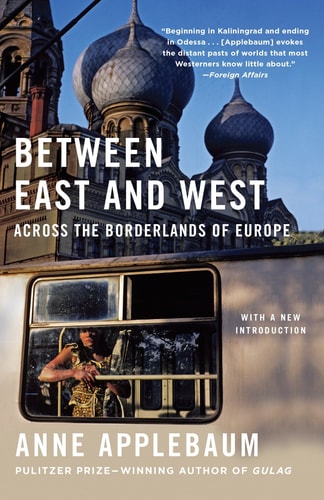
Between East and West Across the Borderlands of Europe

Anne Applebaum
In the summer and fall of 1991, Anne Applebaum, Pulitzer Prize-winning author of Gulag and Iron Curtain , took a three month road trip through the freshly independent borderlands of Eastern Europe. She deftly weaves the harrowing history of the region and captures the effects of political upheaval on a personal level. An extraordinary journey into the past and present of the lands east of Poland and west of Russia—an area defined throughout its history by colliding empires. Traveling from the former Soviet naval center of Kaliningrad on the Baltic to the Black Sea port of Odessa, Anne Applebaum encounters a rich range of competing cultures, religions, and national aspirations. In reasserting their heritage, the inhabitants of the borderlands attempt to build a future grounded in their fractured ancestral legacies. In the process, neighbors unearth old conflicts, devote themselves to recovering lost culture, and piece together competing legends to create a new tradition. Rich in surprising encounters and vivid characters, Between East and West brilliantly illuminates the soul of the borderlands and the shaping power of the past.
National Geographic Books 2017-06-13 336 pages

I Cannot Forgive

Rudolf Vrba,Alan Bestic
April 7, 1944 -- Alarm sirens announce the escape of two Slovak prisoners from a heavily-guarded camp in Nazi Germany. The escapees, Rudolf Vrba and Alfred Wetzler, succeed and flee more than one hundred miles to give the first graphic and exact descriptions of the operations at Auschwitz, which up to that point had only been heard about as unverifiable rumours. Their report, first punished in Swiss and then in the western press, made the reality of Nazi annihilation camps explicit and unequivocal to Pope Pius XII, Winston Churchill and Franklin D. Roosevelt.
Regent College Publishing 1997-10 431 pages

The traitors circle: the true story of a secret resistance network in Nazi Germany--and the spy who betrayed them

Freedland, Jonathan
"When the whole world is lying, someone must tell the truth. Berlin, 1943: A group of high society anti-Nazi dissenters meet for a tea party one late summer's afternoon. They do not know that, sitting around the table, is someone poised to betray them all to the Gestapo. They form a circle of unlikely rebels, drawn from the German elite: two countesses, a diplomat, an intelligence officer, an ambassador's widow and a pioneering headmistress. What unites every one of them is a shared loathing of the Nazis, a refusal to bow to Hitler, and the courage to perform perilous acts of resistance: meeting in the shadows, rescuing Jews or plotting for a future Germany freed from the Führer's rule. Or so they believe. How did a group of brave, principled rebels, who had successfully defied Adolf Hitler for more than a decade, come to fall into such a lethal trap? Undone from within and pursued to near-destruction by one of the Reich's cruelest men, they showed a heroism in the face of the most vengeful regime in history that raises the question: what kind of person does it take to risk everything and stand up to tyranny?"-- Provided by publisher.
Harper, an imprint of HarperCollinsPublishers 2025-10-28 456 pages

The Candy Bombers The Untold Story of the Berlin Airlift and America's Finest Hour

Andrei Cherny
"What an exciting, inspiring, and wonderfully-written book this is....Each page has lessons for today, and it is also a thrilling narrative to read." --Walter Isaacson, #1 New York Times Bestselling Author of Steve Jobs The masterfully told story of the unlikely men who came together to make the Berlin Airlift one of the great military and humanitarian successes of American history. On the sixtieth anniversary of the Berlin Airlift, Andrei Cherny tells a remarkable story with profound implications for the world today. In the tradition of the best narrative storytellers, he brings together newly unclassified documents, unpublished letters and diaries, and fresh primary interviews to tell the story of the ill-assorted group of castoffs and second-stringers who not only saved millions of desperate people from a dire threat but changed how the world viewed the United States, and set in motion the chain of events that would ultimately lead to the dismantling of the Berlin Wall and to America's victory in the Cold War. On June 24, 1948, intent on furthering its domination of Europe, the Soviet Union cut off all access to West Berlin, prepared to starve the city into submission unless the Americans abandoned it. Soviet forces hugely outnumbered the Allies', and most of America's top officials considered the situation hopeless. But not all of them. Harry Truman, an accidental president, derided by his own party; Lucius Clay, a frustrated general, denied a combat command and relegated to the home front; Bill Tunner, a logistics expert downsized to a desk job in a corner of the Pentagon; James Forrestal, a secretary of defense beginning to mentally unravel; Hal Halvorsen, a lovesick pilot who had served far from the conflict, flying transport missions in the backwater of a global war--together these unlikely men improvised and stumbled their way into a uniquely American combination of military and moral force unprecedented in its time. This is the forgotten foundation tale of America in the modern world, the story of when Americans learned, for the first time, how to act at the summit of world power--a masterful and exciting work of historical narrative, and one with strong resonance for our time.
Penguin Publishing Group 2009-06 624 pages

Radical enlightenment: philosophy and the making of modernity, 1650-1750

Israel, Jonathan
Arguably the most decisive shift in the history of ideas in modern times was the complete demolition during the late 17th and 18th centuries — in the wake of the Scientific Revolution — of traditional structures of authority, scientific thought, and belief by the new philosophy and the philosophes, culminating in Voltaire, Diderot, and Rousseau. In this revolutionary process, which effectively overthrew all justification for monarchy, aristocracy, and ecclesiastical power, as well as man's dominance over woman, theological dominance of education, and slavery, substituting the modern principles of equality, democracy, and universality, the Radical Enlightenment played a crucially important part. Despite the present day interest in the revolutions of the late 18th century, the origins and rise of the Radical Enlightenment have been little studied doubtless largely because of its very wide international sweep and the obvious difficulty of fitting it into the restrictive conventions of ‘national history’ which until recently tended to dominate all historiography. The greatest obstacle to the Radical Enlightenment finding its proper place in modern historical writing is simply that it was not French, British, German, Italian, Jewish, or Dutch, but all of these at the same time. In this novel interpretation of the Radical Enlightenment down to La Mettie and Diderot, two of its key exponents, particular stress is placed on the pivotal role of Spinoza and the widespread underground international philosophical movement known before 1750 as Spinozism.
Oxford University Press 2001-03-29 810 pages

Age of ambition: chasing fortune, truth, and faith in the new China

Osnos, Evan
"A vibrant, colorful, and revelatory inner history of China during a moment of profound transformation From abroad, we often see China as a caricature: a nation of pragmatic plutocrats and ruthlessly dedicated students destined to rule the global economy--or an addled Goliath, riddled with corruption and on the edge of stagnation. What we don't see is how both powerful and ordinary people are remaking their lives as their country dramatically changes. As the Beijing correspondent for The New Yorker, Evan Osnos was on the ground in China for years, witness to profound political, economic, and cultural upheaval. In Age of Ambition, he describes the greatest collision taking place in that country: the clash between the rise of the individual and the Communist Party's struggle to retain control. He asks probing questions: Why does a government with more success lifting people from poverty than any civilization in history choose to put strict restraints on freedom of expression? Why do millions of young Chinese professionals--fluent in English and devoted to Western pop culture--consider themselves "angry youth," dedicated to resisting the West's influence? How are Chinese from all strata finding meaning after two decades of the relentless pursuit of wealth? Writing with great narrative verve and a keen sense of irony, Osnos follows the moving stories of everyday people and reveals life in the new China to be a battleground between aspiration and authoritarianism, in which only one can prevail"--
Farrar, Straus and Giroux 2015-05-05 403 pages

Return from Siberia

John Shallman
** Wall Street Journal , Publishers Weekly , and USA Today Bestseller!** In the lead-up to the Bolshevik Revolution, one young revolutionary is condemned to exile in Siberia; a hundred years later, his ancestors discover his story and learn just how much history has repeated itself. In the midst of running a long-shot political campaign, Democratic political consultant John Simon discovers a 100-year-old manuscript written by his grandfather Joseph—a brilliant young revolutionary whose exile to Siberia by the last czar of Russia is just the beginning of an extraordinary tale of survival, romance, and revolution. Return From Siberia chronicles not only the Simon family's relationship to each other and the past, but also the remarkable story of a young man who sacrificed everything for his political ideals. As Joseph's manuscript is translated, chapter-by-chapter, the Simon family is pulled deep into their ancestor’s story— in particular, the bitter rivalry between two brothers, whose competing visions of the American Dream are played out on the campaign trail and in their lives. Return from Siberia is a timely appraisal of modern politics and society juxtaposed with an inside look into the machinations of a young political mind 100 years ago. The true story documents an extraordinary time of political upheaval in Russia and Europe just prior to World War I while also drawing parallels to current day American politics and the current philosophical and ideological debates about immigration, Democratic Socialism, and Capitalism. Beyond the deep social, political, and philosophical themes, there is romance, adventure, betrayal, suspense, and the struggles of families today and in yesteryear. Return from Siberia illustrates how one modern family's connection to the past helps them resolve their future.
Skyhorse 2020-08-18 256 pages

Bismarck A Life

Jonathan Steinberg
This riveting, New York Times bestselling biography illuminates the life of Otto von Bismarck, the statesman who unified Germany but who also embodied everything brutal and ruthless about Prussian culture. Jonathan Steinberg draws heavily on contemporary writings, allowing Bismarck's friends and foes to tell the story. What rises from these pages is a complex giant of a man: a hypochondriac with the constitution of an ox, a brutal tyrant who could easily shed tears, a convert to an extreme form of evangelical Protestantism who secularized schools and introduced civil divorce. Bismarck may have been in sheer ability the most intelligent man to direct a great state in modern times. His brilliance and insight dazzled his contemporaries. But all agreed there was also something demonic, diabolical, and overwhelming in Bismarck's personality. He was a kind of malign genius who, behind the various postures, concealed an ice-cold contempt for his fellow human beings and a drive to control and rule them. As one contemporary noted: "the Bismarck regime was a constant orgy of scorn and abuse of mankind, collectively and individually." A brilliant study in power, this comprehensive biography brings Bismarck to life, revealing the stark contrast between the "Iron Chancellor's" unmatched political skills and his profoundly flawed human character.
Oxford University Press 2011 577 pages

Murder in Amsterdam: liberal Europe, Islam and the limits of tolerance

Buruma, Ian
On a cold November day in Amsterdam, an angry young Muslim man, the son of Moroccan immigrants, killed celebrated and controversial Dutch filmmaker Theo van Gogh, great-grandnephew of Vincent and iconic European provocateur, for making a movie that "blasphemed" Islam. The murder horrified quiet, complacent, prosperous Holland, a country that prides itself on being a bastion of tolerance, and sent shock waves across Europe and around the world. Ian Buruma returned to his native Netherlands to try to make sense of it all and to see what larger meaning should and shouldn't be drawn from this story. The result is a true-crime page-turner with the intellectual resonance we've come to expect from this well-regarded journalist and thinker: the exemplary tale of our age, the story of what happens when political Islam collides with the secular West and tolerance finds its limits.--From publisher description
Penguin Books 2007-08-28 278 pages

The inner life of empires: an eighteenth-century history

Rothschild, Emma
"They were abolitionists, speculators, slave owners, government officials, and occasional politicians. They were observers of the anxieties and dramas of empire. And they were from one family. The Inner Life of Empires tells the intimate history of the Johnstones--four sisters and seven brothers who lived in Scotland and around the globe in the fast-changing eighteenth century. Piecing together their voyages, marriages, debts, and lawsuits, and examining their ideas, sentiments, and values, renowned historian Emma Rothschild illuminates a tumultuous period that created the modern economy, the British Empire, and the philosophical Enlightenment. One of the sisters joined a rebel army, was imprisoned in Edinburgh Castle, and escaped in disguise in 1746. Her younger brother was a close friend of Adam Smith and David Hume. Another brother was fluent in Persian and Bengali, and married to a celebrated poet. He was the owner of a slave known only as "Bell or Belinda," who journeyed from Calcutta to Virginia, was accused in Scotland of infanticide, and was the last person judged to be a slave by a court in the British isles. In Grenada, India, Jamaica, and Florida, the Johnstones embodied the connections between European, American, and Asian empires. Their family history offers insights into a time when distinctions between the public and private, home and overseas, and slavery and servitude were in constant flux. Based on multiple archives, documents, and letters, The Inner Life of Empires looks at one family's complex story to describe the origins of the modern political, economic, and intellectual world"-- Provided by publisher.
Princeton University Press 2012-11-25 483 pages