56 results for "World History"

The highest calling: conversations on the American Presidency

Rubenstein, David M.
"Blending history and anecdote, Rubenstein chronicles the journeys of the presidents who have defined America as it exists now, what they envision for its future, and their legacy on the world stage. Drawing from his own experience in the Carter administration, he engages in dialogues with our nation's presidents and the historians who study them. Get exclusive access to fresh perspectives, including: original interviews with most of the living US presidents; interviews with noted presidential historians like Annette Gordon-Reed, Ron Chernow, Candice Millard, and more. Through insightful analysis, Rubenstein captures our country's most prominent leaders, the political genius and frays of the presidential role, and the wisdom that emerges from it"--
Simon & Schuster 2024-09-10 472 pages

Between Past and Future

Arendt, Hannah
Arendt’s penetrating observations of the modern world, based on a profound knowledge of the past, constitute a major contribution to political philosophy. In this book she describes the perplexing crises which modern society faces as a result of the loss of meaning of the traditional key words of justice, reason, responsibility, virtue, and glory. Through a series of eight exercises, she shows how we can redistill once more the vital essence of these concepts.
Plume 1978 306 pages

When the facts change: essays, 1995-2010

Judt, Tony
"In an age in which the lack of independent public intellectuals has often been sorely lamented, the historian Tony Judt played a rare and valuable role, bringing together history and current events, Europe and America, what was and what is with what should be. In When the Facts Change, Tony Judt's widow and fellow historian Jennifer Homans has assembled an essential collection of the most important and influential pieces written in the last fifteen years of Judt's life, the years in which he found his voice in the public sphere. Included are seminal essays on the full range of Judt's concerns, including Europe as an idea and in reality, before 1989 and thereafter; Israel, the Holocaust and the Jews; American hyperpower and the world after 9/11; and issues of social inclusion and social justice in an age of increasing inequality. Judt was at once most at home and in a state of what he called internal exile from his native England, from Europe, and from America, and he finally settled in New York--between them all. He was a historian of the twentieth century acutely aware of the dangers of ethnic exceptionalism, and if he was shaped by anything, it was the Jewish past and his own secularism. His essays on Israel ignited a firestorm debate for their forthright criticisms of Israeli government polices relating to the Palestinians and the occupied territories. Those crucial pieces are published here in book form for the first time, including an essay, never previously published, called 'What Is to Be Done?' These pieces are suffused with a deep compassion for the Israeli dilemma, a compassion that instilled in Judt a sense of responsibility to speak out and try to find a better path, away from what he saw as a road to ruin. When the Facts Change also contains Judt's homages to the culture heroes who were some of his greatest inspirations: Amos Elon, Francois Furet, Leszek Kolakowski, and perhaps above all Albert Camus, who never accepted the complacent view that the problem of evil couldn't lie within us as well as outside us. Included here too is a magnificent two-part essay on the social and political importance of railway travel to our modern conception of a good society; as well as the urgent text of 'What Is Living and What Is Dead in Social Democracy, ' the final public speech of his life, delivered from a wheelchair after he had been stricken with a terrible illness; and a tender and wise dialogue with his then-teenage son, Daniel, about the different outlooks and burdens of their two generations. To read When the Facts Change is to miss Tony Judt's voice terribly, but to cherish it for what it was, and still is: a wise, human, deeply informed view on our most pressing concerns, delivered in good faith."--
Penguin Press 2015 386 pages

The Nanjing Massacre in history and historiography

Joshua A. Fogel
The Rape of Nanjing was one of the worst atrocities committed during World War II. On December 13, 1937, the Japanese army captured the city of Nanjing, then the capital of wartime China. According to the International Military Tribunal, during the ensuing massacre 20,000 Chinese men of military age were killed and approximately 20,000 cases of rape occurred; in all, the total number of people killed in and around the city of Nanjing was about 200,000. This carefully researched, intelligent collection of original essays considers the post-World War II treatment in China of the Nanjing Massacre and Japan. The book examines how the issue has developed as a political and diplomatic controversy in the five decades since World War II. In his introduction, Joshua A. Fogel raises the significant moral and historiographical issues that frame the other essays. Mark Eykholt then provides an account of postwar Chinese responses to the massacre. Takashi Yoshida assesses the attempts to downplay the incident and its effects, providing a revealing analysis of Japanese debates over Japan's role in the world and the continuing ambivalence of many Japanese toward their defeat in World War II. In the concluding essay, Daqing Yang widens the scope of the discussion by comparing the Nanjing historiographic debates to similar debates in Germany over the nature of the Holocaust.
University of California Press 2000-03-05 248 pages

The myth of Hitler's pope: how Pope Pius XII rescued Jews from the Nazis

Dalin, David G.
Was Pope Pius XII secretly in league with Adolf Hitler? No, says Rabbi David G. Dalin, but there was a cleric in league with Hitler: the grand mufti of Jerusalem, Hajj Amin al-Husseini. As Pope Pius XII worked to save Jews from the Nazis, the grand mufti became Hitler’s staunch ally and a promoter of the Holocaust, with a legacy that feeds radical Islam today. In this shocking and thoroughly documented book, Rabbi Dalin explodes the myth of Hitler’s pope and condemns the mythmakers for not only rewriting history, but for denying the testimony of Holocaust survivors, hijacking the Holocaust for unseemly political ends, and ignoring the real threat to the Jewish people.
Regnery History 2023-06-06 209 pages

Who owns history? rethinking the past in a changing world

Foner, Eric
A thought-provoking new book from one of America's finest historians "History," wrote James Baldwin, "does not refer merely, or even principally, to the past. On the contrary, the great force of history comes from the fact that we carry it within us, are unconsciously controlled by it in many ways, and history is literally present in all that we do." Rarely has Baldwin's insight been more forcefully confirmed than during the past few decades. History has become a matter of public controversy, as Americans clash over such things as museum presentations, the flying of the Confederate flag, or reparations for slavery. So whose history is being written? Who owns it? In W ho Owns History? , Eric Foner proposes his answer to these and other questions about the historian's relationship to the world of the past and future. He reconsiders his own earlier ideas and those of the pathbreaking Richard Hofstadter. He also examines international changes during the past two decades--globalization, the collapse of the Soviet Union, the end of apartheid in South Africa--and their effects on historical consciousness. He concludes with considerations of the enduring, but often misunderstood, legacies of slavery, the Civil War, and Reconstruction. This is a provocative, even controversial, study of the reasons we care about history--or should.
Hill and Wang 2002-04-20 233 pages

Making history: the storytellers who shaped the past

Cohen, Richard
THE HISTORY MAKERS is an epic exploration of who writes about the past and how the biases of certain storytellers - whether Julius Caesar, William Shakespeare or Simon Schama -continue to influence our ideas about history (and about who we are) today. There are many stories we can spin about years gone by, but which accounts come to be told, and by whom? A single author can deeply shape our understanding through the prism of his or her own beliefs. Richard Cohen reveals how professional historians and other equally significant witnesses (such as the writers of the Bible, major novelists, dramatists, journalists and political propagandists) influence what become the accepted records of human experience. Is there, he asks, even such a thing as "objective" history? And what is it to call someone a historian in the first place?The depth of Cohen's inquiry and the delight he takes in his subjects - even the practitioners of what he calls "Bad History," those thieves of history who twist reality to glorify themselves and conceal their or their country's behaviour - make this an unusually authoritative and supremely entertaining volume. Cohen investigates the published works and private utterances of our greatest historical thinkers to discover the agendas that informed their views of the world, and which in so many ways have informed ours. From the origins of history-writing, when such an idea seemed itself revolutionary, through to television and the digital age, THE HISTORY MAKERS abounds in captivating figures brought to vivid life, from Thucydides and Tacitus to Voltaire and Gibbon, from Winston Churchill to Mary Beard. Rich in character, complex truths and surprising anecdotes, the result is a unique exploration of both the aims and craft of history-making that will lead us to think anew about our past and ourselves.
Weidenfeld & Nicolson 2023-03-16 784 pages

Holocaust: an American understanding

Lipstadt, Deborah E.
"Immediately after World War II, there was little discussion of the Holocaust, but today the word has grown into a potent political and moral symbol, recognized by all. In Holocaust: An American Understanding, renowned historian Deborah E. Lipstadt explores this striking evolution in Holocaust consciousness, revealing how a broad array of Americans--from students in middle schools to presidents of the United States--tried to make sense of this inexplicable disaster, and how they came to use the Holocaust as a lens to interpret their own history. Lipstadt weaves a powerful narrative that touches on events as varied as the civil rights movement, Vietnam, Stonewall, and the women's movement, as well as controversies over Bitburg, the Rwandan genocide, and the bombing of Kosovo. Drawing upon extensive research on politics, popular culture, student protests, religious debates and various strains of Zionist ideologies, Lipstadt traces how the Holocaust became integral to the fabric of American life. Even popular culture, including such films as Dr. Strangelove and such books as John Hershey's The Wall, was influenced by and in turn influenced thinking about the Holocaust. Equally important, the book shows how Americans used the Holocaust to make sense of what was happening in the United States. Many Americans saw the civil rights movement in light of Nazi oppression, for example, while others feared that American soldiers in Vietnam were destroying a people identified by the government as the enemy. Lipstadt demonstrates that the Holocaust became not just a tragedy to be understood but also a tool for interpreting America and its place in the world. Ultimately Holocaust: An American Understanding tells us as much about America in the years since the end of World War II as it does about the Holocaust itself."--Publisher information
Rutgers University Press 2016-07-21 204 pages

Przemysłowa Concentration Camp The Camp, the Children, the Trials

Katarzyna Person,Johannes-Dieter Steinert
This book explores one of the most notorious aspects of the German system of oppression in wartime Poland: the only purpose-built camp for children under the age of 16 years in German-occupied Europe. The camp at Przemysłowa street, or the Polen-Jugendverwahrlager der Sicherheitspolizei in Litzmannstadt as the Germans called it, was a concentration camp for children. The camp at Przemysłowa existed for just over two years, from December 1942 until January 1945. During that time, an unknown number of children, mainly Polish nationals, were imprisoned there and subjected to extreme physical and emotional abuse. For almost all, the consequences of atrocities which they endured in the camp remained with them for the rest of their lives. This book focuses on the establishment of the camp, the experience of the child prisoners, and the post-war investigations and trials. It is based on contemporary German documents, post-war Polish trials and German investigations, as well as dozens of testimonies from camp survivors, guards, civilian camp staff and the camp leadership Katarzyna Person is a historian of the Holocaust working at the Jewish Historical Institute in Warsaw, Poland. Johannes-Dieter Steinert is Professor of Modern European History and Migration Studies at the University of Wolverhampton, UK.
Springer International Publishing, Imprint: Palgrave Macmillan 2022 260 pages

Historiography in the twentieth century: from scientific objectivity to the postmodern challenge

Iggers, Georg G.
A preeminent intellectual historian here examines the profound changes in ideas about the nature of history and historiography. Georg G. Iggers traces the basic assumptions upon which historical research and writing have been based since history's emergence as a professional discipline in the nineteenth century, and describes how the newly emerging social sciences transformed historiography following World War II. The discipline's greatest challenge may have come in the last two decades, when postmodern ideas forced a reevaluation of the relationship of historians to their subject and called into question the very possibility of objective history. Iggers sees the contemporary discipline as a hybrid, moving away from a classical, macro-historical approach toward microhistory, cultural history, and the history of everyday life. Still, while the postmodern critique of traditional historiography offers important correctives to historical thought and practice, it "has not destroyed the historian's commitment to recapturing reality or his or her belief in a logic of inquiry."
Wesleyan University Press, published by University Press of New England 1997 182 pages

Mirrors of destruction: war, genocide, and modern identity

Bartov, Omer
Reflects on the interrelationship between war, genocide, and identity in the 20th century. Contends that World War I provided a pattern for the industrial killing that reached its apex in the Nazi Holocaust. Comparing France and Germany, both of which looked for an "elusive enemy" to help them cope with the trauma of World War I, notes that Germany found it in the Jews. This perception allowed the Germans to see themselves as victims and their actions against the Jews as self-defense. The search for "elusive enemies" (to blame for perpetrating the genocide) and "elusive victims" (e.g. the French or German people) continued after the war. Compares the French, German, and Jewish postwar discourses of the Holocaust. Presenting themselves as the main victims of Nazism, the French and Germans have tended to neglect Jews as the main victims. Criticizes writings by Hannah Arendt, Ka-Tzetnik, and some other postwar writers on the Holocaust and its roots.
Oxford University Press 2000 302 pages

Political Awakenings Conversations with History

Harry Kreisler
As a kid, Noam Chomsky handed out the Daily Mirror at his uncle's newsstand on 72nd Street, inadvertently finding himself in a buzzing intellectual and political hub for European immigrants in New York. Iranian human rights Nobelist Shirin Ebadi and her husband signed their own legal contract, attempting to restore equality to their marriage after the Iranian Revolution effectively erased the legal rights of women. Elizabeth Warren set out to expose those frauds declaring bankruptcy and taking advantage of the system-only to discover, in her research, a very different story of hard-working middle-class families facing economic collapse in the absence of a social safety net. While studying at Oxford, a young Tariq Ali made a bet with a friend that he could work the Vietnam War into every single answer on his final exams. In this rousing, thoughtful, often funny, and always inspiring volume, a diverse and impressive group of thinkers reflect on those formative experiences that shaped their own political commitments. A fascinating new window into the revealing links between the personal and the political, Political Awakenings will engage readers across generations.
ReadHowYouWant.com 2011-03 384 pages

The Holocaust in the Soviet Union

Arad, Yitzhak
"The Holocaust in the Soviet Union is the most complete account to date of the Soviet Jews during World War II and the Holocaust (1941-45). Reports, records, documents, and research previously unavailable in English enable Yitzhak Arad to trace the Holocaust in the German-occupied territories of the Soviet Union through three separate periods in which German political and military goals in the occupied territories dictated the treatment of the Jews."--BOOK JACKET.
University of Nebraska Press 2009-07-01 700 pages

The Oxford history of historical writing

Daniel R. Woolf,Andrew Feldherr,Grant Hardy
A 5-volume series that explores representations of the past from the beginnings of writing to the present day, and from all over the world, volume 1 offers essays by leading scholars on the development and history of the major traditions of historical writing, including the ancient Near East, Classical Greece and Rome, and East and South Asia from their origins until c. AD 600. It provides both an authoritative survey of the field and an unrivalled opportunity to make cross-cultural comparisons--Book Jacket
Oxford University Press 2011-02-17 652 pages

Zionism during the Holocaust: the weaponisation of memory in the service of state and nation

Greenstein, Tony,Machover, Moshe
"Tony Greenstein offers a comprehensive and incisive analysis of the indissoluble nexus between anti-Semitism and Zionism. This connection is exposed in its ugliest form during the Holocaust. You can trust a courageous and committed fighter against anti-Semitism, such as Tony, to guide us through this particular dark moment when Zionism and antiSemitism interacted in Europe's darkest hour to educate us about its historical manifestations and implications for our time." Ilan Pappe, Professor of Middle East History, Exeter University "This book is essential reading. Understanding the politics of the thirties and forties is essential if we are to ensure the horrors of World War Two never happen again. Tony Greenstein's detailed reference to original sources leads to conclusions that cannot be ignored." Ken Loach, socialist film maker "In this timely scholarly polemic Tony Greenstein authoritatively demystifies Zionism, convincingly depicting its long obscured and misunderstood connections with anti-Semitism, especially during its horrifying climax in the Holocaust. Essential reading for anyone that wants to understand Israel as a state built upon the premise of Jewish supremacy and sustained by a cruel apartheid regime to deny basic rights to the Palestinian people in their own country." Richard Falk, Professor of International Law Emeritus, Princeton University and Chair of Global Law, Queen Mary University London "The present book is about the entire history of this relationship between Zionism and anti-Semitism. Tony's encyclopaedic familiarity with the dispersed relevant publications and his achievement in arranging the vast material in a coherent account are second to none." Emeritus Professor Moshé Machover, King's College, London University "This is a work of remarkable historical scholarship and analysis, its subject matter is as telling and relevant today as it ever was." Dr Derek Summerfield, Honorary Senior Clinical Lecturer King's College, University of London "Greenstein's book, meticulously researched and liberally peppered with quotations from original sources, will make uncomfortable reading for anyone who feels a sneaking sympathy for Zionism". Dr. Susan Blackwell, Dept of Languages, Literature and Communication, University of Utrecht "The historical relationship of Zionism with antisemitic and racist regimes and movements has been an area long neglected by normative research, influenced as it is by Zionist assumptions; this is why Tony Greenstein's book is so crucial, further developing the pioneering work by Lenni Brenner. Greenstein work is epic in scope, shedding light on dark corners, covering an immense historical, geographic, political and discursive arena; It provides an updated, comprehensive account and evaluation of Zionism's complex interrelation with, as well as its uses and abuses of the Holocaust." Professor Haim Bresheeth, School of Oriental and African Studies, University of London "In this substantial, detailed and scrupulously referenced account, the history of Zionist policies and practices before, during and after the Nazi Holocaust is examined in all its awfulness. Greenstein will no doubt be vilified by predictable opponents, but he offers a powerful alternative to the way most people would think about Zionism, given its current status as beyond criticism, on pain of accusations of antiSemitism." Patrick Williams, Emeritus Professor, Nottingham Trent University
Tony Greenstein 2022-08-12 493 pages

From homicide to slavery: studies in American culture

Davis, David Brion
For more than twenty years David Brion Davis has been recognized as a leading authority on the moral and ideological responses to slavery in the Western world. From Homicide to Slavery, Davis's first book of collected essays, brings together selections reflecting his wide-ranging interests in colonial history, Afro-American history, the social sciences, and American literature. The essays are interconnected by Davis's central concern with violence, irrationality, and the definition of moral limits during a period when Americans believed they were breaking free from historical constraints and acquiring new powers of self-perfection. Topics range from a socially revealing murder trial in 1843 to debates over capital punishment, movements of counter-subverison, the iconography of race, the cowboy as an American hero, the portrayal of violence in American literature, the historiography of slavery, and the British and American antislavery movements.
Oxford University Press 1986 305 pages

Political Awakenings Conversations with History

Harry Kreisler
Twenty sensational erotic stories that are sinfully good from Xcite Books, winners of the ETO Best Erotic Book Brand 2010, 2011, 2012 and 2013. Featuring stories by some of the best writers in the erotic field including Kay Jaybee, Angela Meadows, Elizabeth Cage and Penelope Friday. Indulge yourself in this sensational collection and discover the pleasure of Ultimate Sins. French Connection by Cathy King Escaping to France in the wake of a failed marriage, Mandy attempts to put the past behind her and indulge in a change of scenery. Bad memories fade as the delights of her holiday destination reveal themselves. With British men off of the menu, she is determined to sample the local fare. A chance encounter following an early evening trip to the beach allows Mandy to experience some of the local delicacies. But, with her appetite whetted all she can crave for is more. Eat Me by Elizabeth Cage Tired after a hard day at work all Joanne wants is to go home, relax and indulge her sweet tooth. A chance encounter at the bus station results in a journey home by quite a different route. Her unforeseen diversion is not without its delights. As the evening unfolds she discovers an appetite that needs to be satiated, and is soon treated to a gourmet feast from a menu of the very risqué kind. Vichysoisse by Astrid L. Gathering ingredients to make a soup at the local supermarket, Sophia encounters the highly charged and seductive Samantha, and is immediately enchanted. Intoxicated by her presence she invites Samantha for a culinary lesson in the preparation of Vichysoisse. As the cooking begins, intimacy, passion and anticipation quickly swirl into a heady infusion that consumes the both of them. Unlike the cold soup that brings them together, their relationship soon progresses from a light simmer to boiling desire. Bamboobzled by Landon Dixon When gorgeous celluloid dame, Brinn Stones saunters'' into his office, hard-nosed PI Jim Brubaker is offered a case he simply cannot refuse. Charged with the task of unearthing a seedy blackmailing scam, Brubaker is forced to trawl the seedy underbelly of the City of Angels. As the case reveals itself, he soon discovers that Tinsel Town is not quite as it seems. It''s a dog-eat-dog world, where just about anything goes. Pretty Young Things by Cathryn Cooper It''s the Roaring Twenties, a decade of decadence, prosperity and wild-abandon. In need of fresh excitement, Carew accepts the challenge of a car race to the nearby abbey ruins. With the brazen Suzanne at his side, he leads the rowdy crowd out into the dark night. Once at the ruins, Suzanne embarks upon a ribald display that soon drives those in attendance into a wanton frenzy. Unmoved, Carew leaves the gathering to wander the ruins, chancing upon a mysterious woman and an erotic encounter of his own. Purposeful Liaison by Shermaine Williams When work calls her husband back from their romantic island holiday, Charlotte is left to enjoy what''s left on her own, rather that reigniting the lost passion of her marriage. Her sudden abandonment soon registers on the radar of Matthew, a well-toned holiday-maker looking for company during his stay. His persistent attention soon wears down Charlotte''s resolve, and a late-night invitation for a drink releases more passion than she can possibly control. Alice and the Red Queen by Jean Roberta When a young student takes on the job of gardener for an erstwhile tennis star, gardening is not the only activity to leave her hot and breathless. The Red Queen soon sets her sights on the nubile employee and enters into a game where domination is the ultimate prize. As the game begins, the temperature starts to rise as the former tennis queen samples the many new delights that await her in the intimacy of her well-maintained grounds. Serial Satisfaction by Cathryn Cooper Michael can''t wait to indulge in his affair with his best friend''s wife. In the seclusion of a lay-by Crystal waits for her lover, but has demands of her own in mind. As Michael revels in her sensuous affection, Crystal takes him to the brink only to stop. A girl needs commitment and that''s exactly what she wants. Crystal wants Michael for herself, not to be shared with his wife. As Michael ponders his next move, he soon learns an important lesson, that Hell hath no fury as a woman scorned. Shared Experience by Lynn Lake The saying goes two''s company and three''s a crowd, but is that always the case? David is desperate for Amy to join him in realising his yearning for a threesome. Reluctant at first, Amy eventually succumbs to his wish and arranges for the arrival of the additional party: the voluptuous Cassandra. With her appetite whetted, Amy soon becomes a willing participant in David''s lustful scenario. However, her involvement is always going to be on her own terms, whatever they may be. Sweet Dreams by Jade Taylor Horny, frustrated and eager to get her toy boy home to the bedroom, Ellie must first lure Greg away from the nightclub. However, the easy distractions of youth interfere with her intentions, despite her most determined and seductive efforts. However, fate works in mysterious ways, and an after hours invitation to Greg''s friend Adam''s home provides her with a golden opportunity. Employing the power of her sensual allure, she teases them both only to enjoy a return that doubles her delight. The Florist by Eva Hore Melissa is determined to have her way with John the hunky Florist. With a plan in mind, she arrives late one evening to pursue her intention. As Melissa embarks on her seductive task, events take a very sudden and unexpected twist. Melissa soon finds herself at the centre of a wanton scenario that takes her on a wild, new experience of pleasure and pain. Behind closed doors at the florists will never be the same again. A Lesson For Victoria by Angela Meadows Dispatched by her Father, Victoria arrives at a school for young ladies nestled high the Tyrol. It soon becomes clear, that she has been sent to be educated as a lady. Under the expert guidance of Madams Thackeray and Hulot Victoria is to be prepared for presentation as a desirable Wife for high society gentleman. As the first evening session in the curriculum unfolds, it''s soon apparent to Victoria that her two-year attendance will be extremely hands on. Story Telling by Jim Baker Reality and imagination become entwined in a series of carnal encounters. A lecturer stumbles upon some raunchy extra-curricular activity in the University lecture hall, whilst a Librarian offers a personal and energetic critique of an author''s work. Yet it''s the mind behind these tales that feeds eagerly from its muse. As the plots are energetically worked out, the Authors fantasies are the only limitation. Beautiful Sin by Penelope Friday Two friends met again after a period of prolonged absence and cordially acknowledge each other. The reality is that both Catherine and Elizabeth share a passion that the world must never know. Against a backdrop of strict moral codes, their true feelings would see them incarcerated and separated forever; their lust for each other deemed a sin. Yet when the lights go out and others settle for the night, both women can meet secretly once more to share in their beautiful sin. The Spying Game by Roz MacLeod It''s the height of the Cold War and the nation is on its guard against the spectre of foreign espionage. When Sandi, a top agent in the Secret Service is called before Control, she is presented with a mission to uncover a possible double agent. Determined to safeguard the Nation''s secrets and using the cover of an erotic dancer, Sandi embarks on her wild and raunchy assignment, using every vice at her disposal to catch her target. The Librarian by Eva Hore A young woman returns early to her shared apartment, to find her scantily clad room mate preparing for a mysterious night-out. Where does a Librarian go after a day in the stacks? Imagination runs riot as an increasingly lecherous scenario unfolds in the young woman''s mind. Her room mate''s daytime mousy demeanour, tight bun and glasses are soon discarded, to reveal a wanton dominatrix hell bent on tasting the delights of her desires. Wreck-Her by Lynn Lake A business woman is unexpectedly delayed as her company car breaks-down, deep in the sun-parched Manitoba prairie. With no cell phone signal and the soaring heat of the surroundings rising, desperation rapidly begins to set in. Help soon arrives in the form of a tow truck that stops to offer assistance. After thoroughly appraising the situation, the truck driver is soon ready to dispense a unique form of roadside assistance that ultimately proves much to the woman''s delight. Mixed Blessings by Phoebe Grafton Two friends are in need of temporary relief from their respective husbands. With one husband too demanding and the other too languid, both wives decide that a weekend exchange is the best tonic. A plan is hatched, and after a night out together is put into effect, as door keys are exchanged for each others home and husband. The weekend that follows indulges each in the marital secrets of the other and in doing so sheds light over the question: is the grass always greener on the other side? Blindspot by Elspeth Potter Becca is both excited and intrigued when Dante brings a new toy to their swingers'' event. But what fascinates her more is how he wants to use it. Very soon, she is joined by Marcus who assists both Dante and herself in experiencing a new, exciting and heightened pleasure. As they plunge into their shared lascivious adventure, all inhibitions fall away leading t
UWA Publishing 2011 286 pages

Islam in history

Lewis, Bernard
Recent events have made an understanding of the turmoil in the Middle East more important than ever. In these essays, Bernard Lewis, a leading expert on Islam, gives essential background on Middle Eastern conflicts with the West and shows how Islam -- from its first expansion to its interpretation by Saddam Hussein and other extremists -- has always been inextricably linked to the Western world.
Open Court 2001 487 pages

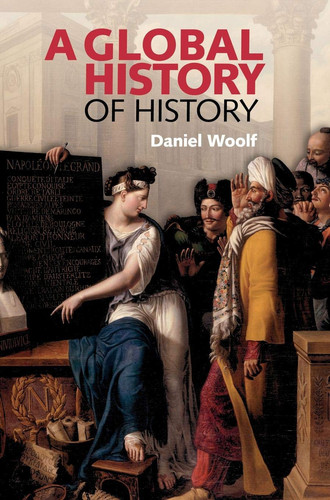
A global history of history

Woolf, D. R.
A global history of historical writing, thought and the development of the historical discipline from the ancient world to the present. This is a definitive guide to human efforts to recover, understand and represent the past, bringing together different historical traditions and their social, economic, political and cultural contexts. Daniel Woolf offers clear definitions of different genres and forms of history and addresses key themes such as the interactions between West and East, the conflict of oral, pictographic, and written accounts of the past and the place of history in society and in politics. Numerous textual extracts and illustrations in every chapter capture the historical cultures of past civilizations and demonstrate the different forms that historical consciousness has taken around the world. The book offers unique insights into the interconnections between different historical cultures over 3000 years and relates the rise of history to key themes in world history. --
Cambridge University Press 2011-02-17 568 pages

History and its objects: antiquarianism and material culture since 1500

Miller, Peter N.
"Cultural history is increasingly informed by the history of material culture--the ways in which individuals or entire societies create and relate to objects both mundane and extraordinary--rather than on textual evidence alone. Books such as The Hare with Amber Eyes and A History of the World in 100 Objects indicate the growing popularity of this way of understanding the past. In History and Its Objects, Peter N. Miller uncovers the forgotten origins of our fascination with exploring the past through its artifacts by highlighting the role of antiquarianism--a pursuit ignored and derided by modem academic history--in grasping the significance of material culture. From the efforts of Renaissance antiquarians, who reconstructed life in the ancient world from coins, inscriptions, seals, and other detritus, to amateur historians in the nineteenth century working within burgeoning national traditions, Miller connects collecting--whether by individuals or institutions--to the professionalization of the historical profession, one which came to regard its progenitors with skepticism and disdain. The struggle to articulate the value of objects as historical evidence, then, lies at the heart both of academic history-writing and of the popular engagement with things. Ultimately, this book demonstrates that our current preoccupation with objects is far from novel and reflects a human need to reexperience the past as a physical presence." -- Publisher's description
Cornell University Press 2017 300 pages