145 results for "World History"

Cue the sun! the invention of reality TV

Nussbaum, Emily
"From beloved New Yorker TV critic Emily Nussbaum comes a groundbreaking narrative detailing the fights, egos, drama, and future presidents of reality television. Cue the Sun is a rollicking, deeply reported story about how the early reality TV business metastasized into an industry that now dominates entertainment in the United States. Starting in 1948, Nussbaum pulls back the curtain on the cultural meat grinder that created a generation-defining form of entertainment, examining shows from The Real World to Survivor to The Apprentice. Through extensive interviews, Nussbaum follows the reality TV industry from its inception with shows like Candid Camera to its 90s heyday and 00s aftermath. The book dives into some of the industry's most remarkable stories--for instance, the one where a serial killer on the run once appeared on The Dating Game"--
Random House 2024-06-25 440 pages

How the Beatles destroyed rock 'n' roll: an alternative history of American popular music

Wald, Elijah
Overthrowing the conventional pieties of mainstream jazz and rock history, Elijah Wald traces the evolution of popular music through developing tastes, trends and technologies—including the role of records, radio, jukeboxes and television—to give a fuller, more balanced account of the broad variety of music that captivated listeners over the course of the twentieth century. Wald revisits original sources—recordings, period articles, memoirs, and interviews—to highlight how music was actually heard and experienced over the years. In a refreshing departure from more typical histories, he focuses on the world of working musicians and ordinary listeners rather than stars and specialists. He looks at the evolution of jazz as dance music, and rock 'n' roll through the eyes of the screaming, twisting teenage girls who made up the bulk of its early audience. Duke Ellington, Benny Goodman, Frank Sinatra, Elvis Presley, Chuck Berry, and the Beatles are all here, but Wald also discusses less familiar names like Paul Whiteman, Guy Lombardo, Mitch Miller, Jo Stafford, Frankie Avalon, and the Shirelles, who in some cases were far more popular than those bright stars we all know today, and who more accurately represent the mainstream of their times. "Wald's book is suave, soulful, ebullient and will blow out your speakers." —Tom Waits "Wald is a meticulous researcher, a graceful writer and a committed contrarian.... An impressive accomplishment." —Peter Keepnews, New York Times Book Review "One of those rare books that aims to upend received wisdom and actually succeeds." —Kirkus Reviews "It is as an alternative, corrective history of American music that Wald's book is invaluable. It forces us to see that only by studying the good with the bad—and by seeing that the good and bad can't be pulled apart—can we truly grasp the greatness of our cultural legacy." —Malcolm Jones, Newsweek "Wald wears his scholarship lightly, but his ideas and insights are substantial.... The attention-grabbing title, for all its counterintuitive appeal, gives scant indication of the book's ambitions and achievements." —David Suisman, The Sixties
Oxford University Press 2011-10 323 pages

Wonderland avenue: tales of glamour and excess

Sugerman, Danny
At the age of thirteen, Danny Sugerman- the already wayward product of Beverley Hills wealth and privilege- went to his first Doors concert. He never looked back. He became Jim Morrison's protégé and- still in his teens- manager of the Doors and then Iggy Pop. He also plunged gleefully into the glamorous underworld of the rock 'n' roll scene, diving headfirst into booze, sex and drugs: every conceivable kind of drug, ever day, in every possible permutation. By the age of twenty-one he had an idyllic home, a beautiful girlfriend, the best car in the world, two kinds of hepatitis, a diseased heart, a $500 a day heroin habit and only a week to live. He lived. This is his tale. Excessive, scandalous, comic, cautionary and horrifying, it chronicles the 60s dream gone to rot and the early life of a Hollywood Wild Child who was just brilliant at being bad.
Abacus 1991 462 pages

Dylan goes electric! Newport, Seeger, Dylan, and the night that split the sixties

Wald, Elijah
One of the music world's preeminent critics takes a fresh and much-needed look at the day Dylan "went electric" at the Newport Folk Festival, timed to coincide with the event's fiftieth anniversary. On the evening of July 25, 1965, Bob Dylan took the stage at Newport Folk Festival, backed by an electric band, and roared into his new rock hit, Like a Rolling Stone. The audience of committed folk purists and political activists who had hailed him as their acoustic prophet reacted with a mix of shock, booing, and scattered cheers. It was the shot heard round the world-- Dylan's declaration of musical independence, the end of the folk revival, and the birth of rock as the voice of a generation-- and one of the defining moments in twentieth-century music. In Dylan Goes Electric!, Elijah Wald explores the cultural, political, and historical context of this seminal event that embodies the transformative decade that was the Sixties. Wald delves deep into the folk revival, the rise of rock, and the tensions between traditional and groundbreaking music to provide new insights into Dylan's artistic evolution, his special affinity to blues, his complex relationship to the folk establishment and his sometime-mentor Pete Seeger, and the ways he reshaped popular music forever. Breaking new ground on a story we think we know, Dylan Goes Electric! is a thoughtful, sharp appraisal of the controversial event at Newport and a nuanced, provocative, analysis of why it matters.
Dey St., an imprint of William Morrow Publishers 2015-07-14 354 pages

Of mice and magic: a history of American animated cartoons

Maltin, Leonard
In this revised and updated edition, the author not only recreates this whole glorious era from the silent days through the Hollywood golden age to Spielberg's American Tail, he traces the evolution of the art of animation and vividly portrays the key creative talents and their studios. This definitive history of American animated cartoons also brings Maltin's many fans up to date on work being done today at the Walt Disney and Warner Bros. studios, and other developments in the world of animation. Drawing on colorful interviews with many of the American cartoon industry's principals, Maltin has come up with a gold mine of anecdotes and film history. Behind the scenes were genius animators and entrepreneurs such as Walt Disney, Chuck Jones, Tex Avery, Mel Blanc, and a legion of others. In all, Maltin has put together a glorious celebration of a universally loved segment of Americana. -- from Back Cover.
New American Library 1987-12-01 485 pages

Take arms against a sea of troubles: the power of the reader's mind over a universe of death

Bloom, Harold
"The great poems, plays, novels, stories teach us how to go on living. . . . Your own mistakes, accidents, failures at otherness beat you down. Rise up at dawn and read something that matters as soon as you can." So Harold Bloom, the most famous literary critic of his generation, exhorts readers of his last book: one that praises the sustaining power of poetry. "Passionate. . . . Perhaps Bloom's most personal work, this is a fitting last testament to one of America's leading twentieth-century literary minds." -- Publishers Weekly "An extraordinary testimony to a long life spent in the company of poetry and an affecting last declaration of [Bloom's] passionate and deeply unfashionable faith in the capacity of the imagination to make the world feel habitable"--Seamus Perry, Literary Review "Reading, this stirring collection testifies, 'helps in staying alive.'"-- Kirkus Reviews , starred review This dazzling celebration of the power of poetry to sublimate death--completed weeks before Harold Bloom died--shows how literature renews life amid what Milton called "a universe of death." Bloom reads as a way of taking arms against the sea of life's troubles, taking readers on a grand tour of the poetic voices that have haunted him through a lifetime of reading. "High literature," he writes, "is a saving lie against time, loss of individuality, premature death." In passages of breathtaking intimacy, we see him awake late at night, reciting lines from Dante, Shakespeare, Milton, Montaigne, Blake, Wordsworth, Hart Crane, Jay Wright, and many others. He feels himself "edged by nothingness," uncomprehending, but still sustained by reading. Generous and clear‑eyed, this is among Harold Bloom's most ambitious and most moving books.
Yale University Press 2021-10-12 672 pages

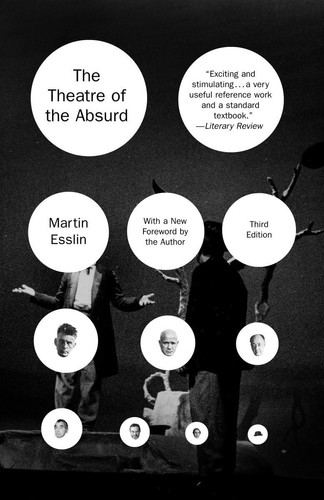
The theatre of the absurd

Esslin, Martin
In 1953, Samuel Beckett’s Waiting for Godot premiered at a tiny avant-garde theatre in Paris; within five years, it had been translated into more than twenty languages and seen by more than a million spectators. Its startling popularity marked the emergence of a new type of theatre whose proponents—Beckett, Ionesco, Genet, Pinter, and others—shattered dramatic conventions and paid scant attention to psychological realism, while highlighting their characters’ inability to understand one another. In 1961, Martin Esslin gave a name to the phenomenon in his groundbreaking study of these playwrights who dramatized the absurdity at the core of the human condition. Over four decades after its initial publication, Esslin’s landmark book has lost none of its freshness. The questions these dramatists raise about the struggle for meaning in a purposeless world are still as incisive and necessary today as they were when Beckett’s tramps first waited beneath a dying tree on a lonely country road for a mysterious benefactor who would never show. Authoritative, engaging, and eminently readable, The Theatre of the Absurd is nothing short of a classic: vital reading for anyone with an interest in the theatre.
Vintage Books 2004-01-06 480 pages

Rust in peace: the inside story of the Megadeth masterpiece

Mustaine, Dave,Selvin, Joel
"Rust in Peace details the making of Megadeth's iconic record, which was released in 1990, at an incredible time of flux and creativity in the rock world. Relayed by the lead vocalist and guitarist of Megadeth himself, Dave Mustaine, the book covers the process of hiring the band and supporting cast, of trying to handle the ensuing success, and ultimately the pressure of fame and fortune -- which caused the band to finally break-up. In short, it's a true story of groundbreaking anti-pop that was moving toward the mainstream (or the mainstream that was moving toward the band), at a time of great cultural change, power, ego, drugs, and other vices that went hand-in-hand with Rock N' Roll, circa the late eighties-early nineties. Little did Mustaine know that the birth pangs of the record were nothing compared to the oncoming pain and torment that would surround it. Alcohol, drugs, sex, money, power, property, prestige, the lies the band was told by the industry -- and the lies they told each other -- were just beginning, and much like rust in real life, these factors would ultimately eat away at the band's bond until only the music survived."--Amazon.com
Hachette Books 2020 191 pages

The old, weird America: the world of Bob Dylan's basement tapes

Marcus, Greil
Previously published as Invisible Republic and already considered a classic of modern American cultural criticism , The Old, Weird America is Greil Marcus's widely acclaimed book on the secret music (the so-called "Basement Tapes") made by Bob Dylan and the Band while in seclusion in Woodstock, New York, in 1967--a folksy yet funky, furious yet hilarious music that remains as seductive and baffling today as it was more than thirty years ago. As Mark Sinker observed in The Wire : "Marcus's contention is that there can be found in American folk a community as deep, as electric, as perverse, and as conflicted as all America, and that the songs Dylan recorded out of the public eye, in a basement in Woodstock, are where that community as a whole gets to speak." But the country mapped out in this book, as Bruce Shapiro wrote in The Nation , "is not Woody Guthrie's land for made for you and me . . . It's what Marcus calls 'the old, weird America.'" This odd terrain, this strange yet familiar backdrop to our common cultural history--which Luc Sante (in New York magazine) termed the "playground of God, Satan, tricksters, Puritans, confidence men, illuminati, braggarts, preachers, anonymous poets of all stripes"--is the territory that Marcus has discovered in Dylan's most mysterious music. And his analysis of that territory "reads like a thriller" (Ken Tucker, Entertainment Weekly ) and exhibits "a mad, sparkling brilliance" (David Remnick, The New Yorker ) throughout. This new edition of The Old, Weird America includes an updated discography.
Picador 2001-09-22 293 pages

A new literary history of America

Greil Marcus,Werner Sollors,Henry B and Anne M Cabot Professor of English Literature and Professor of African and African American Studies Werner Sollors
America is a nation making itself up as it goes along--a story of discovery and invention unfolding in speeches and images, letters and poetry, unprecedented feats of scholarship and imagination. In these myriad, multiform, endlessly changing expressions of the American experience, the authors and editors of this volume find a new American history. In more than two hundred original essays, this book brings together the nation's many voices. From the first conception of a New World in the sixteenth century to the latest re-envisioning of that world in cartoons, television, science fiction, and hip hop, the book gives us a new, kaleidoscopic view of what "Made in America" means. Literature, music, film, art, history, science, philosophy, political rhetoric--cultural creations of every kind appear in relation to each other, and to the time and place that give them shape.--From publisher description.
Belknap Press of Harvard University Press 2009 1095 pages

The Spider-Man vault: a museum-in-a-book with rare collectibles spun from Marvel's web

David, Peter
Rebooted into a fresh new film franchise (2012) directed by Marc Webb and starring up-and-comers Andrew Garfield and Emma Stone, and having debuted in its first ever Broadway appearance in March 2011, Spider-Man is back in the spotlight. Reaching out to millions of devoted fans, The Spider-Man Vault will afford readers a whole new look at the beloved "web-slinger". This vivid collection of images and ephemera focuses on a dynamic exploration of Spider-Man's character, providing a complete biography through his development in comics, media, and culture. Further drawing readers into Spidey's world will be approximately 20 removable features, housed in the sophisticated plastic pages specific to the "vault" format, and printed on special papers to heighten the noteworthiness of each carefully selected piece. From the classic comics to the big screen, The Spider-Man Vault is a comprehensive collection of art and ephemera that brings Spidey's back story out of the archive and into the arms of fans worldwide.
Running Press 2010 190 pages

The Fillmore East: recollections of rock theater

Kostelanetz, Richard
For three short years, from 1968 to 1971, New York's Fillmore East, housed in an abandoned second run movie house on New York's Lower East Side, was the greatest rock palace in the world. The best acts played there; it had its own resident light show presenting some of the most exciting visual images ever seen; and it was managed by the imaginative Bill Graham, who specialized in introducing the audience to new acts. Fans came from around the world and across the neighborhood; one dedicated audience member, then-twenty-eight-year-old performance artist and writer Richard Kostelanetz, attended religiously, keeping notes on the performances, interviewing the musicians, and documenting the shows. Now, he has pulled together these documents, along with original program notes and memories of other regulars, to produce the complete history of the theater. Photographer Raeanne Rubenstein, who got her start as a teenage news photographer, has opened her files to provide many never-before-seen performance photos of the greatest acts. This is a must-have for those who were there and all those who wish they could have been!
Schirmer Books 1995 212 pages

James Rhodes' playlist: the rebels and revolutionaries of sound

Rhodes, James
A visually stunning introduction to classical music from piano maestro and bestselling author James Rhodes. " Rhodes makes classical music accessible, relatable, and exciting . It is hard not to be swept up - Rhodes writes with such enthusiasm and thoughtfulness that readers will be dying to listen to the Spotify playlist he shares ... Rhodes makes history and music come alive. Surreal, psychedelic collages ... make the book an eye-popping visual experience as well. A dynamic and infectious introduction to classical music. " - Kirkus Bach. Mozart. Beethoven. Old guys with curly wigs, right? But trust me: those composers were the original rock stars. Let me introduce you to some of the most breathtaking and magnificent pieces of music ever created. We'll meet the rebels and revolutionaries who wrote them - did you know Beethoven peed into a chamber pot he kept under his piano? - and find out why they're responsible for every track on your phone today. The world of classical music is going to blow your mind. So take some time out to listen to the online playlist I've curated for you as you read. Bach, Mozart, Beethoven, Chopin, Schubert, Rachmaninoff and Ravel: the perfect introduction to classical music. With jaw-dropping artwork and avant-garde design, this visually exquisite celebration of classical music is encased in a stunning slipcase and features a large fold-out poster as well as an accompanying online playlist of the pieces being discussed. It's the perfect gift for older children and adults alike who want to explore classical music, but aren't quite sure where to begin.
Wren & Rook 2019-10-03 72 pages

Jelly Roll blues: censored songs & hidden histories

Wald, Elijah
"A bestselling music historian follows Jelly Roll Morton on a journey through the hidden worlds and forbidden songs of early blues and jazz. In Jelly Roll Blues: Censored Songs and Hidden Histories, Elijah Wald takes readers on a journey into the hidden and censored world of early blues and jazz, guided by the legendary New Orleans pianist Jelly Roll Morton. Morton became nationally famous as a composer and bandleader in the 1920s, but got his start twenty years earlier, entertaining customers in the city's famous bordellos and singing rough blues in Gulf Coast honky-tonks. He recorded an oral history of that time in 1938, but the most distinctive songs were hidden away for over fifty years, because the language and themes were as wild and raunchy as anything in gangsta rap. Those songs inspired Wald to explore how much other history had been locked away and censored, and this book is the result of that quest. Full of previously unpublished lyrics and stories, it paints a new and surprising picture of the dawn of American popular music, when jazz and blues were still the private, after-hours music of the Black 'sporting world.' It gives new insight into familiar figures like Buddy Bolden and Louis Armstrong, and introduces forgotten characters like Ready Money, the New Orleans sex worker and pickpocket who ended up owning one of the largest Black hotels on the West Coast. Revelatory and fascinating, these songs and stories provide an alternate view of Black culture at the turn of the twentieth century, when a new generation was shaping lives their parents could not have imagined and art that transformed popular culture around the world--the birth of a joyous, angry, desperate, loving, and ferociously funny tradition that resurfaced in hip-hop and continues to inspire young artists in a new millennium"--
Hachette Books 2024 336 pages

Conversations

Reich, Steve
A surprising, enlightening series of conversations that shed new light on the music and career of "our greatest living composer" (New York Times) Steve Reich is a living legend in the world of contemporary classical music. As a leader of the minimalist movement in the 1960s, his works have become central to the musical landscape worldwide, influencing generations of younger musicians, choreographers and visual artists. He has explored non-Western music and American vernacular music from jazz to rock, as well as groundbreaking music and video pieces. He toured the world with his own ensemble and his compositions are performed internationally by major orchestras and ensembles. Now Reich sits down with past collaborators, fellow composers and musicians as well as visual artists influenced by his work to reflect on his prolific career as a composer as well as the music that inspired him and that has been inspired by him, including: David Lang Brian Eno Richard Serra Michael Gordon Michael Tilson Thomas Russell Hartenberger Robert Hurwitz Stephen Sondheim Jonny Greenwood David Harrington Elizabeth Lim-Dutton David Robertson Micaela Haslam Anne Teresa de Keersmaeker Julia Wolfe Nico Muhly Beryl Korot Colin Currie Brad Lubman
Hanover Square Press 2022 347 pages

No joke: making Jewish humor

Wisse, Ruth R.
Humor is the most celebrated of all Jewish responses to modernity. In this book, Ruth Wisse evokes and applauds the genius of spontaneous Jewish joking--as well as the brilliance of comic masterworks by writers like Heinrich Heine, Sholem Aleichem, Isaac Babel, S. Y. Agnon, Isaac Bashevis Singer, and Philip Roth. At the same time, Wisse draws attention to the precarious conditions that call Jewish humor into being--and the price it may exact from its practitioners and audience. Wisse broadly traces modern Jewish humor around the world, teasing out its implications as she explores memorable and telling examples from German, Yiddish, English, Russian, and Hebrew
Princeton University Press 2013-06-02 279 pages

Young lions: how Jewish authors reinvented the American war novel

Garrett, Leah
"Young Lions: How Jewish Authors Reinvented the American War Novel shows how Jews, traditionally castigated as weak and cowardly, for the first time became the popular literary representatives of what it meant to be a soldier and what it meant to be an American. Revisiting best-selling works ranging from Norman Mailer's The Naked and the Dead to Joseph Heller's Catch-22, and uncovering a range of unknown archival material, Leah Garrett shows how Jewish writers used the theme of World War II to reshape the American public's ideas about war, the Holocaust, and the role of Jews in postwar life. In contrast to most previous war fiction these new Jewish war novels were often ironic, funny, and irreverent and sought to teach the reading public broader lessons about liberalism, masculinity, and pluralism"--Page 4 of cover.
Northwestern University Press 2015-09-30 275 pages