18 results for "World History"

Mother of God: a history of the Virgin Mary

Rubin, Miri
How did the Virgin Mary, about whom very little is said in the Gospels, become one of the most powerful and complex religious figures in the world? To arrive at the answers to this far-reaching question, one of our foremost medieval historians, Miri Rubin, investigates the ideas, practices, and images that have developed around the figure of Mary from the earliest decades of Christianity to around the year 1600. Drawing on an extraordinarily wide range of sources—including music, poetry, theology, art, scripture, and miracle tales—Rubin reveals how Mary became so embedded in our culture that it is impossible to conceive of Western history without her. In her rise to global prominence, Mary was continually remade and reimagined by wave after wave of devotees. Rubin shows how early Christians endowed Mary with a fine ancestry; why in early medieval Europe her roles as mother, bride, and companion came to the fore; and how the focus later shifted to her humanity and unparalleled purity. She also explores how indigenous people in Central America, Africa, and Asia remade Mary and so fit her into their own cultures. Beautifully written and finely illustrated, this book is a triumph of sympathy and intelligence. It demonstrates Mary’s endless capacity to inspire and her profound presence in Christian cultures and beyond.
Yale University Press 2009 532 pages

Salvation is from the Jews (John 4:22): the role of Judaism in salvation history from Abraham to the Second Coming

Schoeman, Roy H.
Traces the role of Judaism and the Jewish people in God's plan for the salvtion of mankind, from Abraham through the Second Coming, as revealed by the Catholic faith and by a thoughtful examination of history. It will give both Jews and Christians a deeper understanding of Judaism, both as a religion in itself and as a central component of salvation history. The book examines the unique and central role Judaism plays in the destiny of the world. It documents that throughout history attacks on Jews and Judasim have been rooted, not in Christianity, but in the most anti-Christian of forces. Areas addressed in depth include: the Messianic prophecies in Jewish Scripture; the very anti-Christian roots of Nazi anti-Semitism; the links between Nazism and Arab anti-Semitism; the theological insights of well-known Jewish converts; and the role of the Jews in the Second Coming.
Ignatius Press 2003 392 pages

The Messiah texts

Patai, Raphael
Following a detailed introduction to the world of messianic ideology and its significance in Jewish history, The Messiah Texts traces the progress of the messianic legend from its biblical beginnings to contemporary expressions. Renowned scholar Raphael Patai has skillfully selected passages from a voluminous literature spanning three millennia. Using his own translations from Hebrew, Aramaic, Arabic, Latin, and other original texts, Patai excerpts delightful folk tales, apocalyptic fantasies, and parables of prophetic power. All are central to the understanding of a magnificent heritage. patai also investigates the false messiahs who have appeared throughout Jewish history, the modern Messiah-influenced movements such as reform Judaism and Zionism, and the numerous reasons put forth by the various branches of Judaism as to why the Messiah has not yet appeared.
Wayne State University Press 1979 373 pages

Jewish views of the afterlife

Raphael, Simcha Paull
In Jewish Views of the Afterlife, Simcha Paull Raphael guides the reader through 4,000 years of Jewish thought on the afterlife by investigating pertinent sacred texts produced in each era. Through a compilation of ideas found in the Bible, Apocrypha, rabbinic literature, medieval philosophy, medieval Midrash, Kabbalah, and Hasidism, the reader learns how Judaism conceived of the fate of the individual after death throughout Jewish history. In the wake of the horrifying deaths of six million Jews in the Holocaust, many turned away from Judaism and shunned a God who had seemingly allowed this senseless act of cruelty to occur. Others turned toward the faith, desperately wanting to believe in the doctrine that those whose lives had ended prematurely had passed on to another a better life. But does an afterlife even exist? What role does it play in Jewish theology? While many affirm a belief in the afterlife, a scarce few are aware of where these teachings can be found in Jewish literature. Among the topics discussed in this fascinating volume are heaven and hell, Olam Ha-Ba (The World to Come), Gan Eden, resurrection of the dead, immortality of the soul, and divine judgment prior to death.
J. Aronson 1996 474 pages

Sin: the early history of an idea

Fredriksen, Paula
Why the meaning of sin changed radically during the first centuries of Christianity Ancient Christians invoked sin to account for an astonishing range of things, from the death of God's son to the politics of the Roman Empire that worshipped him. In this book, award-winning historian of religion Paula Fredriksen tells the surprising story of early Christian concepts of sin, exploring the ways that sin came to shape ideas about God no less than about humanity. Long before Christianity, of course, cultures had articulated the idea that human wrongdoing violated relations with the divine. But Sin tells how, in the fevered atmosphere of the four centuries between Jesus and Augustine, singular new Christian ideas about sin emerged in rapid and vigorous variety, including the momentous shift from the belief that sin is something one does to something that one is born into. As the original defining circumstances of their movement quickly collapsed, early Christians were left to debate the causes, manifestations, and remedies of sin. This is a powerful and original account of the early history of an idea that has centrally shaped Christianity and left a deep impression on the secular world as well.
Princeton University Press 2014 209 pages

The lost Mary: rediscovering the Mother of Jesus

Tabor, James D.
"A deep dive into the life of history's "best known, least known" woman, the Virgin Mary, tracking how her story was changed and lost over the centuries. In the first century AD, a widowed Jewish woman raised eight children during a brutal Roman occupation of her homeland, instilling into them the lessons she'd learned from growing up under extreme violence barely twenty years before. Some of her sons would go on to proselytize based on what she'd taught; her eldest would face persecution, crucifixion, and, after his death, be known to the world as Jesus Christ. But everyone knows Jesus. What do we know about Mary? Anchoring itself firmly in the "messianic game of thrones" employed by Herod the Great and turbulence of Roman rule, The Lost Mary presents a detailed account of the influences shaping Mary's life, and, by extension, the lives she touched. With precision and expertise, Dr. Tabor breathes life into a woman who remains well-known but unseen, exploring her upbringing and marriage, and presents a compelling case for understanding her not as the saintly mother of a prophet, but as the influential foremother of a movement. Working with snippets from the Bible and primary writings from the period, and drawing on his long academic career, Dr. Tabor pieces together a spellbinding composite of Christianity's forgotten founder: A girl from a wealthy and well-pedigreed family in the cosmopolitan city of Sepphoris. A fierce and devoted mother who instilled her beliefs into her sons. A woman whose accomplishments were lost to theological dogma and time, but, guided by this groundbreaking work, may once again be imagined as something more"--
Alfred A. Knopf 2025 219 pages

The Rebbe, the Messiah, and the scandal of orthodox indifference

Berger, David
This book is a history, an indictment, a lament, and an appeal, focusing on the messianic trend in Lubavitch hasidism. It demonstrates how hasidim who affirm the dead Rebbe's messiahship have abandoned one of Judaism's core beliefs in favour of adherence to the doctrine of a second coming. At the same time, it decries the remarkable equanimity with which the standard-bearers of Orthodoxy have granted legitimacy to this development by continuing to recognize such believers as Orthodox Jews in good standing. This dramatic abandonment of the age-old Jewish resistance to a quintessentially Christian belief is a development of striking importance for the history of religions, and it is an earthquake in the history of Judaism. David Berger chronicles the unfolding of this development from a personal viewpoint. He describes the growing concern that impelled him to undertake an anti-messianist campaign-publications, correspondence, and the sponsorship of a Rabbinical Council of America resolution excluding this belief from authentic Judaism. He argues that a large number, almost certainly a substantial majority, of Lubavitch hasidim believe in the Rebbe's messiahship; a significant segment, including educators in the central institutions of the movement, maintain a theology that goes beyond posthumous messianism to the affirmation that the Rebbe is pure divinity. While many Jews see Lubavitch as a marginal phenomenon, its influence is in fact growing at a remarkable rate-to the point where its representatives are poised to dominate Orthodox religious institutions not merely in isolated outposts but in several major countries throughout the world. This book analyses the boundaries of Judaism's messianic faith and its conception of God. It assesses the threat posed by the messianists of Lubavitch and points to the consequences, ranging from undermining a fundamental argument against the Christian mission to calling into question the kosher status of many foods and ritual objects prepared under Lubavitch supervision. Finally, it proposes a strategy to protect authentic Judaism from this assault.
Littman Library of Jewish Civilization 2008 195 pages

Peoples of an almighty god: competing religions in the ancient world

Goldstein, Jonathan A.
Some ancient civilizations, notably the Babylonians and the Israelites, held fast to the belief that their particular god (or gods) were stronger than all other heavenly powers and gods combined, supremely able to protect their well-being and success as a nation. This belief (which resounds in the modern-day rallying cry "God is on our side") led to some foolhardy and rash decisions, particularly when it came to war. For a nation defeated or conquered by a foreign power inevitably faced the profound, perplexing question: "Why did our God, who has sworn to protect us, allow this to happen?" Jonathan A. Goldstein turns to the religious literature of these ancient peoples to discover how they reconciled their beliefs with the realities of history. In a magnificent blend of several academic disciples (literary criticism, political theory, biblical and classical history), he compares and contrasts the responses of different eras and nations–from the Israelites, Babylonians, and Egyptians to the Zoroastrians, Iranians, and Persians under Alexander the Great. Goldstein’s close readings of literature written following such devastating events as the fall of the Israelites to the Assyrians and the Babylonians demonstrate that theology, far from being a static and unchanging set of beliefs, evolves with the course of history. Revealing how each defeat helped to shape and define the religious beliefs of the conquered, Peoples of an Almighty God clearly demonstrates that no belief can remain unchanged or untouched by the beliefs of other people.
Yale University Press 2009 575 pages

Jesus in the Jewish world

Vermès, Géza
Jesus in the Jewish Wold represents some of the seminal aspects of the lifelong research of Geza Vermes focused on the Dead Sea Scrolls, Jewish Bible interpretation and the historical study of Jesus and the New Testament. Taken together the fifteen essays, the oldest of which dates from 1970 and the most recent from 2010, constitute an evocative cross section of the contribution to scholarship by Vermes who is equally celebrated as a pioneering Jesus In The Jewish World represents a synopsis of the most significant and Scrolls expert and, according to the Sunday Telegraph, the greatest Jesus scholar of his generation. Readers of the present volume are offered lively and often humorous accounts of the impact of Jesus the Jew on Christian and Jewish readers; of the value of Josephus as a historical source regarding John the Baptist, James the brother of the Lord, and Jesus; the historical implications of ancient Jewish biblical exegesis; of the inside story of the monumental recasting by Vermes and his friends of Emil Schurer's History of the Jewish People; and of the sacrifice of Isaac and the story of the first-century Galilean rabbi, Hanina ben Dosa. The final two essays, written in 2007 and 2010, are particularly noteworthy, the first propounding a fresh and revolutionary approach to methodology in the study of the historical Jesus and the second restating and reinforcing Vermes's stance in the half -a-century long Son of Man debate. Geza Vermes is Professor Emeritus of Jewish Studies and Emeritus Fellow of Wolfson College, Oxford but continues to teach at the Oriental Institute in Oxford.
SMC Press 2010 268 pages

By faith alone: the medieval church and Martin Luther

Shestov, Lev
Lev Shestov's By Faith Alone confronts Eastern and Western European conceptions of faith through Russian literature, ancient and medieval philosophy, and Christian theology. Written from 1910-1914, this first English-language translation brings together important early writings on the medieval church and Martin Luther. Shestov reconciles the Greek notion of rational truth with Biblical revelation by drawing on a wide range of ancient, medieval, philosophical and theological sources from Plato to Hegel, Tertullian to Saint Augustine , and Saint Bernard of Clairvaux to William of Ockam. He argues that rational truth has skewed Christian belief by determining knowledge and truth in ways that prize the mind over the world. This approach marks a turning point in the evolution of Shestov's existential thought. It establishes a basic division that became central to Shestov's later work, between Athens as reason and Jerusalem as faith. By Faith Alone provides a crucial piece of the puzzle in the genesis of Shestov's later and better-known writings on medieval philosophy.
Bloomsbury Academic 2025-05-29 240 pages

Beyond death: theological and philosophical reflections on life after death

Dan Cohn-Sherbok,Christopher Lewis
Throughout history human beings have been preoccupied with personal survival after death. As a consequence, most world religions proclaim that life continues beyond the grave, and they have depicted the Hereafter in a variety of forms. These various conceptions constitute answers to the most perplexing spiritual questions: Will we remember our former lives in the Hereafter? Will we have bodies? Can bodiless souls recognize each other? Will we continue to have personal identity? Will we be punished or rewarded, or absorbed into the Godhead? These issues serve as the basis of this collection of essays which provide a framework for understanding traditional conceptions of the Hereafter as well as new perspectives.
Macmillan 1995 219 pages

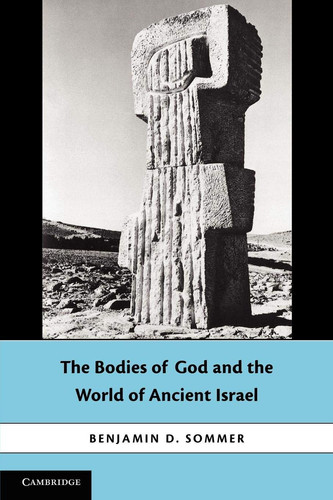
The bodies of God and the world of ancient Israel

Sommer, Benjamin D.
Sommer utilizes a lost ancient Near Eastern perception of divinity according to which a god has more than one body and fluid, unbounded selves. Though the dominant strains of biblical religion rejected it, a monotheistic version of this theological intuition is found in some biblical texts. Later Jewish and Christian thinkers inherited this ancient way of thinking; ideas such as the sefirot in Kabbalah and the trinity in Christianity represent a late version of this theology. This book forces us to rethink the distinction between monotheism and polytheism, as this notion of divine fluidity is found in both polytheistic cultures (Babylonia, Assyria, Canaan) and monotheistic ones (biblical religion, Jewish mysticism, Christianity), whereas it is absent in some polytheistic cultures (classical Greece). The Bodies of God and the World of Ancient Israel has important repercussions not only for biblical scholarship and comparative religion but for Jewish-Christian dialogue.
Cambridge University Press 2011-01-17 334 pages

Noah's flood: the Genesis story in Western thought

Cohn, Norman
The biblical tale of Noah and the Flood has been interpreted in many different ways through the ages, mirroring the many changes in Western beliefs and values. In this masterly and beautifully illustrated book, Norman Cohn, the author of The Pursuit of the Millennium and Cosmos, Chaos and the World to Come, explores the origins, development, and varying interpretations of this ancient story and assesses its impact on the history of ideas. The roots of the Flood story, Cohn explains, lie in Mesopotamian mythology. But its meaning was totally transformed by the authors of Genesis so that it became a message of hope for Jews and later a prefiguring of salvation for Christians. Cohn then shows how, under the impact of the scientific revolution of the seventeenth century, the story came to be understood in a new way. Between the seventeenth and the nineteenth centuries it was closely associated with the development of scientific geology, which it both helped and hindered. From the late eighteenth century until the present day the story of Noah's Flood has been involved also in the conflict between traditional religious beliefs and science and the attempts to harmonize the two. Cohn describes how, while geological and palaeontological discoveries were calling the historicity of the Flood into question, fundamentalists have continued to champion it, even to the extent of searching for the landing site of the ark. Finally, he considers how, in the course of the present century, the story has been interpreted as a solar myth, a lunar myth, a fertility myth, and even (psychoanalytically) as an expression of male resentment against women. Wide ranging and compellingly narrated, the book includesintriguing accounts of the scholars and theologians who endorsed or rejected the Flood story and contributed to its powerful resonance over two thousand years.
Yale University Press 1996-01-01 154 pages

Authority and asceticism from Augustine to Gregory the Great

Leyser, Conrad
Conrad Leyser examines the formation of the Christian ascetic tradition in the western Roman Empire during the period of the barbarian invasions, c.400-600. In an aggressively competitive political context, one of the most articulate claims to power was made, paradoxically, by men who had renounced 'the world', committing themselves to a life of spiritual discipline in the hope of gaining entry to an otherworldly kingdom. Often dismissed as mere fanaticism or open hypocrisy, the language of ascetic authority, Conrad Leyser shows, was both carefully honed and well understood in the late Roman and early medieval Mediterranean. Dr Leyser charts the development of this new moral rhetoric by abbots, teachers, and bishops from the time of Augustine of Hippo to that of St Benedict and Gregory the Great.
Clarendon Press 2000-01 221 pages

Tours of hell: an apocalyptic form in Jewish and Christian literature

Himmelfarb, Martha
From the ancient Book of the Dead to Dante's Divine Comedy , the living have attempted to describe the world of the dead. Tours of Hell focuses on one form of that attempt: the tours of hell found in Jewish and Christian apocalypses of late antiquity and the early Middle Ages. Himmelfarb examines seventeen texts, preserved in five languages and spanning a thousand years of human history. These include Hebrew texts and Christian texts in Greek, Latin, Ethiopic, and Coptic, such as the Apocalypse of Peter and the Apocalypse of Paul family. Muslim texts, medieval visions, and other related literatures are also discussed. Himmelfarb details the common elements of the tour tradition, including such features as a hero or heroine figure, a heavenly revealer, and descriptions of the punishments awaiting those who arrive in hell. She convincingly refutes the accepted nineteenth-century critical view of the earliest of these tours, the Apocalypse of Peter, as a Christian form of an "Orphic-Pythagorean" descent to Hades. She place the work instead on the family tree of the tour apocalypse, a genre she traces back to the third century B.C.E. Book of the Watchers (1 Enoch 1-36). Linking the Apocalypse of Peter with later Jewish tours of hell, Himmelfarb reveals significant sin-and-punishment combinations that seem to point to a common source, which she theorizes to be a lost Jewish Tour work of the late Second Temple period. Rich and fascinating texts seldom before brought to light are treated in detail in this pioneering study. A comprehensive work on the apocalyptic tradition, Tours of Hell will be of great interest to scholars and students of religion, history, ancient and medieval literature, and Dante studies.
University of Pennsylvania Press 1983 198 pages

Connecting the covenants: Judaism and the search for Christian identity in eighteenth-century England

Ruderman, David B.
The first few decades of the eighteenth century witnessed an important moment in Jewish-Christian relations, as influential Christian scholars increasingly looked to Jewish texts to reveal the truths of their own faith. To what extent could postbiblical writings help them better understand the New Testament? And who would best be able to explicate these connections?Connecting the Covenants focuses on two separate but entwined stories, the first centering around the colorful character of Moses Marcus. The English-born son of wealthy parents and the grandson of the famous autobiographical author Glikl of Hameln, Marcus was a prominent Jew educated in the Ashkenazic yeshivah at Hamburg. On New Year's Day, 1723, Marcus was baptized as a Christian, later publishing a justification of his conversion and a vindication of his newly discovered faith in a small book in London. A trophy convert, he was promoted by figures at the highest levels of the Anglican Church as a cultural mediator between Judaism and Christianity. His modest successes in the world of the elite clerical establishment were followed, however, by conspicuous failures, both intellectual and material.The second story that David Ruderman tells emerges against the background of Marcus's professional decline. In the end, the prize convert proved to be a theologian of limited ability, far outstripped in sophistication and openness to rabbinic learning by a circle of Enlightenment Protestant scholars. It was not the Jew who had abjured Judaism who was willing or able to apply the Mishnah and Talmud to Christian exegesis, but figures such as William Whiston, Anthony Collins, William Wotton, and the Dutch scholar William Surenhusius who seized upon the ways to connect the covenants.
University of Pennsylvania Press 2007 141 pages

Ascent to heaven in Jewish and Christian apocalypses

Himmelfarb, Martha
This is a study of the ancient Jewish and Christian apocalypses involving ascent into heaven, which have received little scholarly attention in comparison to apocalypses concerned primarily with the end of the world. Recent developments like the publication of the Aramaic Enoch fragments from Qumran and interest in questions of genre in the study of the apocalypses make this a particularly appropriate time to undertake this study. Martha Himmelfarb places the apocalypses in relation to both their biblical antecedents and their context in the Greco-Roman world. Her analysis emphasizes the emergence of the understanding of heaven as temple in the Book of the Watchers, the earliest of these apocalypses, and the way in which this understanding affects the depiction of the culmination of ascent, the hero's achievement of a place among the angels, in the ascent apocalypses generally. It also considers the place of secrets of nature and primeval history in these works. Finally, it offers an interpretation of the pseudepigraphy of the apocalypses and their function.
Oxford University Press 1993 171 pages