13 results for "World Literature"

Sarah: the life of Sarah Bernhardt

Gottlieb, Robert
Everything about Sarah Bernhardt is fascinating, from her obscure birth to her glorious career--redefining the very nature of her art--to her amazing (and highly public) romantic life, to her indomitable spirit. Well into her seventies, after the amputation of her leg, she was performing under bombardment for soldiers during World War I and toured America for the ninth time. Though the Bernhardt literature is vast, this is the first English-language biography to appear in decades, tracking the trajectory through which an illegitimate--and scandalous--daughter of a Jewish courtesan transformed herself into the most famous actress who ever lived, and into a national icon, a symbol of France.--From publisher description.
Yale University Press 2010 233 pages

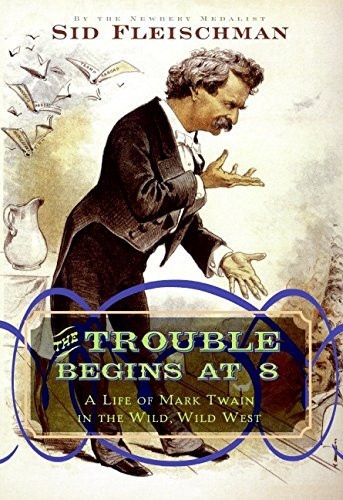
The trouble begins at 8: a life of Mark Twain in the wild, wild West

Fleischman, Sid
"Mark Twain was born fully grown, with a cheap cigar clamped between his teeth." So begins Sid Fleischman's ramble-scramble biography of the great American author and wit, who started life in a Missouri village as a barefoot boy named Samuel Clemens. Abandoning a career as a young steamboat pilot on the Mississippi River, Sam took a bumpy stagecoach to the Far West. In the gold and silver fields, he expected to get rich quick. Instead, he got poor fast, digging in the wrong places. His stint as a sagebrush newspaperman led to a duel with pistols. Had he not survived, the world would never have heard of Tom Sawyer or Huckleberry Finn—or red-headed Mark Twain. Samuel Clemens adopted his pen name in a hotel room in San Francisco and promptly made a jumping frog (and himself) famous. His celebrated novels followed at a leisurely pace; his quips at jet speed. "Don't let schooling interfere with your education," he wrote. Here, in high style, is the story of a wisecracking adventurer who came of age in the untamed West; an ink-stained rebel who surprised himself by becoming the most famous American of his time. Bountifully illustrated.
Greenwillow Books 2008 224 pages

Modernism: the lure of heresy : from Baudelaire to Beckett and beyond

Gay, Peter
A celebration of subversives: the first one-volume history of the greatest cultural movement since the Enlightenment. Peter Gay's most ambitious endeavor since Freud explores the shocking modernist rebellion that, beginning in the 1840s, transformed art, literature, music, and film with its assault on traditional forms. Beginning his epic study with Baudelaire, whose lurid poetry scandalized French stalwarts, Gay traces the revolutionary path of modernism from its Parisian origins to its emergence as the dominant cultural movement in world capitals such as Berlin and New York. A work unique in its breadth and brilliance, Modernism presents a thrilling pageant of heretics that includes (among others) Oscar Wilde, Pablo Picasso, and D. W. Griffiths; James Joyce, Virginia Woolf, and T. S. Eliot; Walter Gropius, Arnold Schoenberg, and (of course!) Andy Warhol. Finally, Gay examines the hostility of totalitarian regimes to modernist freedom and the role of Pop Art in sounding the death knell of a movement that dominated Western culture for 120 years. Lavishly illustrated, Modernism is a superlative achievement by one of our greatest historians.
W.W. Norton 2008 610 pages

The Indispensable Man The Story Of Thomas Alva Edison's Life And Inventive Genius

David Sarnoff,Mary Pickford,Harvey S. Firestone Jr.
""The Indispensable Man: The Story Of Thomas Alva Edison's Life And Inventive Genius"" by David Sarnoff is a detailed biography of one of the most influential inventors of all time. Thomas Alva Edison is known for his inventions that changed the world, including the phonograph, the motion picture camera, and the electric light bulb. The book explores Edison's life, from his early years as a curious child to his rise as a successful inventor and entrepreneur. It covers his struggles and failures, as well as his many successes, including his development of the first industrial research laboratory. Sarnoff delves into Edison's creative process, examining how he came up with his ideas and how he worked to turn them into reality. The book also explores Edison's personal life, including his relationships with his family and his colleagues. Overall, ""The Indispensable Man"" provides a comprehensive look at the life and work of Thomas Alva Edison, offering insights into his genius and his lasting impact on the world.The Story Of Thomas Alva Edison's Life And Inventive Genius Seen In 130 Photographs, The Most Unusual Collection About The Inventor Ever Assembled. Additional Authors Are Thomas W. Martin, Giorgio Valerio, Sherman R. Knapp, And Walker L. Cisler. Edited By George E. Probst.This scarce antiquarian book is a facsimile reprint of the old original and may contain some imperfections such as library marks and notations. Because we believe this work is culturally important, we have made it available as part of our commitment for protecting, preserving, and promoting the world's literature in affordable, high quality, modern editions, that are true to their original work.
Literary Licensing, LLC 2012-06 130 pages

The American Newness Culture and Politics in the Age of Emerson

Irving Howe
"To confront American culture is to feel oneself encircled by a thin but strong presence. I call it Emersonian, an imprecise term but one that directs us to a dominant spirit in the national experience." Thus Irving Howe, America's distinguished social critic and a longtime reader of the Sage of Concord, begins this illuminating discussion of Emerson and his disciples and doubters. What is the Emersonian spirit? What inspired it, what propelled it? And what does it mean to us today? History gave Emerson his opportunity and then took it away. Coming to manhood during the 1830s and 1840s, the time of "the newness" when Americans beheld the world with unbounded expectations, Emerson became the spokesman for the self-reliant new man he believed had arisen, ready to thrust aside mossy traditions and launch a new revolution of freewheeling thought. But the rapid pace of the American experience overtook the Emersonian vision; in the 1850s, the rising problems of slavery, a boom-and-bust economy, the vulgarity of mass culture overwhelmed the idealist. His satellite spirits wavered and shrouded the Emersonian optimism: Hawthorne, with his stories of moral breakdown; Thoreau, rooted in nature yet inclined to the cranky and fanatical; Melville, his fathomless blackness waiting beneath archetypal fables of innocence and evil also Walt Whitman, Orestes Brownson, Twain--all were influenced by, yet reacted against, the Emersonian "newness." Howe identifies three kinds of response: the literature of work (Melville and Mark Twain), the literature of Edenic fraternity (James Fenimore Cooper, Whitman, Twain again), and the literature of loss (all the post-Civil War writers). He lays before us the intellectual and personal tragedy of the first great American man of letters, yet also shows that Emerson's belief in the untapped power of free men pervades not only the lives and works of his contemporaries but is also a permanent part of the American psyche.
Harvard University Press 2013-10 99 pages

An anthology of Jewish-Russian literature: two centuries of dual identity in prose and poetry

Maxim Shrayer
This definitive anthology gathers stories, essays, memoirs, excerpts from novels, and poems by more than 130 Jewish writers of the past two centuries who worked in the Russian language. It features writers of the tsarist, Soviet, and post-Soviet periods, both in Russia and in the great emigrations, representing styles and artistic movements from Romantic to Postmodern. The authors include figures who are not widely known today, as well as writers of world renown. Most of the works appear here for the first time in English or in new translations. The editor of the anthology, Maxim D. Shrayer of Boston College, is a leading authority on Jewish-Russian literature. The selections were chosen not simply on the basis of the author's background, but because each work illuminates questions of Jewish history, status, and identity. Each author is profiled in an essay describing the personal, cultural, and historical circumstances in which the writer worked, and individual works or groups of works are headnoted to provide further context. The anthology not only showcases a wide selection of individual works but also offers an encyclopedic history of Jewish-Russian culture. This handsome two-volume set is organized chronologically. The first volume spans the nineteenth century and the first part of the twentieth century, and includes the editor's extensive introduction to the Jewish-Russian literary canon. The second volume covers the period from the death of Stalin to the present, and each volume includes a corresponding survey of Jewish-Russian history by John D. Klier of University College, London, as well as detailed bibliographies of historical and literary sources.
Sharpe 2007 1278 pages

Savage reprisals

Gay, Peter
A revelatory work that examines the intricate relationship between history and literature, truth and fiction—with some surprising conclusions. Focusing on three literary masterpieces—Charles Dickens's Bleak House (1853), Gustave Flaubert's Madame Bovary (1857), and Thomas Mann's Buddenbrooks (1901)—Peter Gay, a leading cultural historian, demonstrates that there is more than one way to read a novel. Typically, readers believe that fiction, especially the Realist novels that dominated Western culture for most of the nineteenth century and beyond, is based on historical truth and that great novels possess a documentary value. That trust, Gay brilliantly shows, is misplaced; novels take their own path to reality. Using Dickens, Flaubert, and Mann as his examples, Gay explores their world, their craftsmanship, and their minds. In the process, he discovers that all three share one overriding quality: a resentment and rage against the society that sustains the novel itself. Using their stylish writing as a form of revenge, they deal out savage reprisals, which have become part of our Western literary canon. A New York Times Notable Book and a Best Book of 2002.
W W Norton 2003-12-17 192 pages

Dreamers of the Ghetto

Israel Zangwill
Dreamers of the Ghetto (1892) is a collection of stories by Israel Zangwill. Raised in London by parents from Latvia and Poland, Zangwill understood the plight of the city's Jewish community firsthand. Having risen through poverty to become an educator and author, he dedicated his career to the voiceless, the oppressed, and the needy, advocating for their rights and bearing witness to their suffering in some of the most powerful novels and stories of the Victorian era. "This is a Chronicle of Dreamers, who have arisen in the Ghetto from its establishment in the sixteenth century to its slow breaking-up in our own day. Some have become historic in Jewry, others have penetrated to the ken of the greater world and afforded models to illustrious artists in letters..." As a Jewish immigrant who grew up in poverty in London, Israel Zangwill knows that the condition of life in the ghetto changes not just lives, but mentalities. In the third installment of his Ghetto series, Zangwill imagines the lives of such historical Jewish figures as Dutch philosopher Baruch Spinoza, German poet Heinrich Heine, and Prussian lawyer and political activist Ferdinand Lasalle. The tales of Jewish life in Dreamers of the Ghetto earned Zangwill comparisons to Dickens upon publication, and helped to establish him as an author with a gift for intensive character study and a passion for political themes. This edition of Israel Zangwill's Dreamers of the Ghetto is a classic of British literature reimagined for modern readers. Since our inception in 2020, Mint Editions has kept sustainability and innovation at the forefront of our mission. Each and every Mint Edition title gets a fresh, professionally typeset manuscript and a dazzling new cover, all while maintaining the integrity of the original book. With thousands of titles in our collection, we aim to spotlight diverse public domain works to help them find modern audiences. Mint Editions celebrates a breadth of literary works, curated from both canonical and overlooked classics from writers around the globe.
West Margin Press 2021-10-12 382 pages

The African worker

Freund, Bill
The African Worker, first published in 1988, was intended as a synthesis considering issues and debates from the work of many writers on labour history and labour studies in Africa. The development of a particular critical literature, spanning a number of disciplines, is critically considered. In some respects, the concerns of past generations have been to align the understanding of labour issues in Africa with those more generally in the modern world. In others, the emphasis remains on the specific and African. Both directions clearly emerge here. The bibliographical essay, as well as the bibliography itself, is meant to point readers further who want a higher order of detail, a regional focus or a more thorough-going theoretical treatment of all or some of the relevant issues.
Cambridge University Press 1988-08-25 200 pages

Such a deathly desire: Un si funeste désir

Klossowski, Pierre
Shocking, brilliant, and eccentric, the French author, translator, and artist Pierre Klossowski (1905–2001) exerted a profound effect on French intellectual culture throughout the twentieth century. The older brother of the painter Balthus, secretary to the novelist André Gide, friend to Georges Bataille and Maurice Blanchot, and heralded as one of the most important voices in the French “return to Nietzsche” by Michel Foucault and Gilles Deleuze, Klossowski pursued his singular vision of mortal embodiment through a variety of scholarly manifestations. In Such a Deathly Desire (Un si funeste désir), Klossowski’s original interpretation of Nietzsche’s eternal return is developed around the enigmatic figure of the “demon,” then deepened with provocative readings of Gide’s correspondence; Barbey d’Aurevilly’s novel A Married Priest; and the intertwining of language and death in the work of Bataille, Blanchot, and Brice Parain. The book concludes with the powerful essay “Nietzsche, Polytheism, and Parody,” in which Klossowski articulates the consequences of the eternal return and the meaning of Nietzsche’s genealogy of the fabulation of the world. Intersecting with and confounding a range of disciplines—including psychoanalysis, literary criticism, gender studies, and philosophy—Klossowski’s critical writings on language, literature, and the aesthetics of embodiment remain powerful and original contributions to contemporary concerns in the theoretical humanities. --
State University of New York Press 2007-08-09 150 pages

The consecration of the writer, 1750-1830: Le sacre de l'écrivain

Bénichou, Paul
The Consecration of the Writer is the definitive study of the first stages of a phenomenon that has profoundly affected world literature: the process by which modern writers ceased to speak as representatives of some religious or political power and instead seized the mantle of spiritual authority in their own right, speaking directly to and in the name of humanity. ø Paul Bänichou identifies three great moments in this process: the advent of the Enlightenment faith in philosophy and the rise of its literary concomitant, the man of letters; the literary creations of the counterrevolution and their surprising involvement in the elevation of the status of poetry; and, finally, the fusion of these tendencies in the early phases of romanticism in France. ø Bänichou deepens our understanding of romanticism by showing that it was a revision of the Enlightenment faith rather than a reaction against it. The extraordinary depth of Bänichou?s research, the originality of his conclusions, and the importance of his methodological reflections make this study an essential reference in the contemporary return to literary history.
University of Nebraska Press 1999-01-01 454 pages

Haskalah and Hasidism in the Kingdom of Poland: a history of conflict

Wodziński, Marcin
The conflict between Haskalah and hasidism was one of the most important forces in shaping the world of Polish Jewry for almost two centuries, but our understanding of it has long been dominated by theories based on stereotypes rather than detailed analysis of the available sources. In this award-winning study, Marcin Wodziński challenges the long-established theories about the conflict by contextualizing it, principally in the Kingdom of Poland but also with regard to other parts of eastern Europe. Covering the period from the earliest anti-hasidic polemics in the late eighteenth century through to the post-Haskalah movements of the twentieth century, it follows the development of this important conflict in its central arena. Using source materials (including many hitherto unknown documents) in Polish and five other languages, Wodziński has succeeded in reconstructing the way the conflict expressed itself. Identifying the motives, the methods, and the consequences of the conflict as it was played out in five Polish towns (Lódz, Opoczno, Piotrków, Warsaw, and Warta), he shows that it was primarily informed by non-ideological clashes at the level of local communities rather than by high-level ideological debates. Much attention is also devoted to the general characteristics of hasidism and the Haskalah, as well as to the post-Haskalah movements. Here too Wodziński challenges the ideologically charged assumptions of a generation of historians who refused to see the advocates of Jewish modernity in nineteenth-century Poland as an integral part of the Haskalah movement. Extensive consideration is given to the professional, social, institutional, and ideological characteristics of the Polish Haskalah as well as to its geographic extent, and to the changes the movement underwent in the course of the nineteenth century. Similar attention is given to the influence of the specific characteristics of Polish hasidism on the shape of the conflict, especially as regard the size of the movement and the evolution of hasidic communal involvement. In consequence the book presents a synthesis that offers both breadth and depth, contextualizing its subject matter within the broader domains of the European Enlightenment and Polish culture, hasidism and rabbinic culture, tsarist policy and Polish history, not to mention the ins and outs of the Haskalah itself across Europe. An extensive appendix presents translations of nineteen important and hitherto unknown sources of relevance to a nuanced understanding of many aspects of nineteenth-century Jewish history in Poland and eastern Europe more generally.
The Littman Library of Jewish Civilization 2009 335 pages

Re-interpretations: Seven studies in nineteenth century German Literature

Stern, J P.
This is a reissue of Professor Stern's distinguished study of German prose from the death of Goethe to the heyday of the Wilhelminian Empire. Professor Stern argues that nineteenth-century German prose is characterized by a particular combination of the prophetic and the archaic, of the existential and the parochial, and is only partially and sometimes not at all related to the social and political realities of the age. In this sense, German literature of the period stands apart from the main stream of European realism and has, for that reason, received little attention from the common reader outside its own country. The book contains studies of Goethe, Grillparzer, Büchner, Schopenhauer, Heine, Stifter and Fontane, all of whom re-interpreted the world from points of view other than that of the common and commonly explored social certainties of their age. Consequently, Professor Stern suggests alternative criteria to the common notion of realism with which to asses their work.
Cambridge University Press 1981-10-30 370 pages